109 Featured Specimen
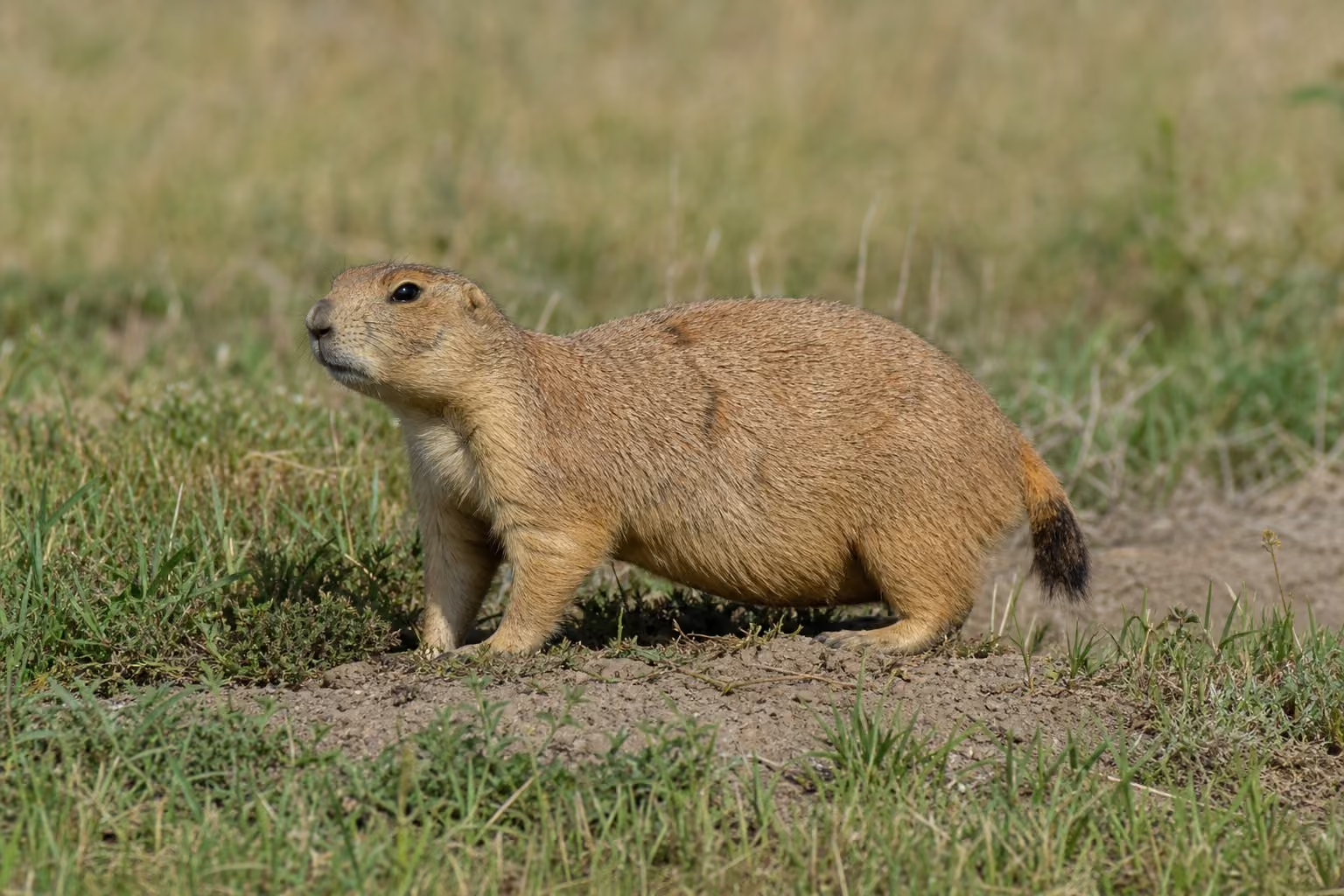
Black-tailed prairie dog

Details

Black-tailed prairie dog

Cynomys ludovicianus

Size
35–43 cm · 0.7–1.5 kg
Diet
Herbivore
Activity
Diurnal
Sociality
Colony
Lifespan
10-20 years

The black-tailed prairie dog is a diurnal ground squirrel of North American grasslands. It combines burrow systems, sentry behavior, and colony living in open country.
Range

Habitat range map
Native range Occasional / Transient
NearcticNearcticNearcticNearcticNearcticNearcticNearcticNearcticNearcticNearcticNearcticNearcticNearcticNearcticNearcticNearcticNearcticNearcticNearcticNearcticNearcticNearcticNearcticNearcticNearcticNearcticNearcticNearcticNearcticNearcticNearcticNearcticNearcticNearcticNearcticNearcticNearcticNearcticNearcticNearcticNearctic

Map: Ecoregions 2017 © RESOLVE (CC BY 4.0) · Natural Earth (PD)

Details

Habitat

It lives mainly in shortgrass prairie and other open grasslands where visibility is high. Its burrows provide shelter from weather and predators.

Appearance

Body length is about 35-43 cm and weight about 700-1,500 g. It has a compact body, short tail, strong digging forefeet, and a dark-tipped tail.

Behavior

Active by day, it uses lookouts and alarm calls within a colony. Family groups occupy neighboring burrow entrances and feed close to cover.

Feeding

It is herbivorous, feeding on grasses, leaves, seeds, and other low vegetation. Foraging takes place above ground, usually with frequent scanning.

Reproduction

Young are born and raised underground in protected nest chambers. As they mature, they may remain nearby or disperse to adjacent burrow systems.

Notes

Its status is listed as Least Concern, but local colonies can be affected by grassland conversion and control programs. Its burrows support many other prairie animals.