107 Featured Specimen
Binturong

Details

Binturong

Arctictis binturong

Size
60–96 cm · 9–20 kg
Diet
Omnivore
Activity
Nocturnal
Sociality
Solitary
Lifespan
10-20 years

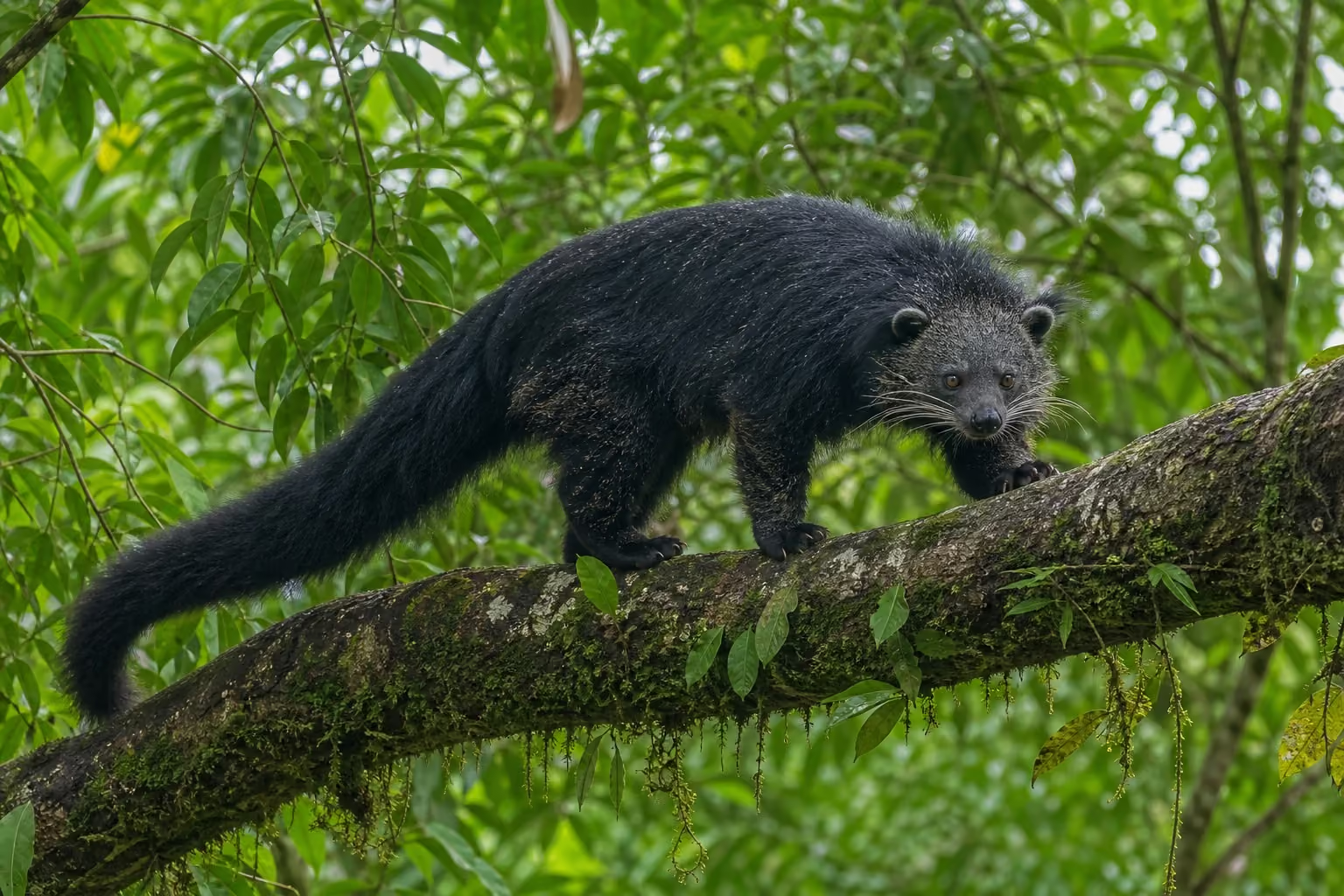
The binturong is one of the largest members of the civet family, a heavyset arboreal carnivore with a long, muscular prehensile tail that can grip branches like a fifth limb. It is famous for the buttered-popcorn scent it gives off, marking it as one of Southeast Asia's most distinctive forest mammals.
Range

Habitat range map
Native range Occasional / Transient
IndomalayanIndomalayanIndomalayanIndomalayanIndomalayanIndomalayanIndomalayanIndomalayanIndomalayanIndomalayanIndomalayanIndomalayanIndomalayanIndomalayanIndomalayan

Map: Ecoregions 2017 © RESOLVE (CC BY 4.0) · Natural Earth (PD)

Details

Habitat

It ranges from India, eastern Nepal and Bhutan across mainland Southeast Asia to Sumatra, Java, Borneo and Palawan. Favouring primary and secondary lowland forest from sea level up to about 3,000 m, it depends on fruit-rich woodland canopies.

Appearance

A stocky animal measuring roughly 60-96 cm and weighing 9-20 kg, it wears a coat of coarse black hair tipped with grey or reddish-brown, with small rounded ears edged in white. Its signature feature is the long, heavily muscled prehensile tail, nearly as long as the body and used like a grasping hand.

Behavior

Active by night, it rests by day in tree hollows, curling its tail around its body and tucking its head beneath it to sleep. Largely solitary and chiefly arboreal, it moves deliberately through the canopy using its tail, though it will descend to the ground and even enter water.

Feeding

An omnivore, it feeds mainly on fruit, especially figs, supplemented by insects, birds, small mammals and fish. By softening tough seed coats as it digests them, it disperses strangler-fig seeds and acts as a keystone species in forest regeneration.

Reproduction

Breeding year-round and showing delayed implantation, females carry young for 84-99 days. Litters number one to six, usually one to three and averaging two; cubs begin taking solid food at six to eight weeks and reach maturity at about two and a half years. Lifespan can approach 18 years.

Notes

Listed as Vulnerable on the IUCN Red List, the binturong is squeezed by habitat loss from logging and oil-palm conversion, along with hunting and the pet trade. Though sometimes taken for meat or folk medicine, its odd popcorn scent and dexterous tail make it a charismatic favourite.