049 Featured Specimen
American bison

Details

American bison

Bison bison

Size
2.1–3.5 m · 0.3–1 t
Diet
Herbivore
Activity
Diurnal
Sociality
Herd
Lifespan
15-20 years

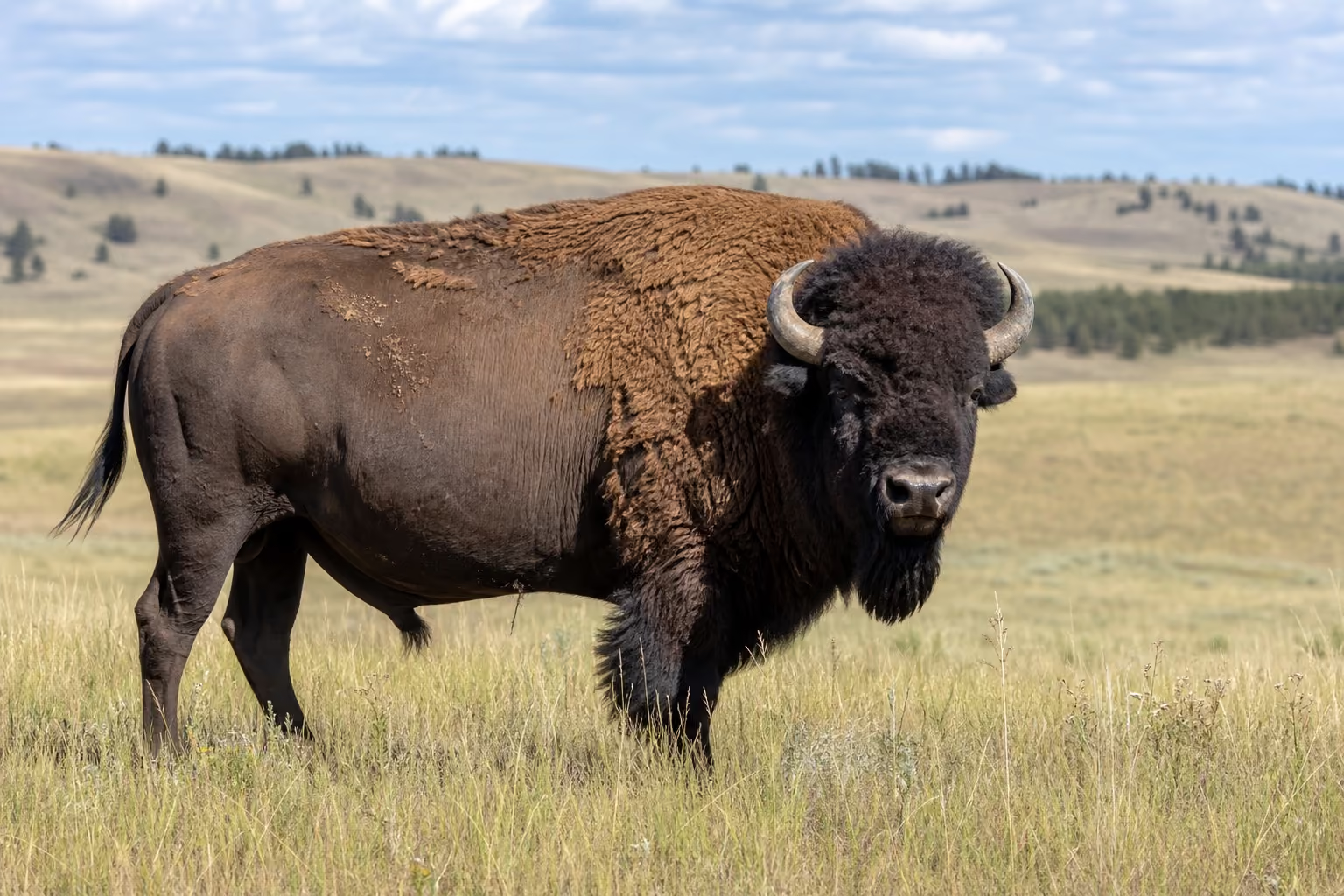
The largest land mammal in North America, the American bison is instantly known by its massive head, muscular shoulder hump, and shaggy dark-brown coat. Once numbering in the tens of millions across the Great Plains, it was driven to the edge of extinction by 19th-century hunting.
Range

Habitat range map
Native range Occasional / Transient

Map: Ecoregions 2017 © RESOLVE (CC BY 4.0) · Natural Earth (PD)

Details

Habitat

Bison favor prairies, plains, and river valleys, but also range through sagebrush, semiarid scrub, lightly wooded country, and mountains. Historically they roamed grasslands from Alaska to northern Mexico; today wild herds survive only in scattered protected areas of the United States and Canada.

Appearance

Body length runs 2.1 to 3.5 m and weight from about 300 kg to a full tonne, with bulls far larger than cows. A shaggy dark-brown winter coat gives way to a lighter brown one in summer. Both sexes carry curved horns up to 60 cm long, and the muscular hump rising from neck to back is the species' hallmark.

Behavior

Cows and their young form maternal herds, while bulls leave around age three to join bachelor groups or live alone, the two only mingling in the breeding season. Bison wallow in shallow dust or mud depressions for grooming and social cohesion, and despite their bulk can run at 60 to 70 km/h.

Feeding

A grazer of prairie grasses and sedges, the bison follows a daily rhythm of roughly two-hour bouts of feeding, resting, and chewing cud before moving on to graze again. It drinks water daily and will eat snow in winter.

Reproduction

Mating occurs in August and September, and after a gestation of about 285 days a cow bears a single reddish-brown calf the following spring. She nurses it for at least seven or eight months, and females reach sexual maturity at around three years. Lifespan is roughly 15 years in the wild and up to 25 in captivity.

Notes

Tens of millions once covered the plains, but commercial slaughter cut the population to barely 500 animals by the late 1800s. Conservation has since rebuilt numbers into the hundreds of thousands, yet low genetic diversity from that bottleneck and hybridization with domestic cattle remain concerns. Named the national mammal of the United States, the bison is central to the life and ceremony of Plains Indigenous peoples.