736 Featured Specimen
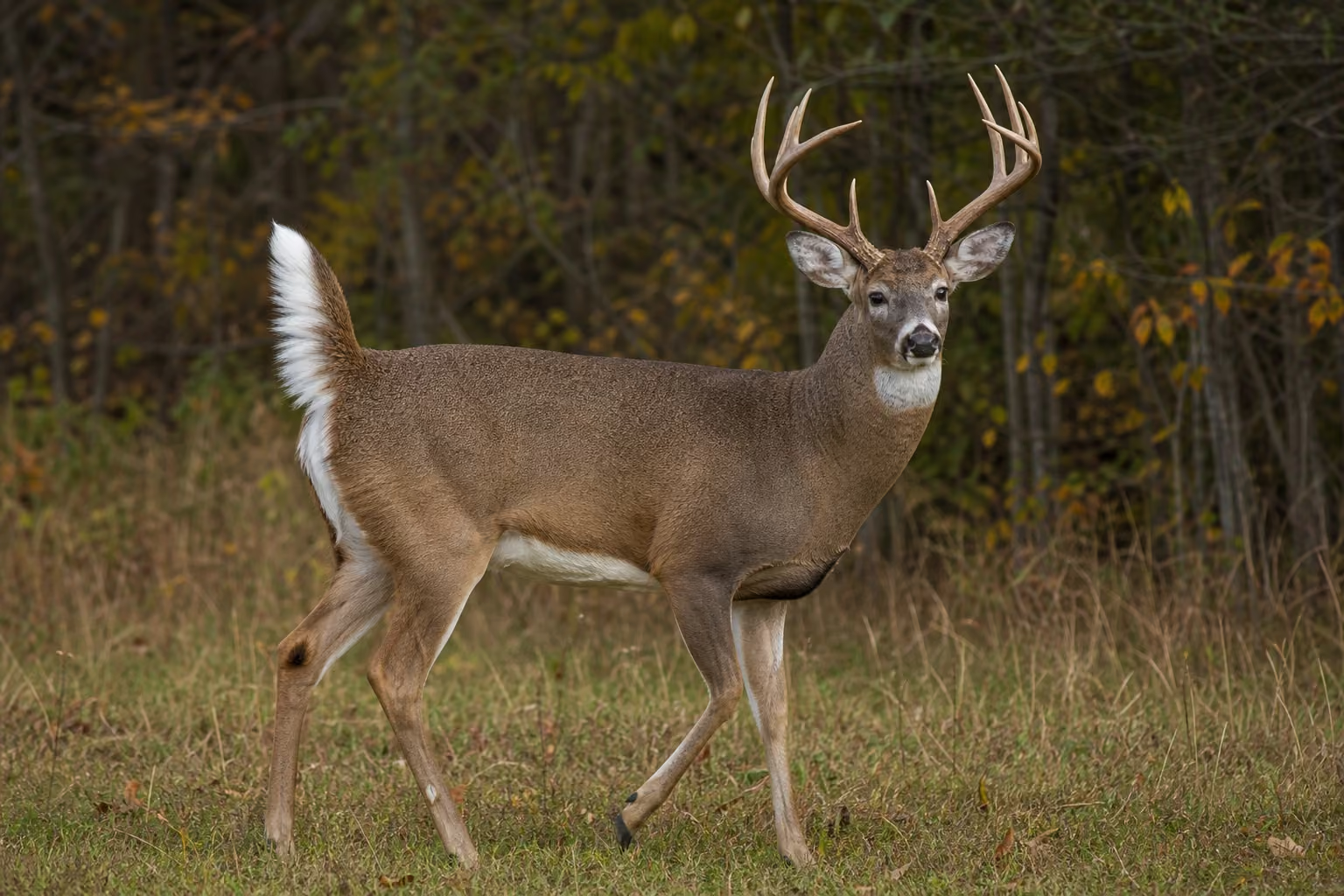
White-tailed deer

Details

White-tailed deer

Odocoileus virginianus

Size
1–2.2 m · 36–136 kg
Diet
Herbivore
Activity
Crepuscular
Sociality
Loose group
Lifespan

A widespread deer of North, Central, and parts of South America. It is named for the bright white underside of the tail flashed during alarm.
Range

Habitat range map
Native range Occasional / Transient
NearcticNearcticNearcticNearcticNearcticNearcticNearcticNearcticNearcticNearcticNearcticNearcticNearcticNearcticNearcticNearcticNearcticNearcticNearcticNearcticNearcticNearcticNearcticNearcticNearcticNearcticNearcticNearcticNearcticNearcticNearcticNearcticNearcticNearcticNearcticNearcticNearcticNearcticNearcticNearcticNearcticNeotropicalNeotropicalNeotropicalNeotropicalNeotropicalNeotropicalNeotropicalNeotropical

Map: Ecoregions 2017 © RESOLVE (CC BY 4.0) · Natural Earth (PD)

Details

Habitat

It uses forests, forest edges, grasslands, wetlands, farms, and suburban green spaces. Edges with cover near feeding areas are especially suitable.

Appearance

The coat is reddish brown in summer and gray brown in winter, with a white tail underside. Males grow branched antlers that are shed and renewed each year.

Behavior

Activity often peaks at dawn and dusk. When alarmed, it raises the tail, bounds away, and may form loose groups outside the breeding season.

Feeding

It browses leaves, twigs, forbs, acorns, fruits, and crops. Diet shifts strongly with season and local plant availability.

Reproduction

Mating occurs in autumn, followed by spotted fawns in spring or early summer. Young fawns hide while the mother returns periodically to nurse.

Notes

Globally it is secure, but high local densities can affect forest regeneration, vehicle collisions, and disease management.