Buff-tailed bumblebee

Details

Buff-tailed bumblebee

Bombus terrestris

Size
1.1–2.2 cm · 0.1–0.9 g
Diet
Nectarivore
Activity
Diurnal
Sociality
Colony
Lifespan
less than 1 year

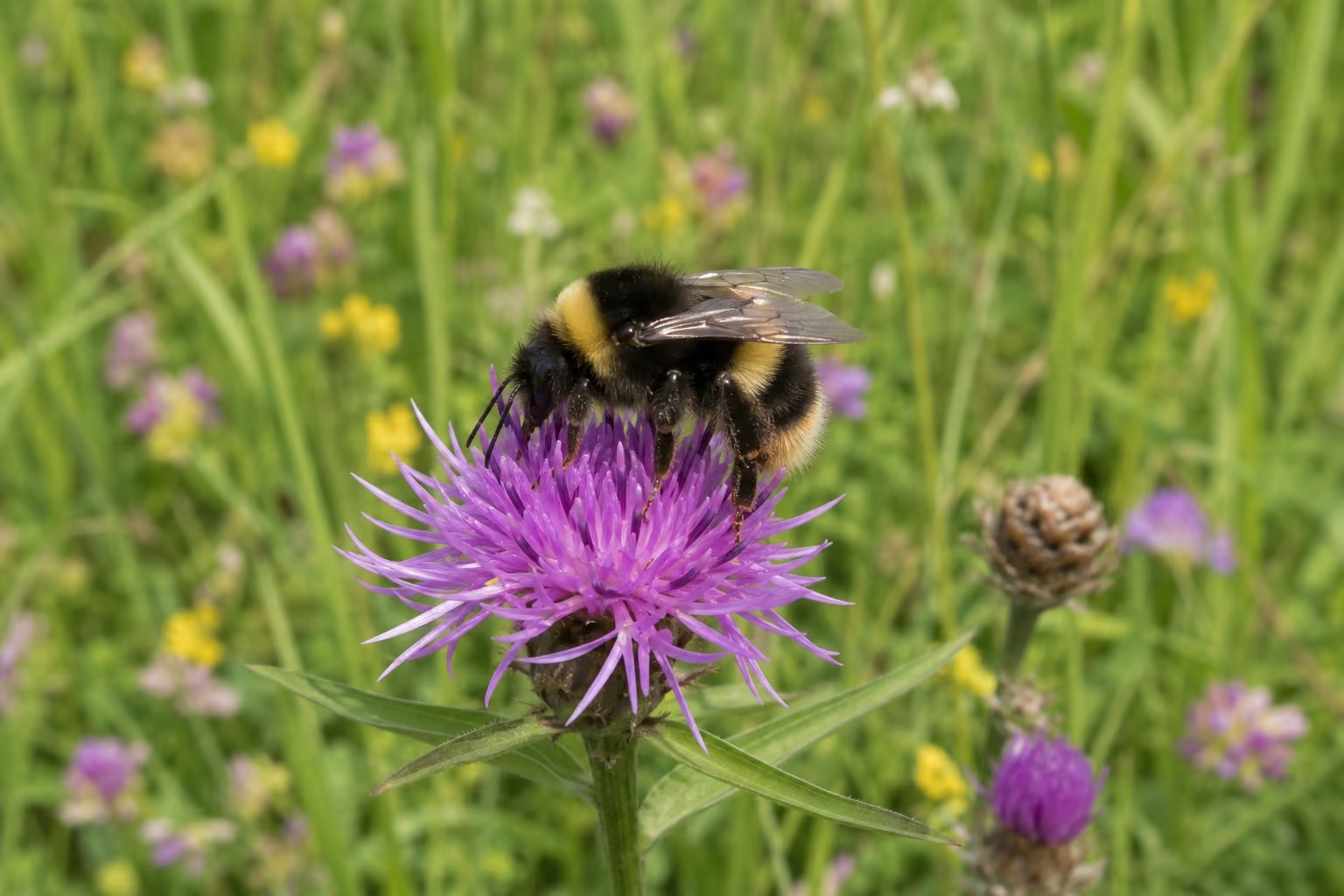
The buff-tailed bumblebee is a social bumblebee with a round hairy body and pale tail. It is an important pollinator of grassland, woodland edge, gardens, and crops.

View in catalog
Key facts

  • Buff-tailed bumblebee (Bombus terrestris) is a nectarivore animal classified as Invertebrate.
  • Primary habitats are grassland · forest · urban, with a range across Palearctic.
  • Activity is diurnal, sociality is colony, and conservation status is LC (Least Concern).
  • The buff-tailed bumblebee is a social bumblebee with a round hairy body and pale tail.
  • It occupies grassland, woodland, and urban greenspace in the Palearctic.
  • Typical lifespan: less than 1 year

Range

Habitat range map
Native rangeOccasional / Transient
PalearcticPalearcticPalearcticPalearcticPalearcticPalearcticPalearcticPalearcticPalearcticPalearcticPalearcticPalearcticPalearcticPalearcticPalearcticPalearcticPalearcticPalearcticPalearcticPalearcticPalearcticPalearcticPalearcticPalearctic

Map: Ecoregions 2017 © RESOLVE (CC BY 4.0) · Natural Earth (PD)

Details

Habitat

It occupies grassland, woodland, and urban greenspace in the Palearctic. Nests are often made in old burrows or grassy cavities.

Appearance

Length 1.1-2.2 cm; weight 0.1 g-0.85 g. The black body has yellow bands and a buff to whitish tail. Dense hair helps retain heat and carries pollen.

Behavior

Diurnal and colonial, it lives in nests with a queen and workers. Workers patrol flowers and can buzz-pollinate blossoms by vibration.

Feeding

A nectarivore, adults use nectar for energy and collect pollen to feed larvae. They visit many wildflowers and crops.

Reproduction

An overwintered queen founds a nest in spring, and workers build the colony through summer. New queens and males are produced late in the season, and mated queens overwinter.

Notes

It is listed as Least Concern, though local populations can still be affected by habitat change, collection, or pollution.