Praying mantis

Details

Praying mantis

Mantis religiosa

Size
5–8 cm · 1–5 g
Diet
Carnivore
Activity
Diurnal
Sociality
Solitary
Lifespan
Varies by species and environment

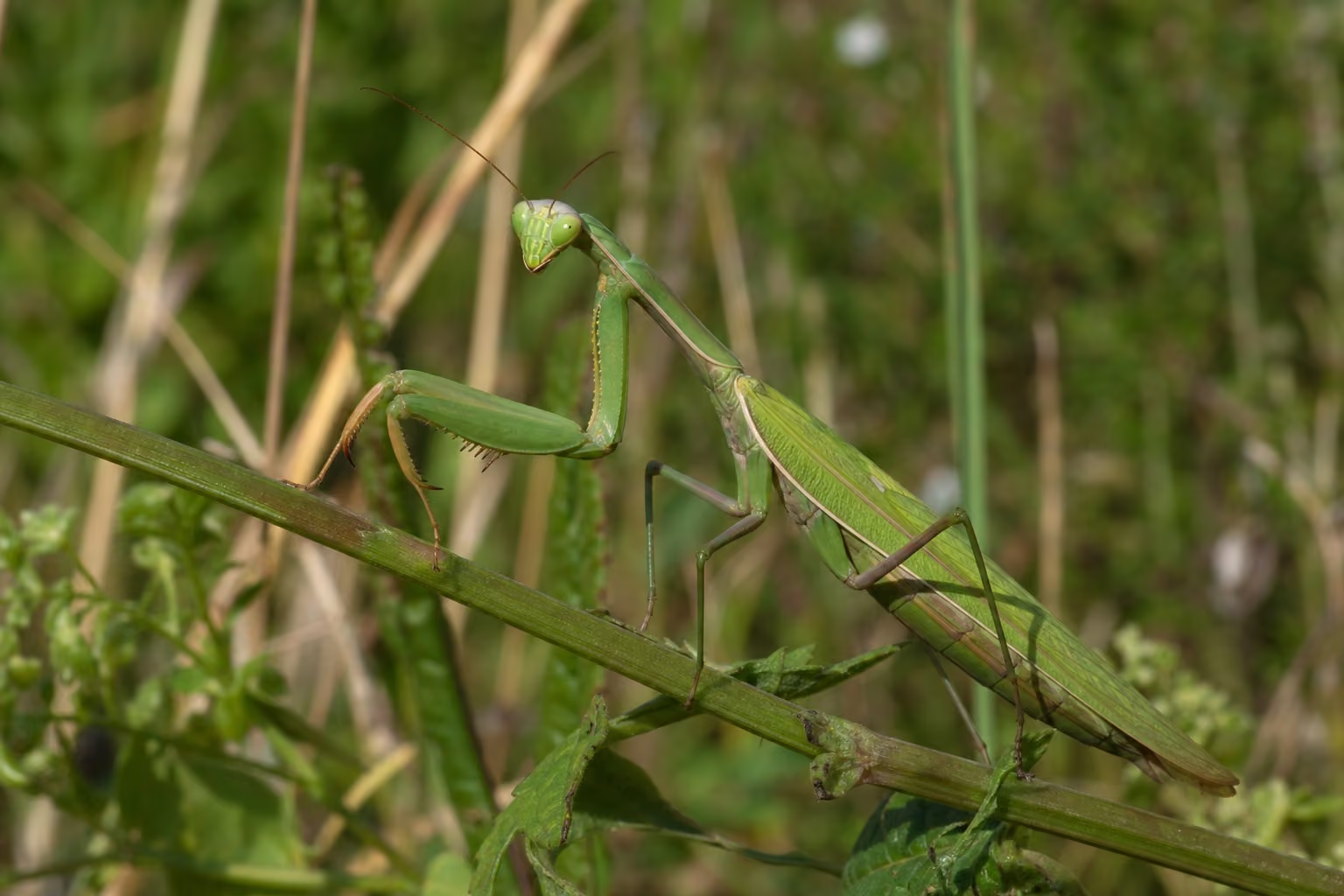
The praying mantis is an ambush predator named for the folded, prayer-like posture of its raptorial forelegs. It waits motionless among plants, then strikes rapidly at passing prey.

View in catalog
Key facts

  • Praying mantis (Mantis religiosa) is a carnivore animal classified as Invertebrate · Mantodea · Mantidae.
  • Primary habitats are grassland · forest · urban, with a range across Palearctic · Nearctic.
  • Activity is diurnal, sociality is solitary, and conservation status is LC (Least Concern).
  • The praying mantis is an ambush predator named for the folded, prayer-like posture of its raptorial forelegs.
  • It uses open vegetation such as grasslands, field edges, gardens, parks, and woodland margins across much of the Palearctic and introduced parts of the Nearctic.
  • Typical lifespan: Varies by species and environment

Range

Habitat range map
Native rangeOccasional / Transient
PalearcticPalearcticPalearcticPalearcticPalearcticPalearcticPalearcticPalearcticPalearcticPalearcticPalearcticPalearcticPalearcticPalearcticPalearcticPalearcticPalearcticPalearcticPalearcticPalearcticPalearcticPalearcticPalearcticPalearcticNearcticNearcticNearcticNearcticNearcticNearcticNearcticNearcticNearcticNearcticNearcticNearcticNearcticNearcticNearcticNearcticNearcticNearcticNearcticNearcticNearcticNearcticNearcticNearcticNearcticNearcticNearcticNearcticNearcticNearcticNearcticNearcticNearcticNearcticNearcticNearcticNearcticNearcticNearcticNearcticNearctic

Map: Ecoregions 2017 © RESOLVE (CC BY 4.0) · Natural Earth (PD)

Details

Habitat

It uses open vegetation such as grasslands, field edges, gardens, parks, and woodland margins across much of the Palearctic and introduced parts of the Nearctic. Sunny stems and shrubs provide hunting perches.

Appearance

Adults are about 5-8 cm long and weigh roughly 1-5 g. The body is slender with a triangular, mobile head, and the forelegs are spined grasping limbs. Colour varies from green to brown, blending with living or dry vegetation.

Behavior

Diurnal and solitary, it perches on plants while scanning for movement. When prey comes close, the forelegs snap forward in a rapid grab. If threatened, it may raise the forelegs and spread the wings to look larger.

Feeding

Carnivorous, it takes flies, grasshoppers, butterflies, beetles, and many other insects. Prey is held in the spined forelegs and often eaten head-first while still gripped.

Reproduction

After mating, the female lays eggs inside a foamy ootheca attached to stems or twigs. The case hardens to protect the eggs, and nymphs hatch looking like small wingless adults. They grow through repeated moults.

Notes

Often welcomed in gardens for eating insects, it is a generalist predator rather than a specialist pest controller. Its alert posture and swivelling head make it one of the most familiar mantises.