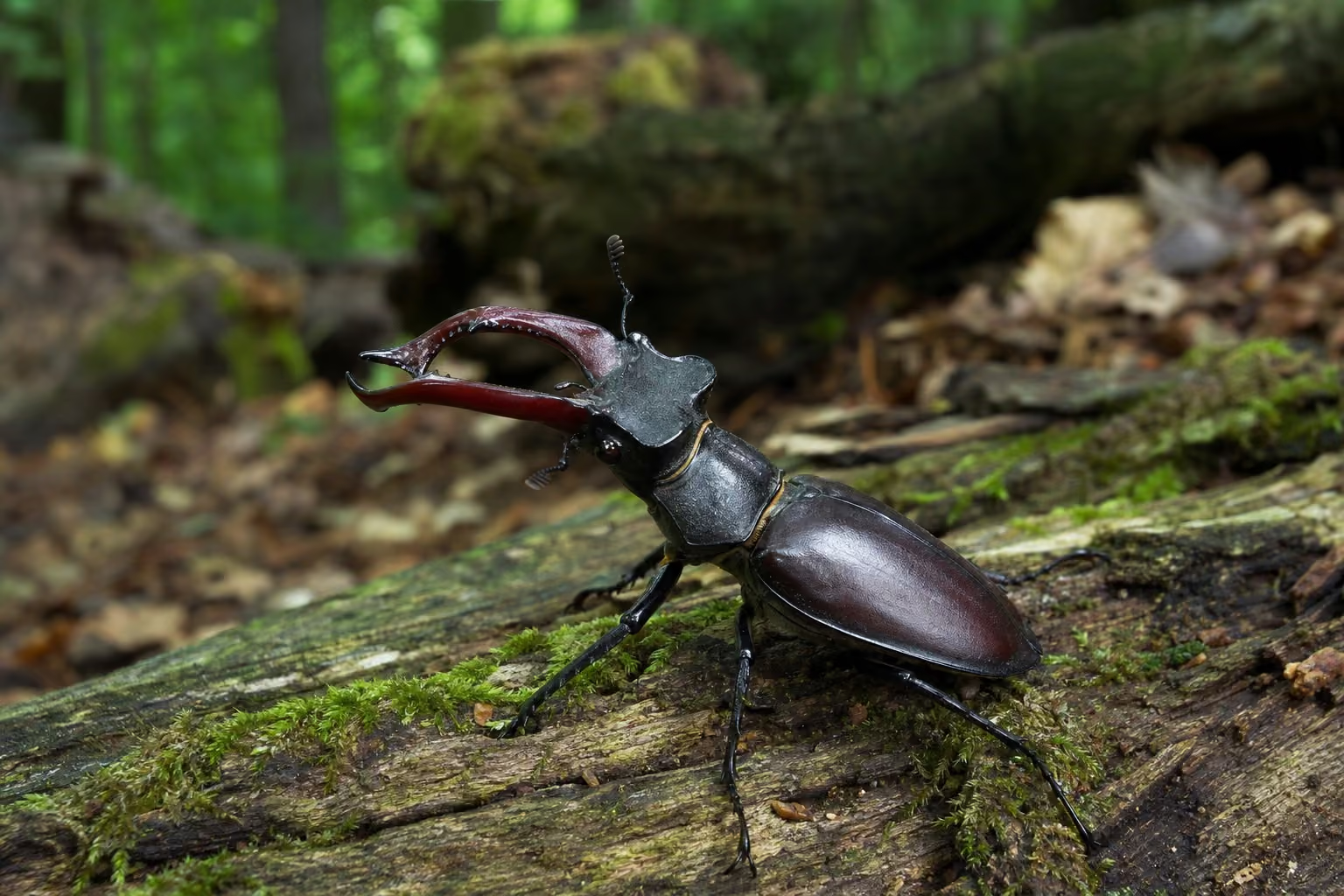
Stag beetle

Details

Stag beetle

Lucanus cervus

Size
3–8 cm · 1–6 g
Diet
Herbivore
Activity
Diurnal
Sociality
Solitary
Lifespan
1-5 years

The stag beetle is a large beetle of Palearctic forests. It is a solitary diurnal insect using plant-based resources such as tree sap.

View in catalog
Key facts

  • Stag beetle (Lucanus cervus) is a herbivore animal classified as Invertebrate · Coleoptera · Lucanidae.
  • Primary habitats are forest, with a range across Palearctic.
  • Activity is diurnal, sociality is solitary, and conservation status is LC (Least Concern).
  • The stag beetle is a large beetle of Palearctic forests.
  • It depends on deciduous woods and forests with old trees.
  • Typical lifespan: 1-5 years

Range

Habitat range map
Native rangeOccasional / Transient
PalearcticPalearcticPalearcticPalearcticPalearcticPalearcticPalearcticPalearcticPalearcticPalearcticPalearcticPalearcticPalearcticPalearcticPalearcticPalearcticPalearcticPalearcticPalearcticPalearcticPalearcticPalearcticPalearcticPalearctic

Map: Ecoregions 2017 © RESOLVE (CC BY 4.0) · Natural Earth (PD)

Details

Habitat

It depends on deciduous woods and forests with old trees. Larvae need decaying wood, while adults gather at sap flows.

Appearance

Body length is about 3-8 cm and weight about 1-6 g. Males have enlarged mandibles; females and smaller males have shorter jaws.

Behavior

It is solitary and treated here as diurnal. Males may wrestle with their jaws over sap sites or access to females.

Feeding

It is herbivorous. Adults lap tree sap and fruit juices, while larvae eat rotting wood and contribute to decomposition.

Reproduction

Females lay eggs in decaying wood. Larvae grow inside the wood, then pupate and emerge as adults.

Notes

Its conservation status is LC. Retaining old trees and dead wood helps support its full life cycle.