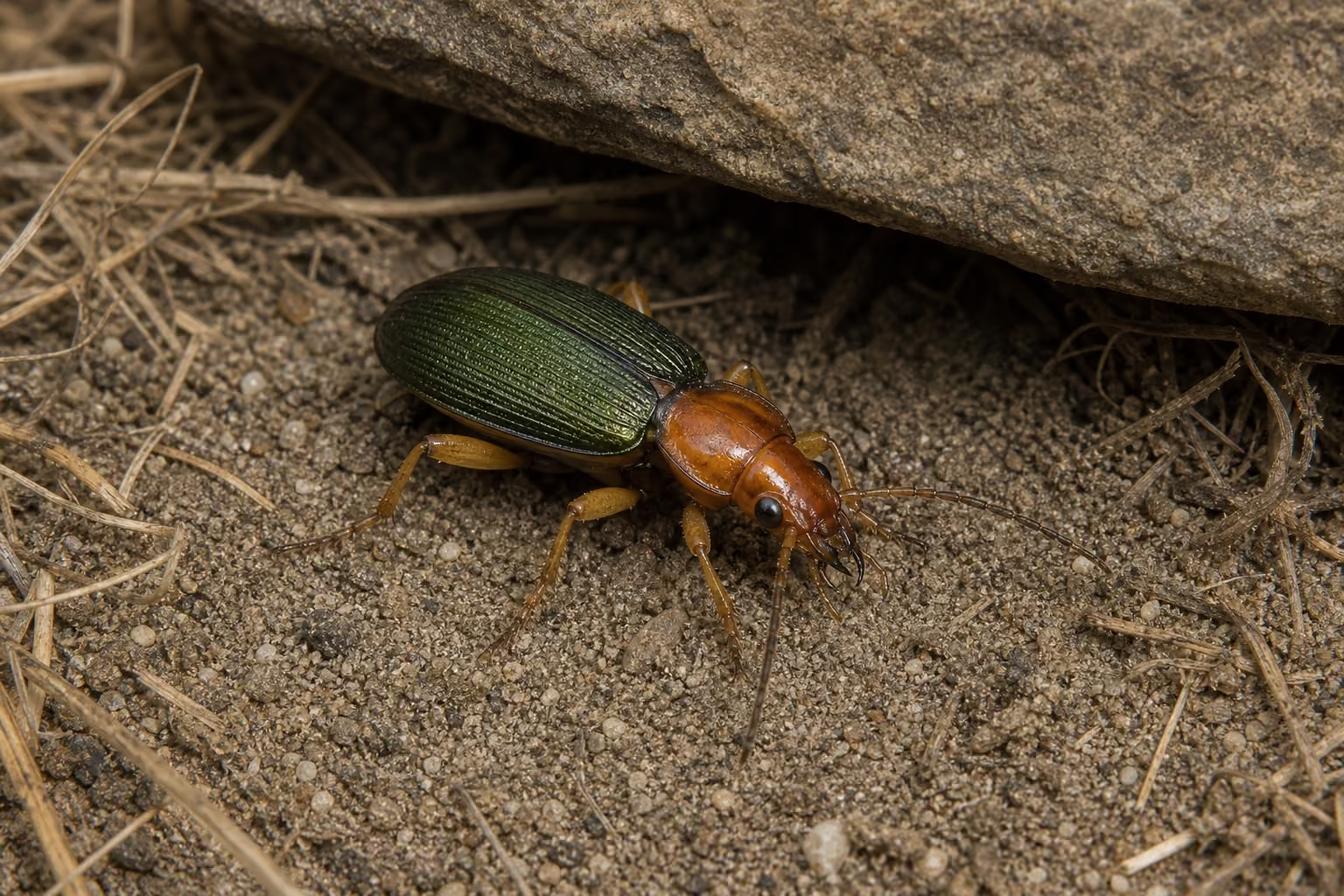
Bombardier beetle

Details

Bombardier beetle

Brachinus crepitans

Size
0.7–1 cm
Diet
Carnivore
Activity
Nocturnal
Sociality
Loose group
Lifespan

The bombardier beetle is a ground beetle famous for firing a hot chemical spray from the abdomen when attacked. Its small body carries one of the classic insect defenses.

View in catalog
Key facts

  • Bombardier beetle (Brachinus crepitans) is a carnivore animal classified as Invertebrate · Coleoptera · Carabidae.
  • Primary habitats are grassland · desert, with a range across Palearctic · Afrotropical.
  • Activity is nocturnal, sociality is loose group, and conservation status is LC (Least Concern).
  • The bombardier beetle is a ground beetle famous for firing a hot chemical spray from the abdomen when attacked.
  • It occurs in Europe, North Africa and western to central Asia in dry grassland, fields, chalky slopes and under stones.

Range

Habitat range map
Native rangeOccasional / Transient
PalearcticPalearcticPalearcticPalearcticPalearcticPalearcticPalearcticPalearcticPalearcticPalearcticPalearcticPalearcticPalearcticPalearcticPalearcticPalearcticPalearcticPalearcticPalearcticPalearcticPalearcticPalearcticPalearcticPalearcticAfrotropicalAfrotropicalAfrotropicalAfrotropical

Map: Ecoregions 2017 © RESOLVE (CC BY 4.0) · Natural Earth (PD)

Details

Habitat

It occurs in Europe, North Africa and western to central Asia in dry grassland, fields, chalky slopes and under stones. Sunny open places are typical.

Appearance

Adults are about 7-10 mm long. The head and thorax are reddish brown, the wing covers are dark greenish, and the legs are slender.

Behavior

Mostly active on the ground at night, it hides under stones and debris by day. When threatened, it points the abdomen and releases a hot, irritating spray.

Feeding

Small insects and other arthropods are eaten. Larvae are thought to use pupae of other beetles and similar prey.

Reproduction

Adults are conspicuous in early summer, and eggs are laid near the ground. Larvae develop in soil or sheltered microhabitats.

Notes

The spray is produced by mixing chemicals such as hydrogen peroxide and hydroquinones in a reaction chamber. It is a compact example of complex chemical defense.