Sea wasp

Details

Sea wasp

Chironex fleckeri

Size
15–30 cm · 0.5–2 kg
Diet
Carnivore
Activity
Diurnal
Sociality
Solitary
Lifespan
1-5 years

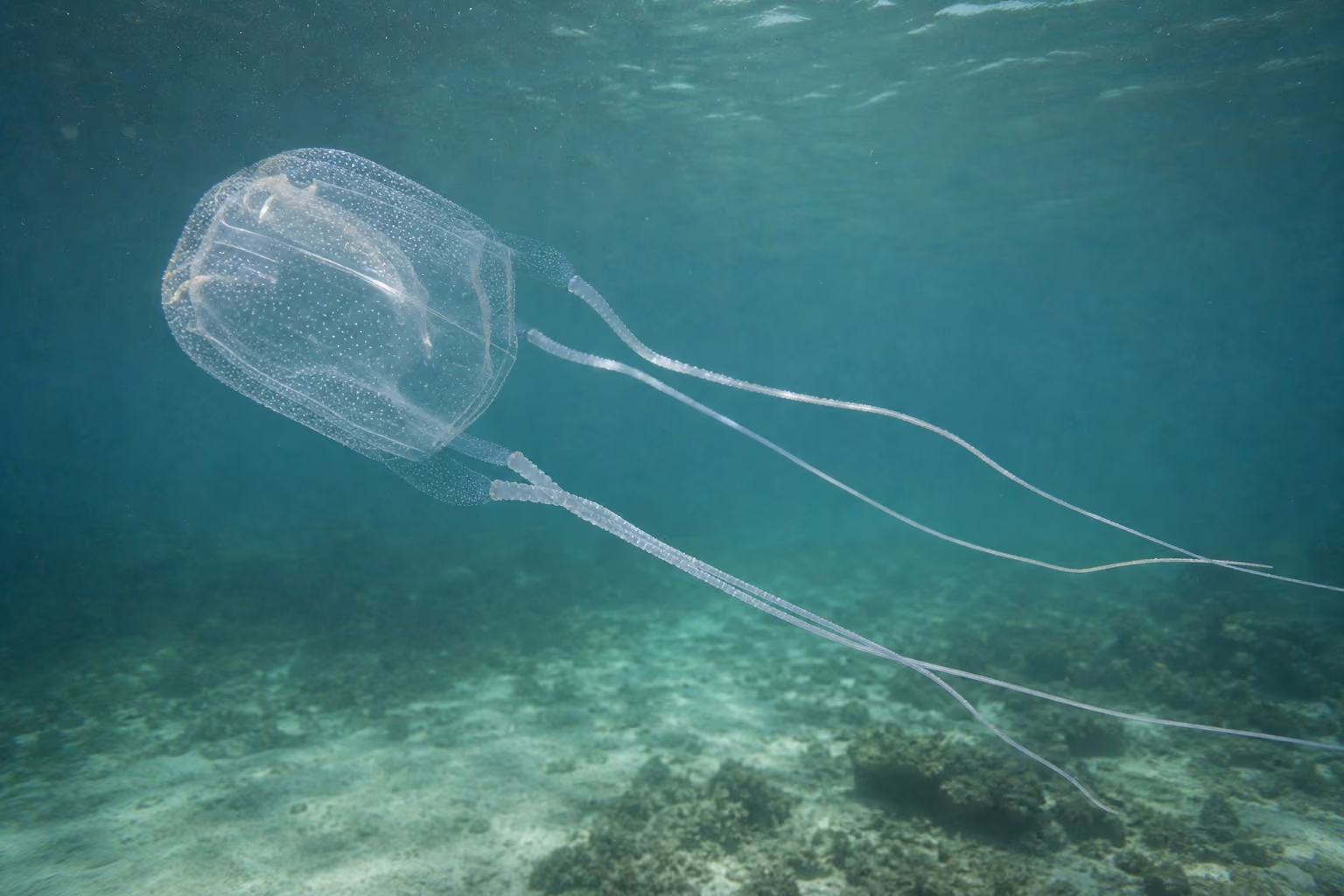
The sea wasp is a box jellyfish of Australasian, Indian, and Pacific coastal waters. It is a solitary carnivore and an active swimmer.

View in catalog
Key facts

  • Sea wasp (Chironex fleckeri) is a carnivore animal classified as Invertebrate · Chirodropida · Chirodropidae.
  • Primary habitats are coast · open ocean, with a range across Australasian · Indian Ocean · Pacific Ocean.
  • Activity is diurnal, sociality is solitary, and conservation status is LC (Least Concern).
  • The sea wasp is a box jellyfish of Australasian, Indian, and Pacific coastal waters.
  • It appears in tropical coasts and shallow seas, sometimes near estuaries and sandy beaches.
  • Typical lifespan: 1-5 years

Range

Habitat range map
Native rangeOccasional / Transient
Pacific OceanPacific OceanPacific OceanIndian OceanAustralasianAustralasianAustralasianAustralasianAustralasianAustralasianAustralasianAustralasianAustralasianAustralasianAustralasianAustralasianAustralasianAustralasianAustralasianAustralasianAustralasian

Map: Ecoregions 2017 © RESOLVE (CC BY 4.0) · Natural Earth (PD)

Details

Habitat

It appears in tropical coasts and shallow seas, sometimes near estuaries and sandy beaches. Occurrence varies by season and locality.

Appearance

Bell size is about 15-30 cm, and weight about 0.5-2 kg. A transparent box-shaped bell carries long tentacles lined with stinging cells.

Behavior

It is solitary and treated here as diurnal. Unlike many drifting jellyfish, it swims actively and responds to obstacles and prey.

Feeding

It is carnivorous, catching small fish and shrimp with its tentacles. Venomous stinging cells quickly immobilize prey.

Reproduction

Its life cycle includes a swimming medusa and a bottom-attached polyp stage. Polyps produce young jellyfish that enter the water column.

Notes

Its conservation status is LC. Stings can be dangerous, so local warnings and swimming closures should be followed in its range.