Chocolate chip sea star

Details

Chocolate chip sea star

Protoreaster nodosus

Size
15–30 cm · 200–800 g
Diet
Omnivore
Activity
Cathemeral
Sociality
Solitary
Lifespan
5–17 years

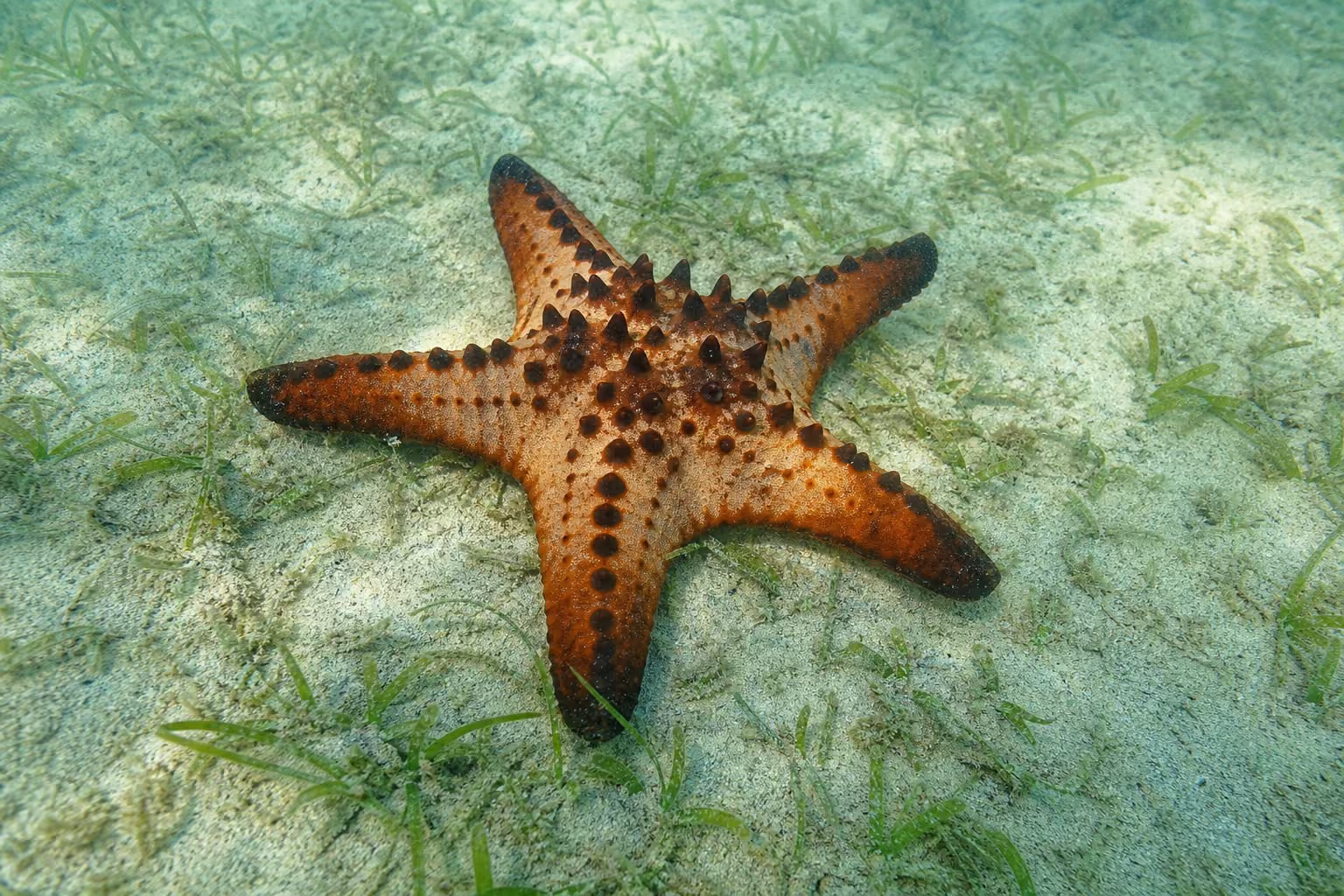
The chocolate chip sea star is a stout sea star marked with dark cone-shaped knobs. It creeps across shallow bottoms and feeds on organic matter and small animals.

View in catalog
Key facts

  • Chocolate chip sea star (Protoreaster nodosus) is an omnivore animal classified as Invertebrate · Valvatida · Oreasteridae.
  • Primary habitats are coast · coral reef · open ocean, with a range across Indian Ocean · Pacific Ocean.
  • Activity is cathemeral, sociality is solitary, and conservation status is LC (Least Concern).
  • The chocolate chip sea star is a stout sea star marked with dark cone-shaped knobs.
  • It lives on Indian and Pacific coasts, reefs, and shallow sandy or muddy bottoms.
  • Typical lifespan: 5–17 years

Range

Habitat range map
Native rangeOccasional / Transient
Pacific OceanPacific OceanPacific OceanIndian Ocean

Map: Ecoregions 2017 © RESOLVE (CC BY 4.0) · Natural Earth (PD)

Details

Habitat

It lives on Indian and Pacific coasts, reefs, and shallow sandy or muddy bottoms. Seagrass edges and coral flats are common foraging areas.

Appearance

Diameter 15-30 cm; weight 200-800 g. The thick five-rayed body carries dark conical bumps that contrast with a pale tan background. Many tube feet line the underside.

Behavior

Cathemeral and solitary, it moves slowly over the bottom. Tube feet pull it forward while chemical cues guide it toward food.

Feeding

An omnivore, it eats algae fragments, detritus, small invertebrates, and carrion. Like other sea stars, it can evert the stomach over food.

Reproduction

Adults release eggs and sperm into the water during spawning. Larvae drift before later settling onto the seafloor.

Notes

It is listed as Least Concern. It is collected for aquaria, so shallow local populations can be affected by heavy take or habitat change.