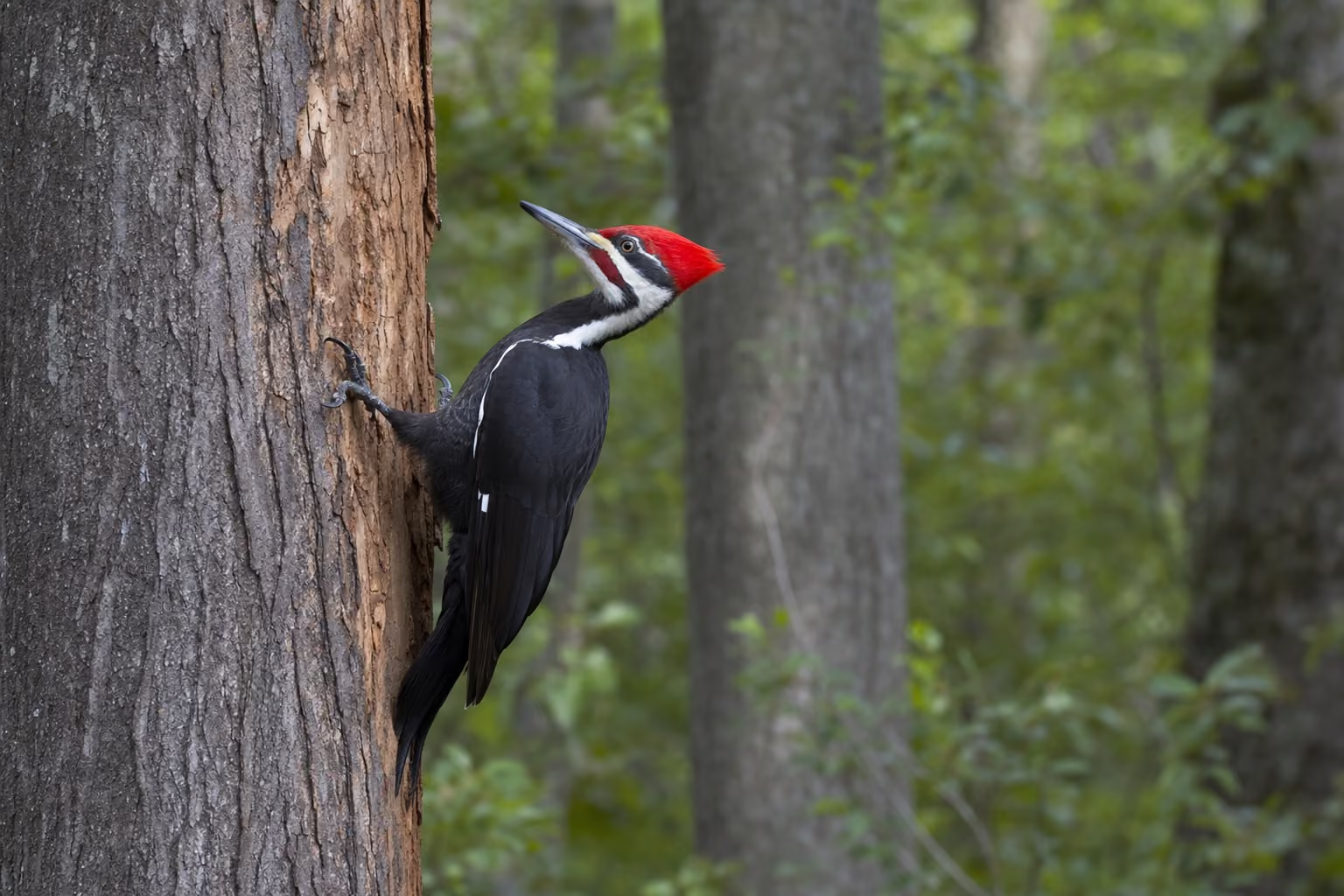
Pileated woodpecker

Details

Pileated woodpecker

Dryocopus pileatus

Size
Wingspan 66–75 cm · 250–400 g
Diet
Omnivore
Activity
Diurnal
Sociality
Pair
Lifespan
8-25 years

The pileated woodpecker is a large woodpecker of mature North American forests. Diurnal pairs work through big trees and dead wood.

View in catalog
Key facts

  • Pileated woodpecker (Dryocopus pileatus) is an omnivore animal classified as Bird · Piciformes · Picidae.
  • Primary habitats are forest, with a range across Nearctic.
  • Activity is diurnal, sociality is pair, and conservation status is LC (Least Concern).
  • The pileated woodpecker is a large woodpecker of mature North American forests.
  • It uses mature forest, riparian woods, and wooded parks with large trees.
  • Typical lifespan: 8-25 years

Range

Habitat range map
Native rangeOccasional / Transient
NearcticNearcticNearcticNearcticNearcticNearcticNearcticNearcticNearcticNearcticNearcticNearcticNearcticNearcticNearcticNearcticNearcticNearcticNearcticNearcticNearcticNearcticNearcticNearcticNearcticNearcticNearcticNearcticNearcticNearcticNearcticNearcticNearcticNearcticNearcticNearcticNearcticNearcticNearcticNearcticNearctic

Map: Ecoregions 2017 © RESOLVE (CC BY 4.0) · Natural Earth (PD)

Details

Habitat

It uses mature forest, riparian woods, and wooded parks with large trees. Snags and fallen timber are important for feeding and nesting.

Appearance

Wingspan is about 66-75 cm and weight about 250-400 g. A black body, white facial stripes, bright red crest, and chisel-like bill are distinctive.

Behavior

Active by day, pairs move through their territory and excavate large rectangular holes. Loud drumming and calls advertise their presence.

Feeding

It is omnivorous, eating carpenter ants, beetle larvae, fruit, and nuts. Deep excavation in dead wood exposes hidden prey.

Reproduction

Pairs excavate nest cavities in living or dead trees. Old cavities later provide shelter for many other birds and mammals.

Notes

Its status is listed as Least Concern. Forests with large trees and dead wood support both feeding and nesting needs.