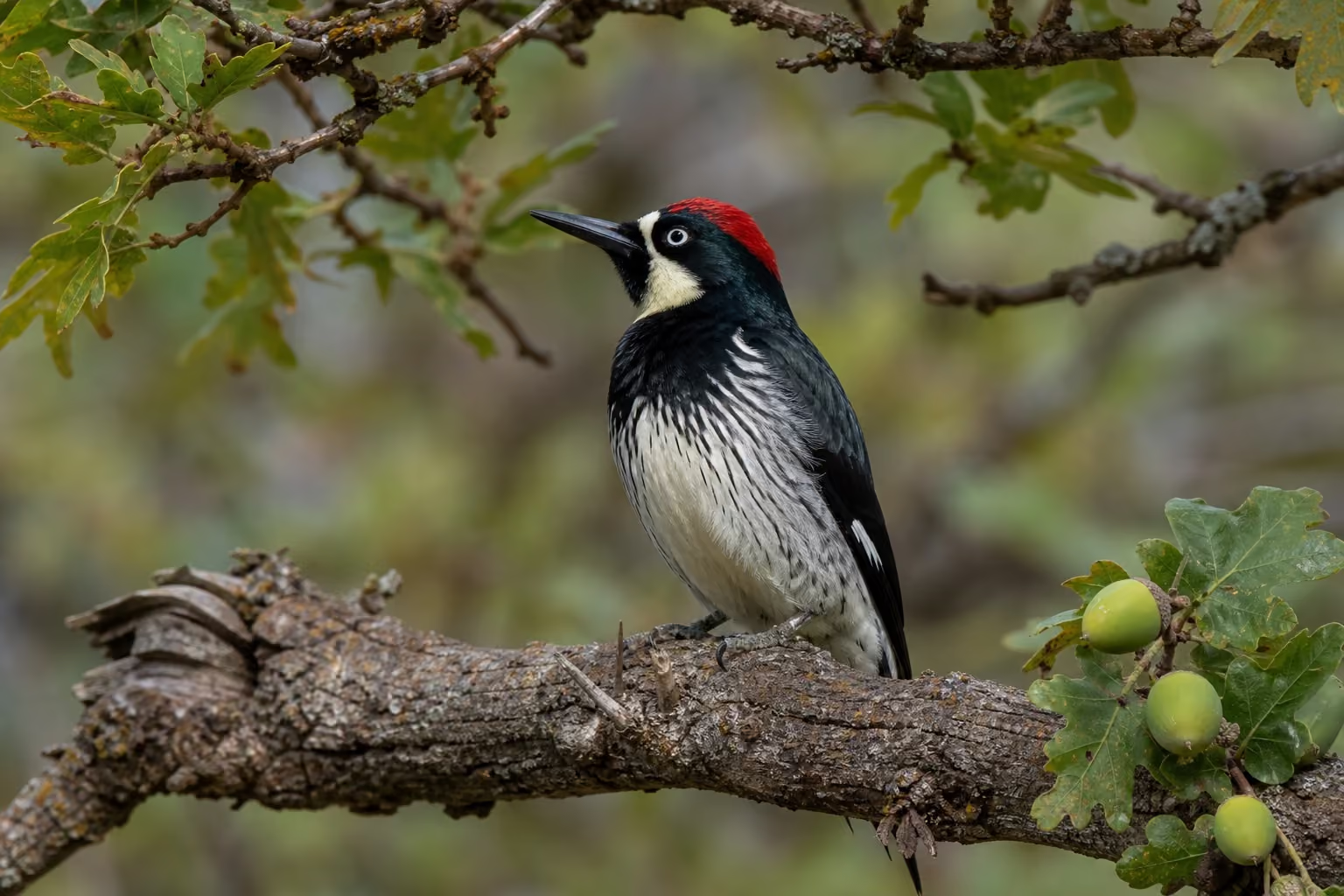
Acorn woodpecker

Details

Acorn woodpecker

Melanerpes formicivorus

Size
19–23 cm · 65–90 g
Diet
Omnivore
Activity
Diurnal
Sociality
Social
Lifespan
10–16 years

The acorn woodpecker is a highly social woodpecker of oak woodlands from North America into Central America. It drills storage holes and caches acorns one by one.

View in catalog
Key facts

  • Acorn woodpecker (Melanerpes formicivorus) is an omnivore animal classified as Bird · Piciformes · Picidae.
  • Primary habitats are forest · mountains, with a range across Nearctic · Neotropical.
  • Activity is diurnal, sociality is social, and conservation status is LC (Least Concern).
  • The acorn woodpecker is a highly social woodpecker of oak woodlands from North America into Central America.
  • It uses oak woodland, pine-oak forest, and open montane woods.
  • Typical lifespan: 10–16 years

Range

Habitat range map
Native rangeOccasional / Transient
NearcticNearcticNearcticNearcticNearcticNearcticNearcticNearcticNearcticNearcticNearcticNearcticNearcticNearcticNearcticNearcticNearcticNearcticNearcticNearcticNearcticNearcticNearcticNearcticNearcticNearcticNearcticNearcticNearcticNearcticNearcticNearcticNearcticNearcticNearcticNearcticNearcticNearcticNearcticNearcticNearcticNeotropicalNeotropicalNeotropicalNeotropicalNeotropicalNeotropicalNeotropicalNeotropical

Map: Ecoregions 2017 © RESOLVE (CC BY 4.0) · Natural Earth (PD)

Details

Habitat

It uses oak woodland, pine-oak forest, and open montane woods. Groups center on granary trees, snags, poles, or wooden structures used for storage.

Appearance

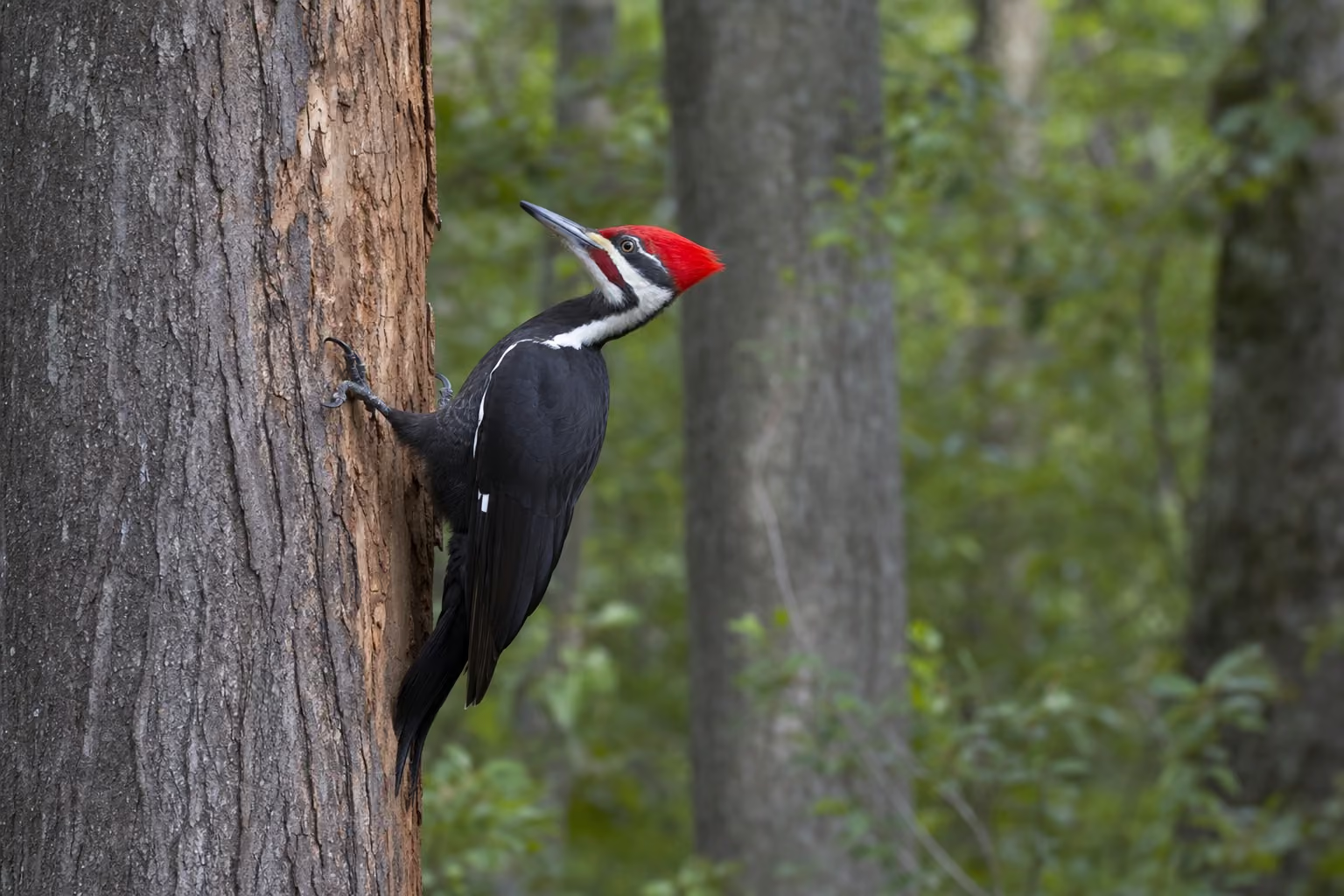
Length is 19-23 cm and weight 65-90 g. The body is black and white, the face is white, the crown red, and the stout bill is built for drilling.

Behavior

Diurnal and social, family groups defend territories and granaries. Members share duties such as watching, drilling, and feeding young.

Feeding

An omnivore, it eats acorns, insects, sap, and fruit. Acorns collected in autumn are fitted into small holes and eaten later.

Reproduction

Several adults in a group may participate in breeding. Young are raised in a shared cavity, and non-breeding helpers often feed them.

Notes

It is listed as Least Concern. The species depends strongly on oak crops and suitable storage trees, so removal of snags can reduce habitat.