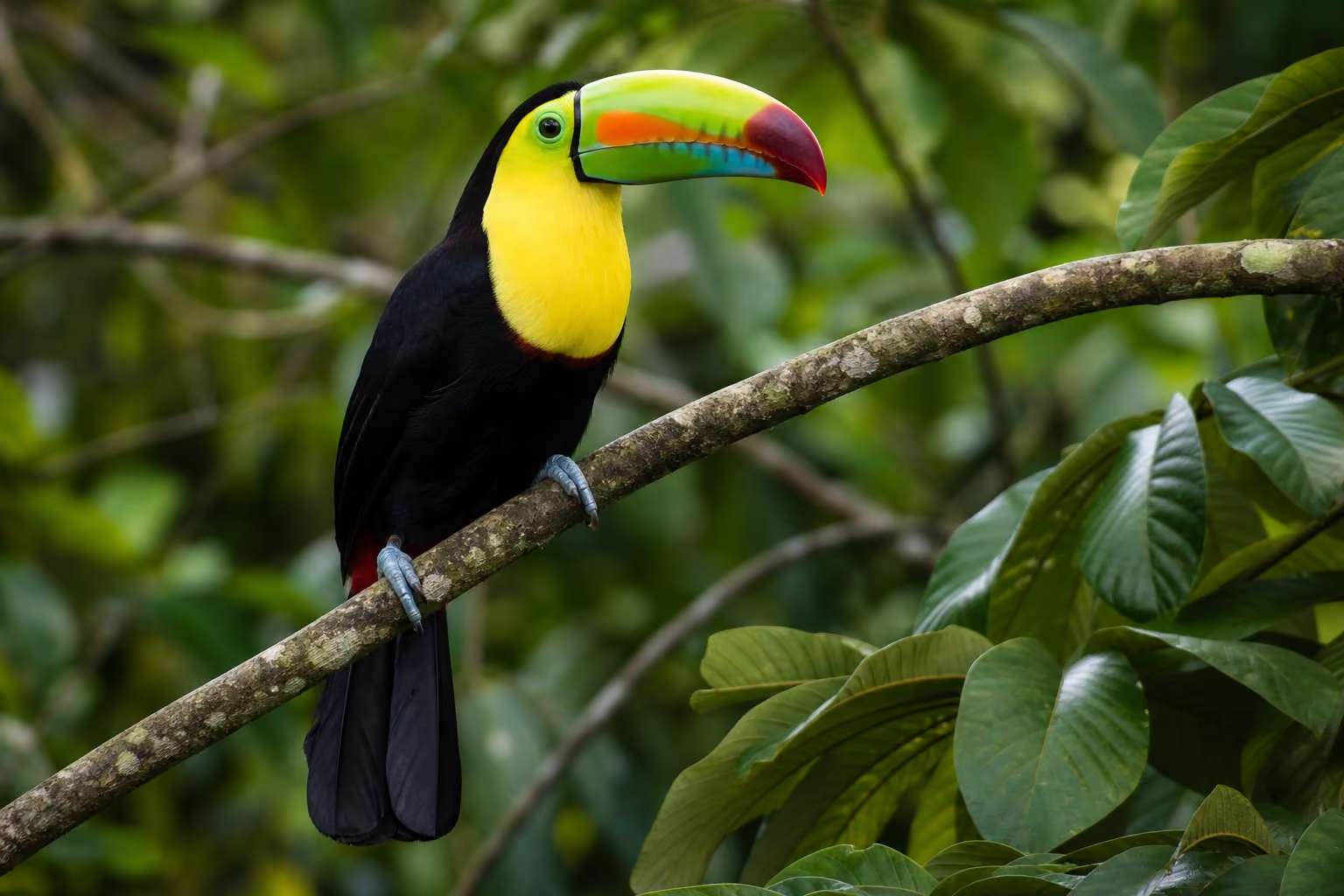
Keel-billed toucan

Details

Keel-billed toucan

Ramphastos sulfuratus

Size
Wingspan 1.1–1.5 m · 380–500 g
Diet
Omnivore
Activity
Diurnal
Sociality
Loose group
Lifespan
8-25 years

The keel-billed toucan is a brightly colored forest bird from Central America to northern South America. Diurnal loose groups move through the canopy.

View in catalog
Key facts

  • Keel-billed toucan (Ramphastos sulfuratus) is an omnivore animal classified as Bird · Piciformes · Ramphastidae.
  • Primary habitats are forest, with a range across Neotropical.
  • Activity is diurnal, sociality is loose group, and conservation status is LC (Least Concern).
  • The keel-billed toucan is a brightly colored forest bird from Central America to northern South America.
  • It uses tropical forest, edges, and secondary woodland with fruiting trees.
  • Typical lifespan: 8-25 years

Range

Habitat range map
Native rangeOccasional / Transient
NeotropicalNeotropicalNeotropicalNeotropicalNeotropicalNeotropicalNeotropicalNeotropical

Map: Ecoregions 2017 © RESOLVE (CC BY 4.0) · Natural Earth (PD)

Details

Habitat

It uses tropical forest, edges, and secondary woodland with fruiting trees. Large tree cavities are important for roosting and nesting.

Appearance

Wingspan is about 109-152 cm and weight about 380-500 g. The huge multicolored bill, black body, and yellow chest are unmistakable.

Behavior

Active by day, it makes short flights between branches and calls to companions. The long bill helps pluck fruit beyond the feet.

Feeding

It is omnivorous, eating mostly fruit along with insects, small animals, and eggs. Swallowed fruit can make it a seed disperser.

Reproduction

Pairs nest in tree cavities and feed chicks inside the narrow chamber. Food brought to the nest includes fruit and small animal items.

Notes

Its status is listed as Least Concern. It depends on fruiting forest but can use edges and some secondary growth.