Oilbird

Details

Oilbird

Steatornis caripensis

Size
Wingspan 1–1.1 m · 350–475 g
Diet
Herbivore
Activity
Nocturnal
Sociality
Colony
Lifespan
8-25 years

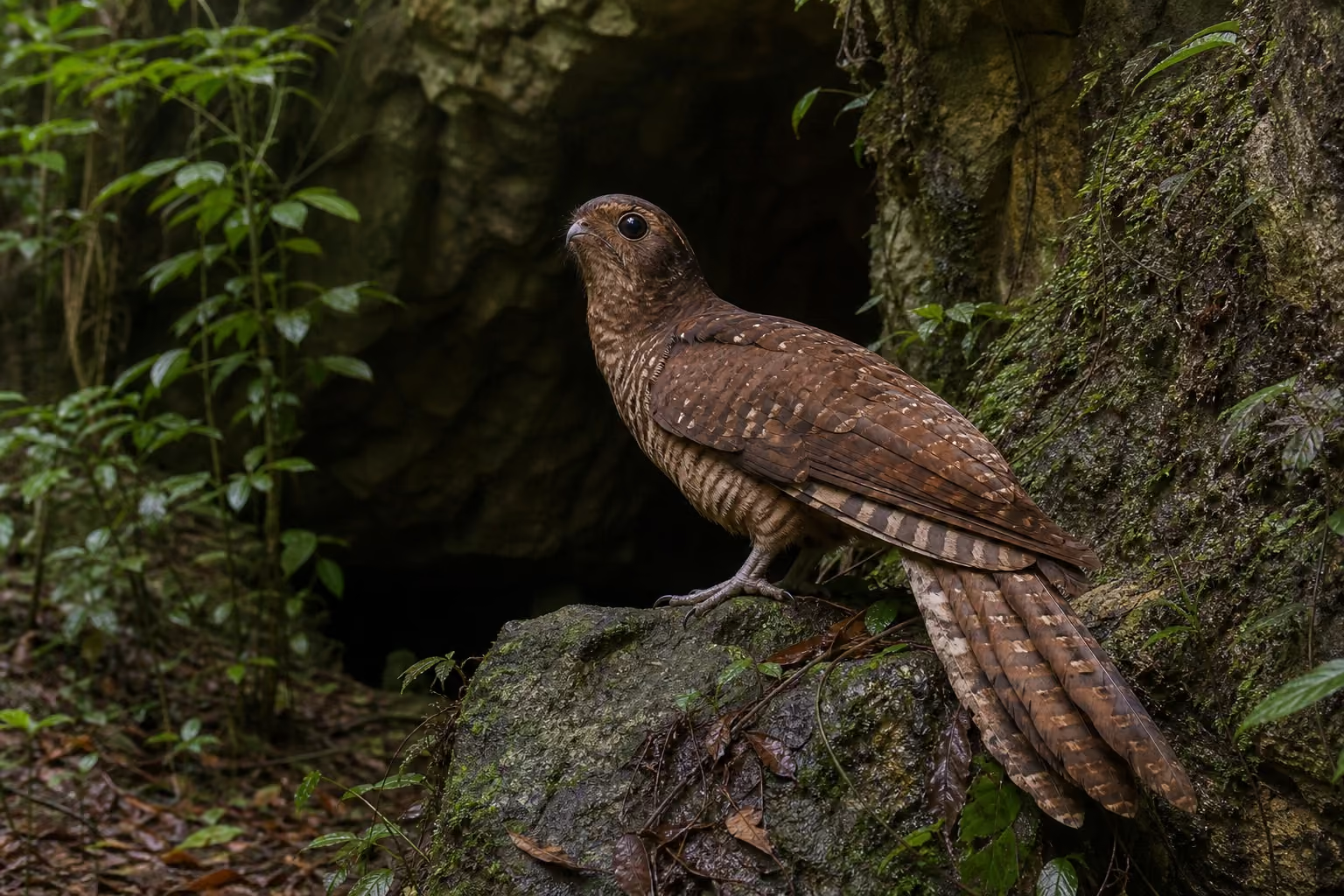
The oilbird is a nocturnal fruit-eating bird of northern South America. It roosts and breeds in cave colonies, then flies into forest at night.

View in catalog
Key facts

  • Oilbird (Steatornis caripensis) is a herbivore animal classified as Bird · Steatornithiformes · Steatornithidae.
  • Primary habitats are forest, with a range across Neotropical.
  • Activity is nocturnal, sociality is colony, and conservation status is LC (Least Concern).
  • The oilbird is a nocturnal fruit-eating bird of northern South America.
  • It depends on tropical forest near dark caves or rock cavities.
  • Typical lifespan: 8-25 years

Range

Habitat range map
Native rangeOccasional / Transient
NeotropicalNeotropicalNeotropicalNeotropicalNeotropicalNeotropicalNeotropicalNeotropical

Map: Ecoregions 2017 © RESOLVE (CC BY 4.0) · Natural Earth (PD)

Details

Habitat

It depends on tropical forest near dark caves or rock cavities. Secure dark spaces are essential for daytime roosting and breeding.

Appearance

Wingspan is about 95-105 cm and weight about 350-475 g. Large eyes, a wide mouth, long wings, and brown plumage with pale spots are typical.

Behavior

Nocturnal birds use clicking sounds inside caves to navigate. At night they range widely over forest in search of fruit.

Feeding

It is herbivorous, feeding mainly on oily palm and other fruits. Fruits are swallowed whole, making the bird a seed disperser.

Reproduction

It nests on ledges or rock surfaces inside caves within colonies. Chicks are fed fruit-rich meals and build fat as they grow.

Notes

Its status is listed as Least Concern. It requires both fruiting forest and undisturbed caves.