European wildcat

Details

European wildcat

Felis silvestris

Size
45–80 cm · 3–8 kg
Diet
Carnivore
Activity
Nocturnal
Sociality
Solitary
Lifespan

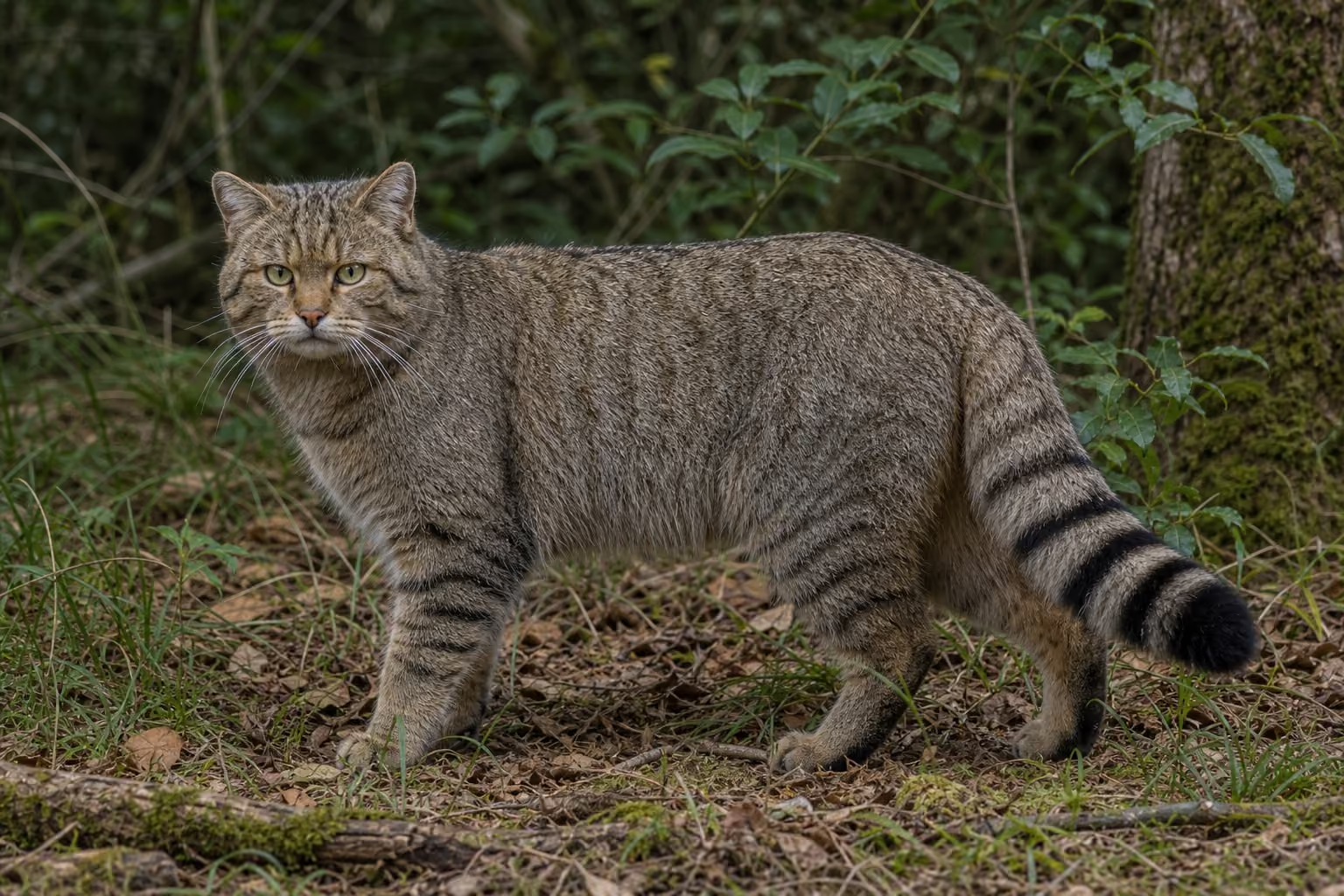
A wild cat of European and western Asian forests and grasslands. A thick ringed tail and robust build distinguish it from many domestic cats.

View in catalog


Key facts

  • European wildcat (Felis silvestris) is a carnivore animal classified as Mammal · Carnivora · Felidae.
  • Primary habitats are forest · grassland · mountains, with a range across Palearctic.
  • Activity is nocturnal, sociality is solitary, and conservation status is LC (Least Concern).
  • A wild cat of European and western Asian forests and grasslands.
  • European wildcats use deciduous and mixed forest, scrub, and grassland mosaics.

Range

Habitat range map
Native rangeOccasional / Transient
PalearcticPalearcticPalearcticPalearcticPalearcticPalearcticPalearcticPalearcticPalearcticPalearcticPalearcticPalearcticPalearcticPalearcticPalearcticPalearcticPalearcticPalearcticPalearcticPalearcticPalearcticPalearcticPalearcticPalearctic

Map: Ecoregions 2017 © RESOLVE (CC BY 4.0) · Natural Earth (PD)

Details

Habitat

European wildcats use deciduous and mixed forest, scrub, and grassland mosaics. They need both hunting openings and dense cover.

Appearance

They are gray-brown with dark stripes, a thick tail with black rings, and a pale throat. The blunt black tail tip is a useful field mark.

Behavior

They are mostly solitary and active at night or twilight. Hunting is often by stalking or ambush on the ground.

Feeding

Rodents, rabbits, and birds are major prey. Grasslands and forest edges with high prey density are important foraging sites.

Reproduction

Females give birth in tree hollows, rock crevices, or burrows. Young learn hunting from the mother before establishing their own ranges.

Notes

Hybridization with domestic cats is a major conservation issue, and genetic surveys are often needed to assess wild populations.