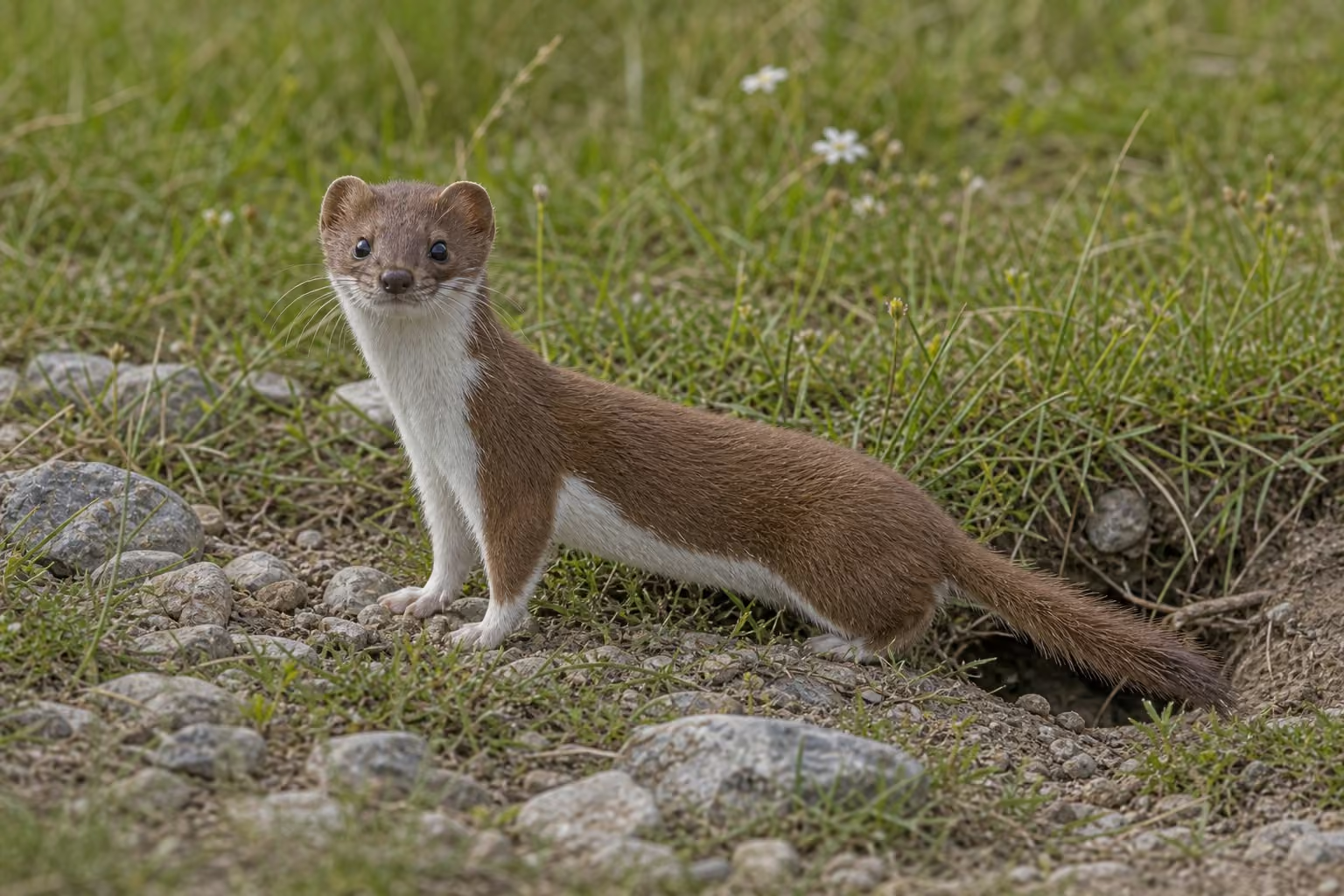
Least weasel

Details

Least weasel

Mustela nivalis

Size
11–26 cm · 25–250 g
Diet
Carnivore
Activity
Cathemeral
Sociality
Solitary
Lifespan

One of the smallest carnivorous mammals, widespread across the Northern Hemisphere. Its slender body lets it enter rodent burrows and tackle larger prey.

View in catalog


Key facts

  • Least weasel (Mustela nivalis) is a carnivore animal classified as Mammal · Carnivora · Mustelidae.
  • Primary habitats are forest · grassland · mountains, with a range across Palearctic · Nearctic.
  • Activity is cathemeral, sociality is solitary, and conservation status is LC (Least Concern).
  • One of the smallest carnivorous mammals, widespread across the Northern Hemisphere.
  • Least weasels use grassland, farmland, forest edge, wetlands, and mountain vegetation where small mammals and cover are available.

Range

Habitat range map
Native rangeOccasional / Transient
PalearcticPalearcticPalearcticPalearcticPalearcticPalearcticPalearcticPalearcticPalearcticPalearcticPalearcticPalearcticPalearcticPalearcticPalearcticPalearcticPalearcticPalearcticPalearcticPalearcticPalearcticPalearcticPalearcticPalearcticNearcticNearcticNearcticNearcticNearcticNearcticNearcticNearcticNearcticNearcticNearcticNearcticNearcticNearcticNearcticNearcticNearcticNearcticNearcticNearcticNearcticNearcticNearcticNearcticNearcticNearcticNearcticNearcticNearcticNearcticNearcticNearcticNearcticNearcticNearcticNearcticNearcticNearcticNearcticNearcticNearctic

Map: Ecoregions 2017 © RESOLVE (CC BY 4.0) · Natural Earth (PD)

Details

Habitat

Least weasels use grassland, farmland, forest edge, wetlands, and mountain vegetation where small mammals and cover are available.

Appearance

They have a long narrow body, short legs, and rounded ears. The back is brown and the belly white; northern populations may turn white in winter.

Behavior

They are solitary and active in short bouts by day or night. Individuals move quickly through burrows, stone walls, and dense cover while scent-marking ranges.

Feeding

Voles and mice dominate the diet, but birds, eggs, lizards, and insects may be taken. Surplus prey can be cached in burrows.

Reproduction

Breeding follows food abundance. Females rear litters in nests lined with grass and fur, and young learn to hunt quickly.

Notes

A tiny body and fast metabolism force frequent hunting, making the species an important predator of small rodents.