738 Featured Specimen
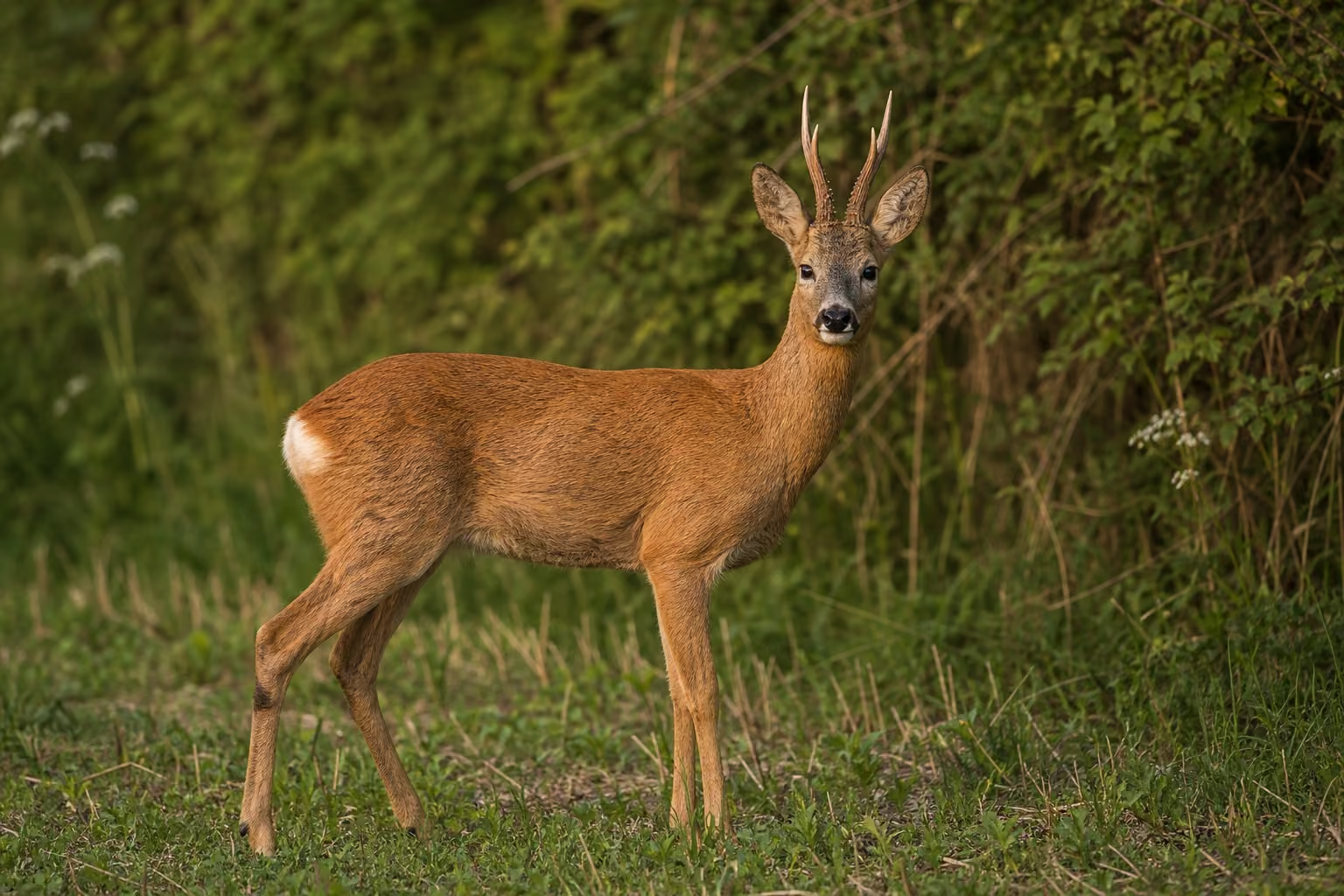
Roe deer

Details

Roe deer

Capreolus capreolus

Size
1–1.4 m · 15–35 kg
Diet
Herbivore
Activity
Crepuscular
Sociality
Solitary
Lifespan

A small deer of Europe and western Asia. It has a short tail, large ears, and is often seen near woodland edges, fields, and hedgerows.
Range

Habitat range map
Native range Occasional / Transient
PalearcticPalearcticPalearcticPalearcticPalearcticPalearcticPalearcticPalearcticPalearcticPalearcticPalearcticPalearcticPalearcticPalearcticPalearcticPalearcticPalearcticPalearcticPalearcticPalearcticPalearcticPalearcticPalearcticPalearctic

Map: Ecoregions 2017 © RESOLVE (CC BY 4.0) · Natural Earth (PD)

Details

Habitat

Roe deer use deciduous and conifer forests, grassland edges, farmland, and peri-urban green space. Patchy landscapes with cover and browse are favored.

Appearance

The body is slender, reddish brown in summer and gray brown in winter. Males have short antlers, and the pale rump patch becomes conspicuous when alarmed.

Behavior

They are usually solitary or in small groups, with feeding activity concentrated around dawn and dusk. Males may defend small territories in the breeding season.

Feeding

They select leaves, herbs, buds, shoots, shrubs, and fruits. Their feeding style is more selective browsing than bulk grazing.

Reproduction

Mating occurs in summer, followed by delayed implantation. Fawns are born the next spring, commonly as one or two young.

Notes

The species adapts well to human-shaped landscapes, so road mortality and forestry or crop impacts can be local management issues.