689 Featured Specimen
Details
Tufted duck
Aythya fuligula
- Size
- 40–47 cm · 0.5–1 kg
- Diet
- Omnivore
- Activity
- Diurnal
- Sociality
- Herd
- Lifespan
- —
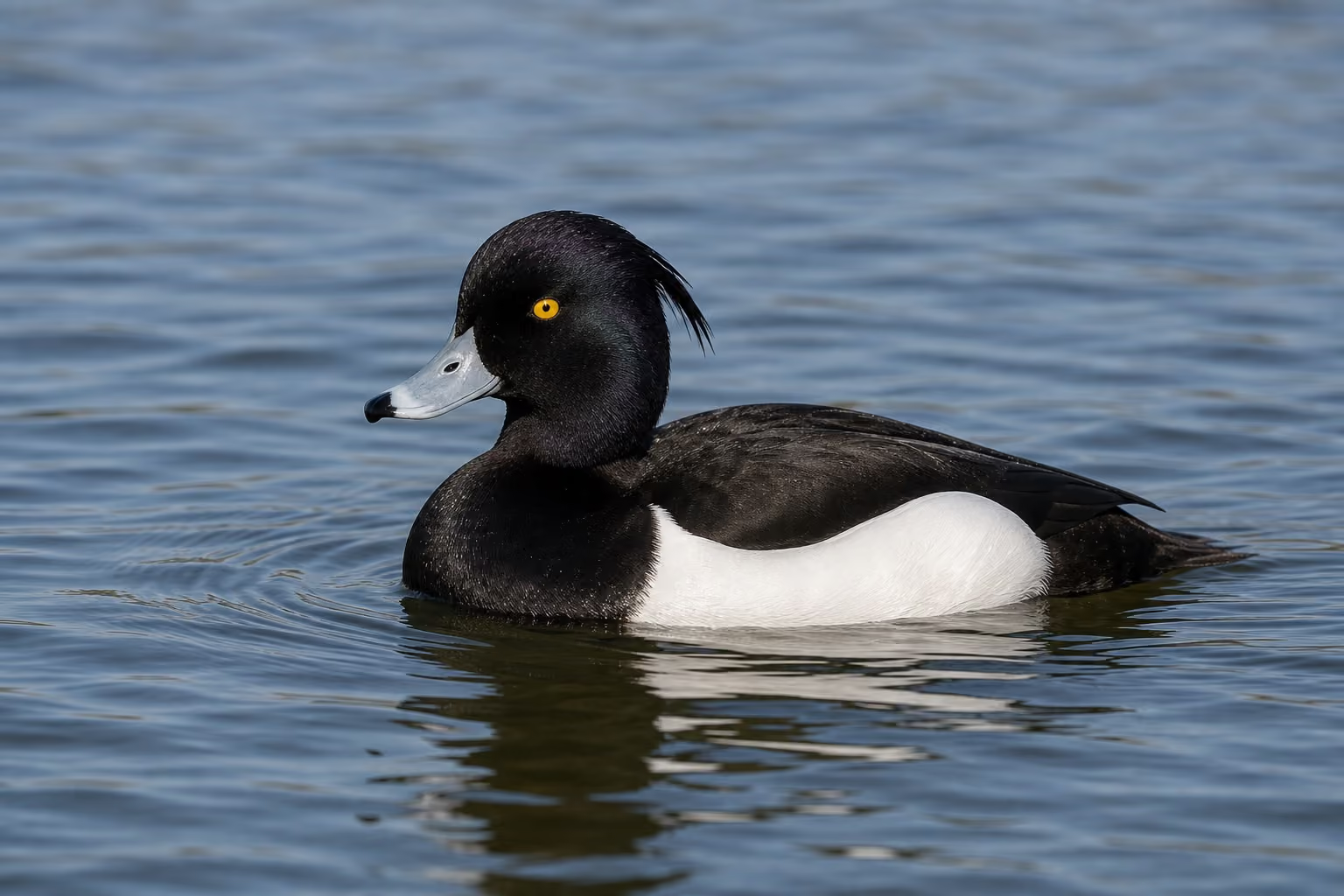
A diving duck with a head tuft and yellow eye; males show strong black-and-white contrast.
Details
Aythya fuligula
A diving duck with a head tuft and yellow eye; males show strong black-and-white contrast.
Map: Ecoregions 2017 © RESOLVE (CC BY 4.0) · Natural Earth (PD)
Lives on lakes, reservoirs, ponds, rivers, city park lakes, and sheltered coastal bays with enough depth for diving.
Males have a black head and breast, white flanks, yellow eyes, and a rear head tuft. Females are brown with a shorter tuft.
Flocks float on open water and make short dives for food, often mixing with other diving ducks in winter.
Mollusks, crustaceans, aquatic insects, aquatic plants, and seeds are taken, often from the bottom.
Hidden nests are built in waterside vegetation or on islands. Ducklings swim soon after hatching and feed near the female.
It readily uses artificial ponds, but water quality and benthic prey abundance shape feeding conditions.