014 Featured Specimen
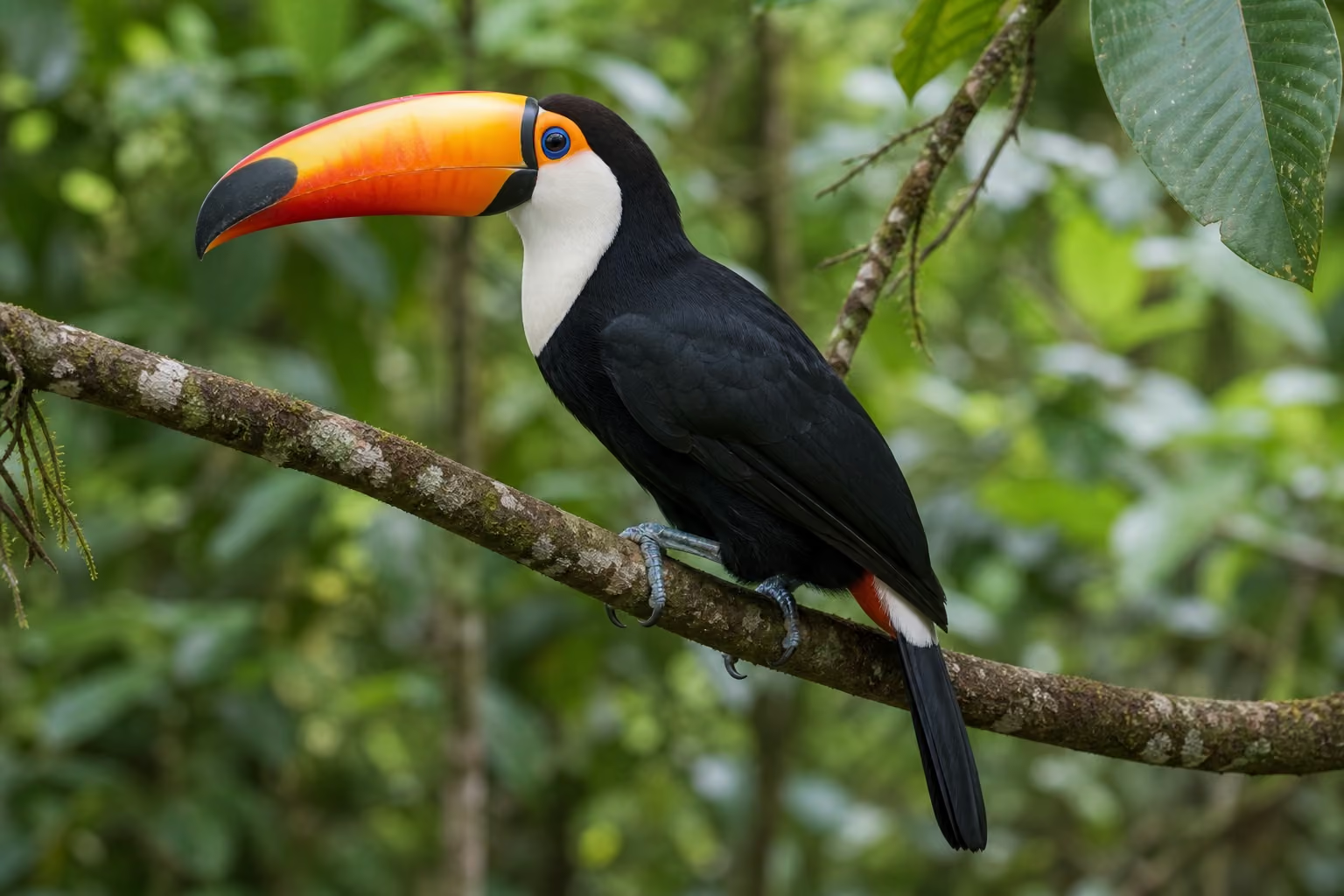
Toco toucan

Details

Toco toucan

Ramphastos toco

Size
55–65 cm · 500–860 g
Diet
Omnivore
Activity
Diurnal
Sociality
Loose group
Lifespan
15–20 years

The largest toucan and an icon of the Neotropics, instantly recognized by its enormous orange bill. Glossy black plumage and that outsized beak make it one of South America's most famous birds.
Range

Habitat range map
Native range Occasional / Transient

Map: Ecoregions 2017 © RESOLVE (CC BY 4.0) · Natural Earth (PD)

Details

Habitat

Ranges across central and southeastern South America, from the Guianas south to northern Argentina and Uruguay. Unlike most toucans it favors semi-open country — cerrado savanna, wetlands such as the Pantanal, and gallery forest — and occurs up to about 1,750 m.

Appearance

At 55–65 cm long and 500–860 g, it is the biggest toucan. The body is glossy black with a white throat and bib, red undertail coverts, and a brown eye ringed in blue. Its giant orange bill looks heavy but is largely hollow and surprisingly light.

Behavior

Active by day, it lives alone or in small loose groups and is less gregarious than other toucans. Its flight is undulating, alternating flaps with glides. The huge bill doubles as a thermal radiator, shedding body heat through controlled blood flow.

Feeding

An omnivore and generalist frugivore, it feeds mainly on fleshy fruits such as figs, guavas and oranges. It also takes insects, eggs and nestlings, and its diet shifts considerably with local habitat.

Reproduction

It nests in tree cavities, with breeding timed to the region. Both parents incubate a clutch of 2–4 eggs for 17–18 days, and chicks fledge 43–52 days after hatching. Nestlings are fed largely on insects at first, gradually moving to fruit.

Notes

Widespread and common, it faces no major extinction risk, though it is still hunted for meat and the pet trade. As a far-ranging seed disperser it plays a key role in regenerating fragmented landscapes.