461 Featured Specimen
Star-nosed mole

Details

Star-nosed mole

Condylura cristata

Size
15–20 cm · 35–75 g
Diet
Carnivore
Activity
Cathemeral
Sociality
Solitary
Lifespan
3–4 years

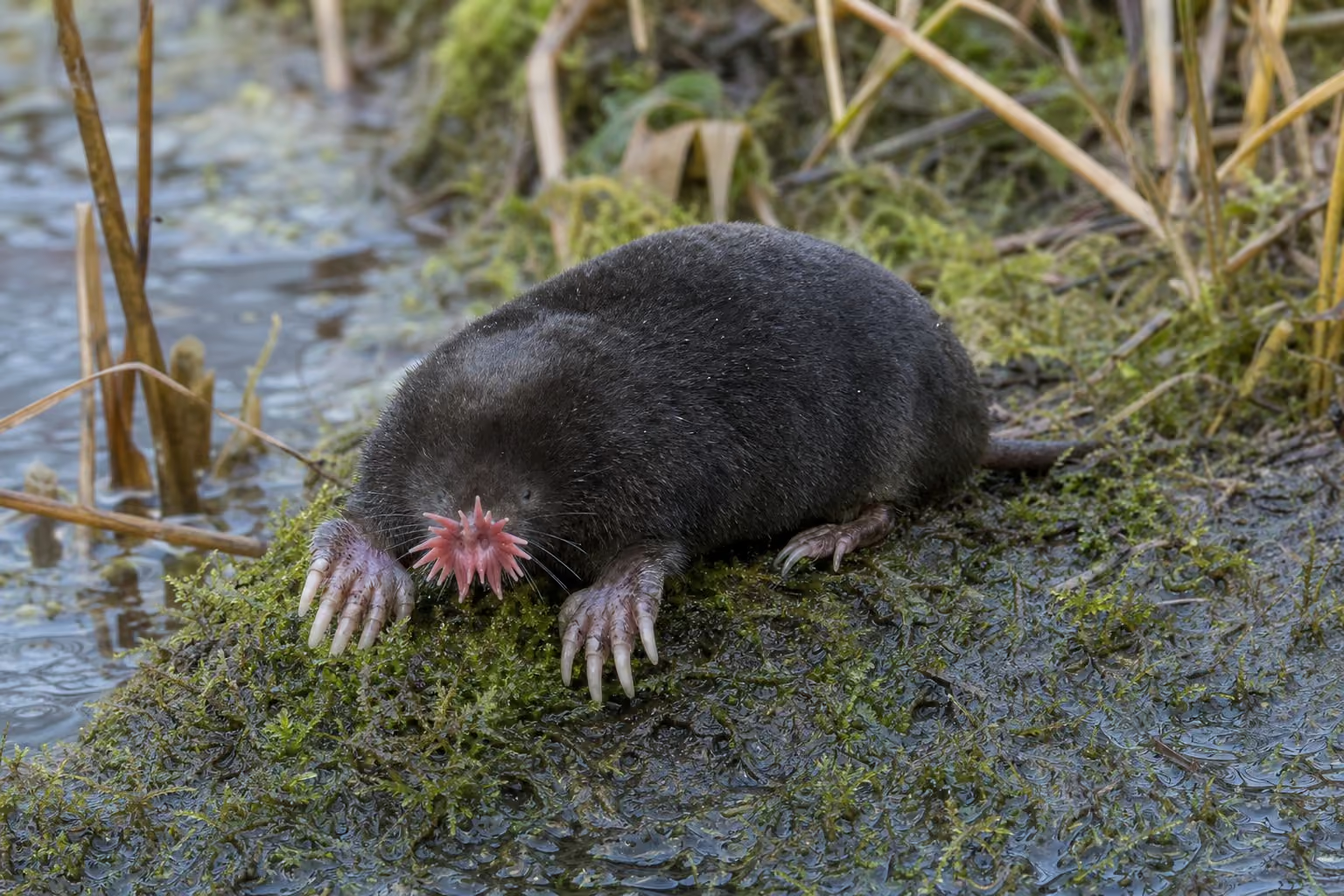
The star-nosed mole is a wetland mole with a remarkable star-shaped nose. It hunts rapidly underground and underwater using touch rather than sight.
Range

Habitat range map
Native range Occasional / Transient
NearcticNearcticNearcticNearcticNearcticNearcticNearcticNearcticNearcticNearcticNearcticNearcticNearcticNearcticNearcticNearcticNearcticNearcticNearcticNearcticNearcticNearcticNearcticNearcticNearcticNearcticNearcticNearcticNearcticNearcticNearcticNearcticNearcticNearcticNearcticNearcticNearcticNearcticNearcticNearcticNearctic

Map: Ecoregions 2017 © RESOLVE (CC BY 4.0) · Natural Earth (PD)

Details

Habitat

It lives in Nearctic wet forests, marshes, and the edges of streams and ponds. Moist soil and shallow water let it combine tunneling with aquatic foraging.

Appearance

Length 15-20 cm; weight 35-75 g. Twenty-two fleshy rays ring the nose and act as sensitive touch organs. Broad forefeet are built for digging.

Behavior

Cathemeral and solitary, it moves through tunnels and also swims. The nasal rays sweep rapidly over surfaces to identify prey.

Feeding

A carnivore, it eats aquatic insects, earthworms, small crustaceans, and mollusks. Prey is detected by touch and taken with quick bites.

Reproduction

Breeding occurs in spring, with young born in nests underground or along wet banks. Juveniles later disperse to their own foraging areas.

Notes

It is listed as Least Concern. Its nose is among the most sensitive tactile organs known in mammals.