807 Featured Specimen
European mole

Details

European mole

Talpa europaea

Size
11–16 cm · 70–130 g
Diet
Carnivore
Activity
Cathemeral
Sociality
Solitary
Lifespan

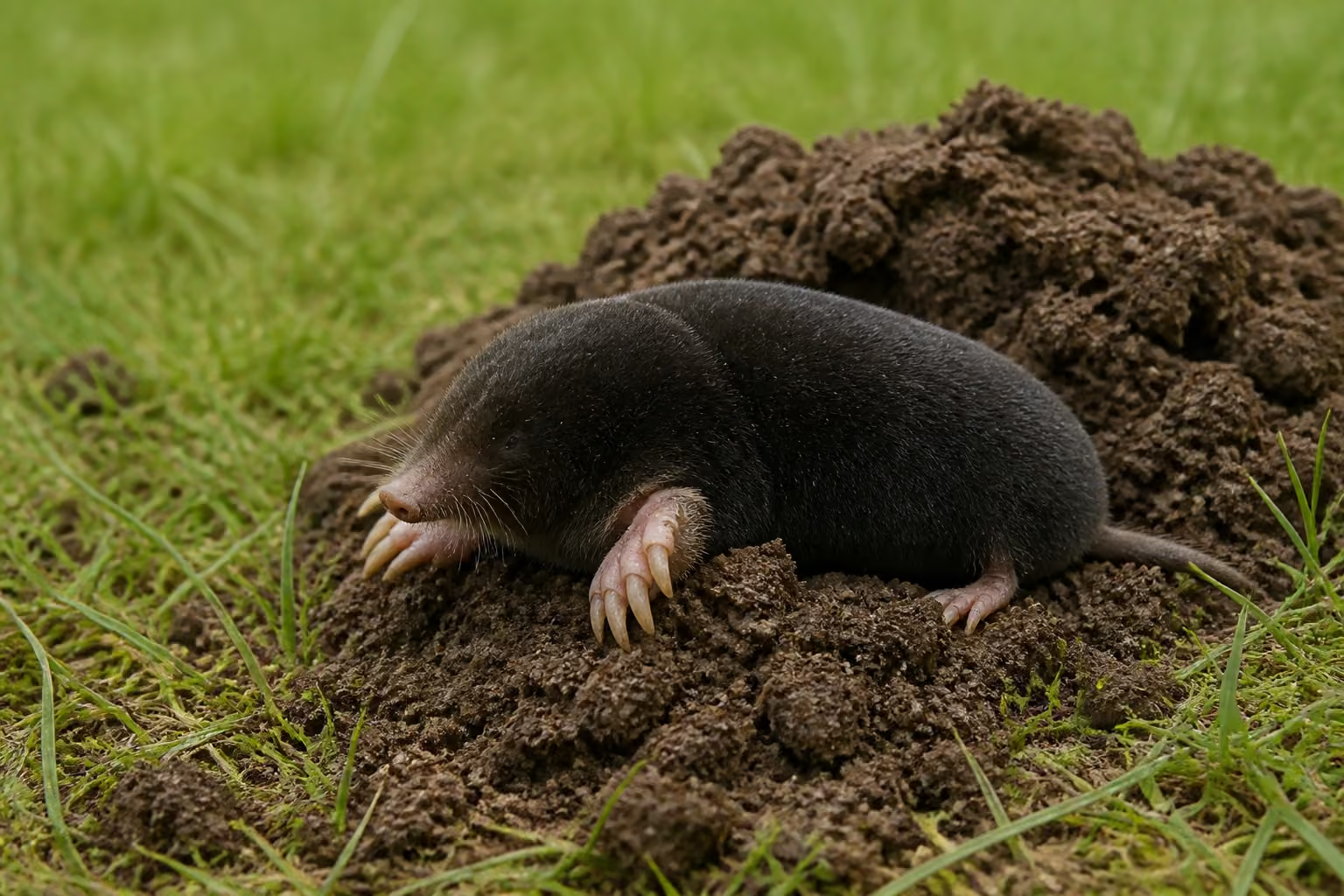
European mole is a small subterranean mammal with powerful digging forefeet. Molehills can be unwelcome in lawns, but the animal is an important underground predator.


Range

Habitat range map
Native range Occasional / Transient
PalearcticPalearcticPalearcticPalearcticPalearcticPalearcticPalearcticPalearcticPalearcticPalearcticPalearcticPalearcticPalearcticPalearcticPalearcticPalearcticPalearcticPalearcticPalearcticPalearcticPalearcticPalearcticPalearcticPalearctic

Map: Ecoregions 2017 © RESOLVE (CC BY 4.0) · Natural Earth (PD)

Details

Habitat

It uses grassland, fields, gardens, parks, and deciduous woodland with workable soil. Main habitat types in this guide are forest, grassland, urban.

Appearance

Typical length 11-16 cm, weight 70 g-130 g. A cylindrical body, short tail, tiny eyes, and outward-facing shovel-like forefeet suit tunneling.

Behavior

It is active in repeated bouts across day and night and usually solitary. It uses nest chambers and feeding tunnels, leaving molehills at the surface.

Feeding

It is carnivorous. Earthworms, insect larvae, and other soil invertebrates dominate the diet.

Reproduction

Females rear young in underground nests in spring, and juveniles disperse after growth.

Notes

Although still widespread in places, it remains sensitive to habitat change. Molehills can be unwelcome in lawns, but the animal is an important underground predator.