011 Featured Specimen
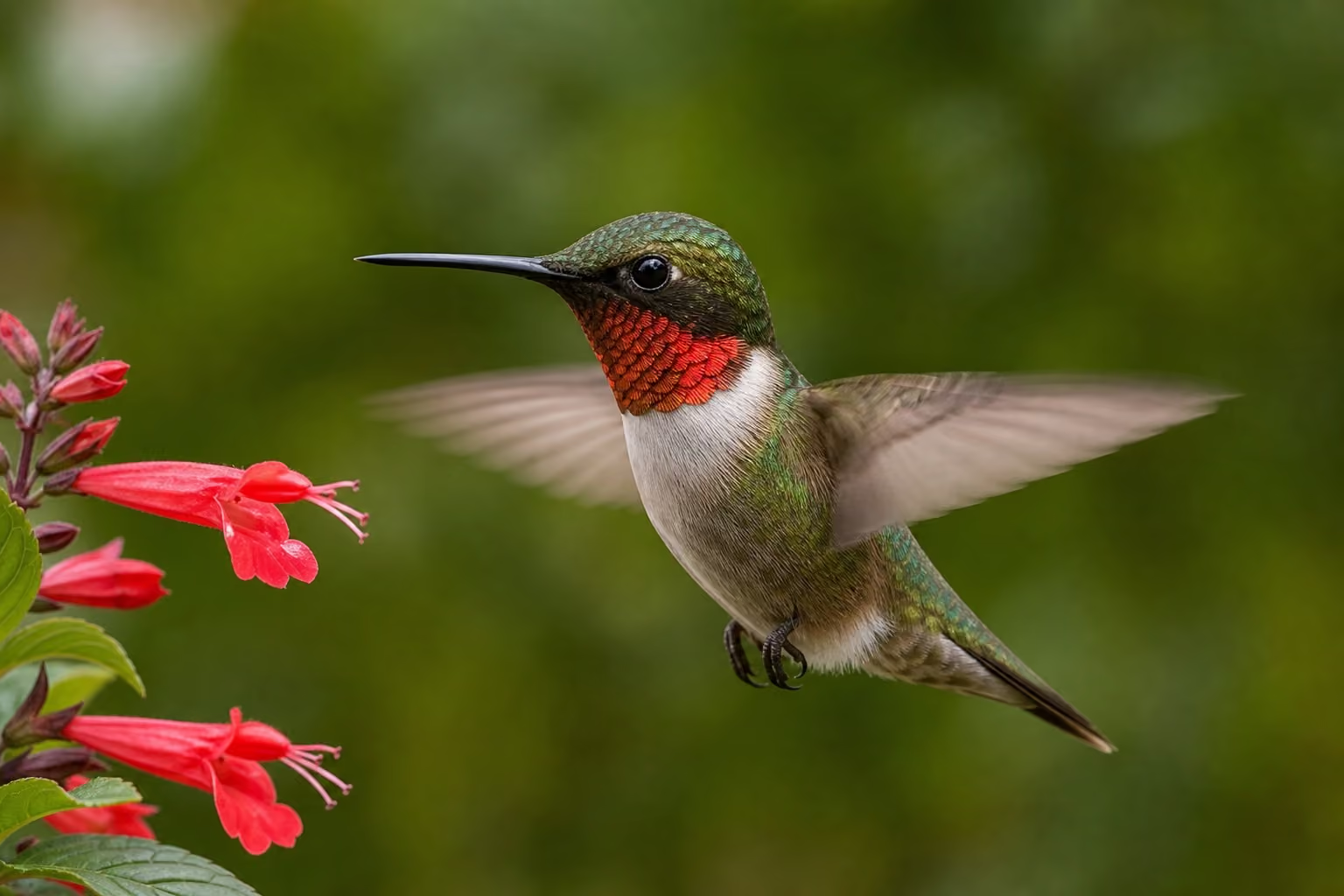
Ruby-throated hummingbird

Details

Ruby-throated hummingbird

Archilochus colubris

Size
7–9 cm · 2–6 g
Diet
Nectarivore
Activity
Diurnal
Sociality
Solitary
Lifespan
3–5 years

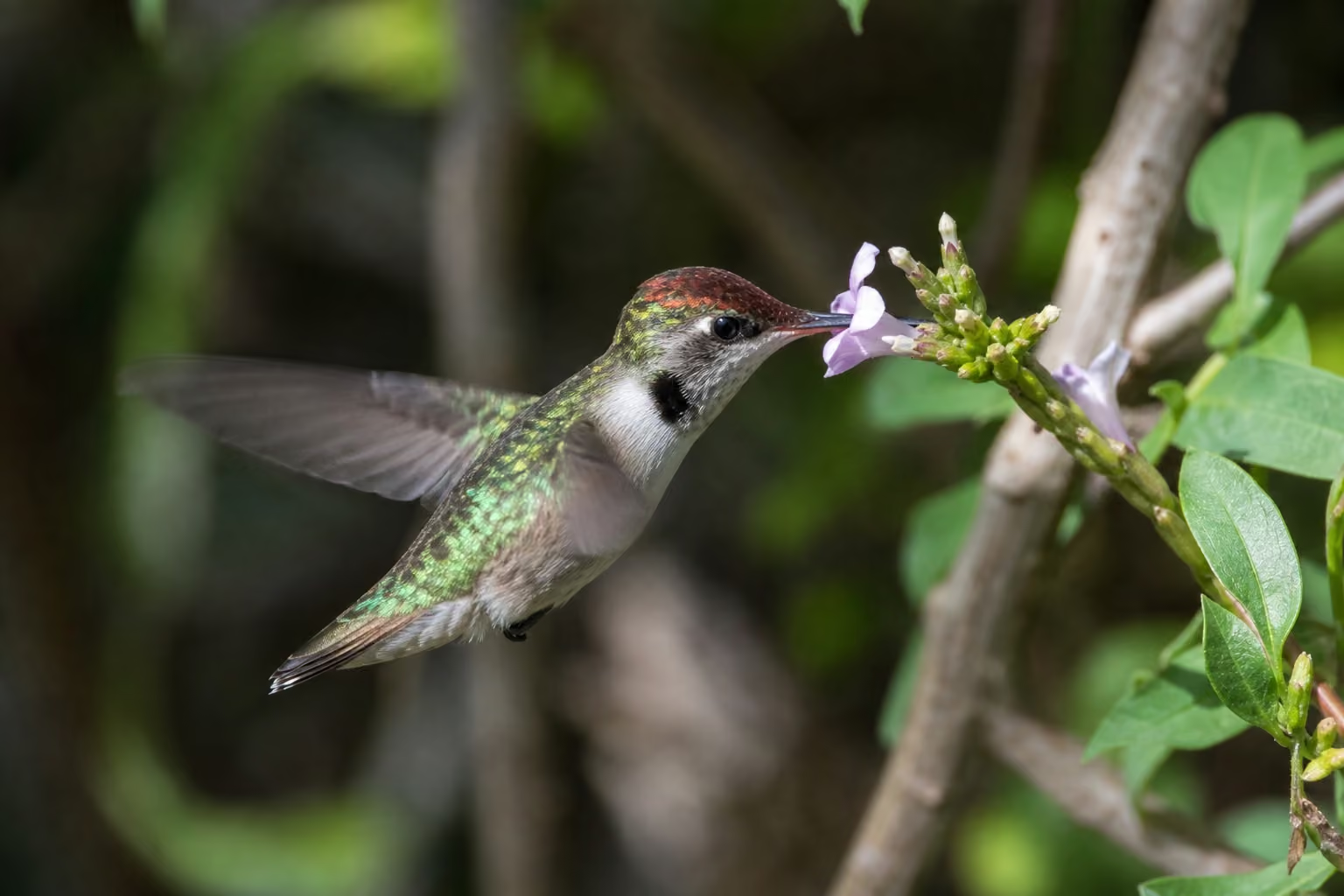
One of North America's smallest birds, beating its wings up to 80 times a second to hover motionless and sip flower nectar. The male flashes a jewel-like iridescent ruby throat, and the species makes a remarkable nonstop spring crossing of the Gulf of Mexico.
Range

Habitat range map
Native range Occasional / Transient

Map: Ecoregions 2017 © RESOLVE (CC BY 4.0) · Natural Earth (PD)

Details

Habitat

It breeds across the eastern United States and south-central and southeastern Canada in deciduous and pine forests, forest edges, orchards and gardens. In winter it moves south to Florida, southern Mexico, Central America and the West Indies, spanning the Nearctic and Neotropics.

Appearance

A diminutive bird 7–9 cm long with an 8–11 cm wingspan and a weight of just 2–6 g. It is metallic green above and grayish white below, with a slender bill up to 2 cm; the male shows a black-bordered iridescent ruby gorget and forked tail, while the female has a white throat and rounded tail.

Behavior

Diurnal and largely solitary, it is fiercely territorial and aggressive toward other hummingbirds. It can fly forward, backward and hover with ease, and on spring migration doubles its fat reserves to cross 800–900 km of open Gulf of Mexico in a single nonstop flight.

Feeding

A nectarivore, it feeds mainly on flower nectar drawn through a long extendable tongue, favoring red, orange and bright pink tubular blooms. To supplement protein it also catches small insects and gleans spiders from webs and foliage.

Reproduction

Polygynous with no pair bond, the male performs a diving courtship display 2.5–3 m above the female. The female alone builds a lichen-and-spider-silk nest, lays two eggs about 12.9 × 8.5 mm, incubates them for 12–14 days, and tends the young, which fledge at 18–22 days.

Notes

Listed as Least Concern by the IUCN, with a population numbering in the tens of millions despite a recent modest decline. Across North America it is a beloved garden visitor, drawn in summer to red sugar-water feeders set out to attract it.