070 Featured Specimen
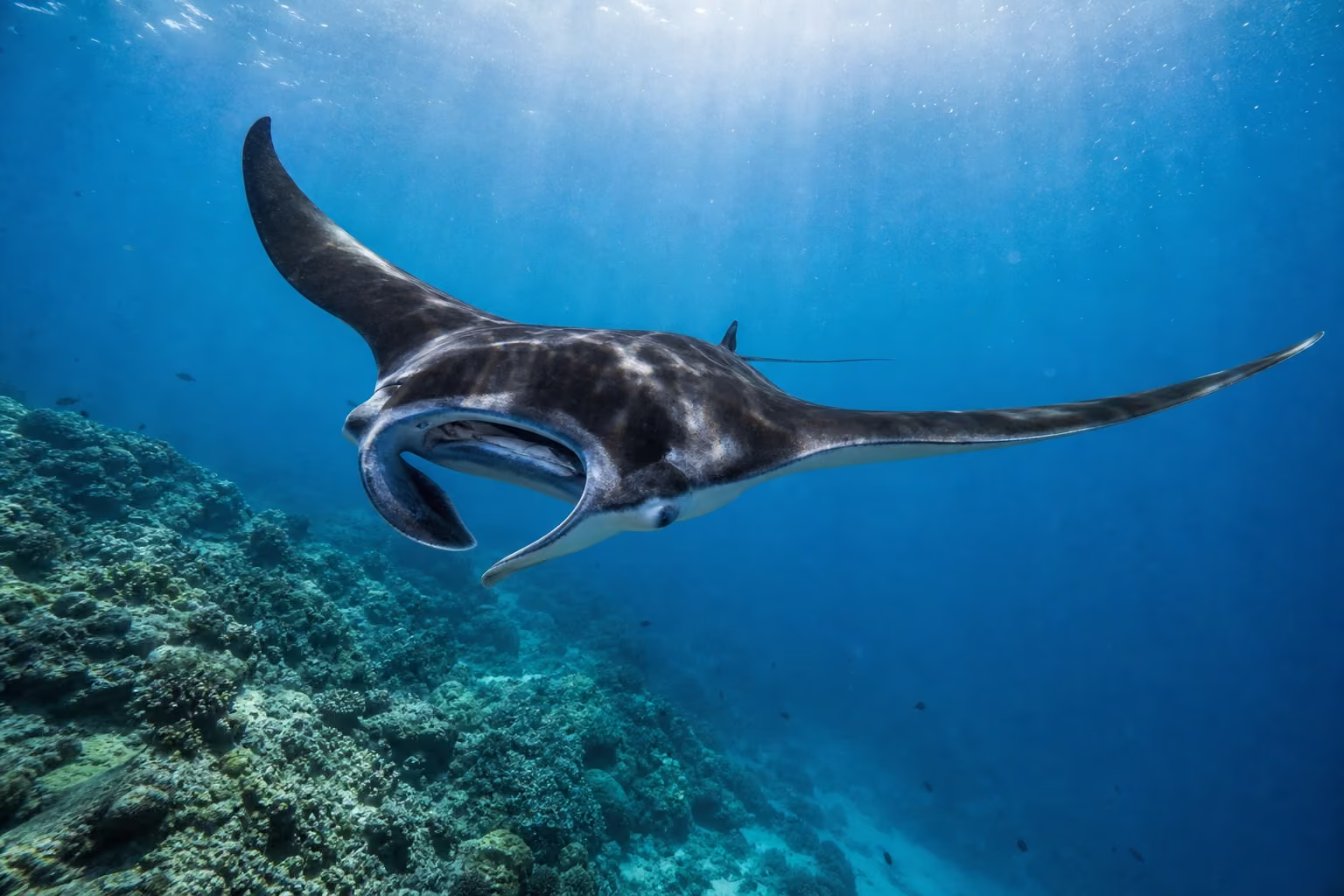
Reef manta ray

Details

Reef manta ray

Mobula alfredi

Size
3–5 m · 0.5–1.4 t
Diet
Filter Feeder
Activity
Diurnal
Sociality
Loose group
Lifespan
Varies by species and environment

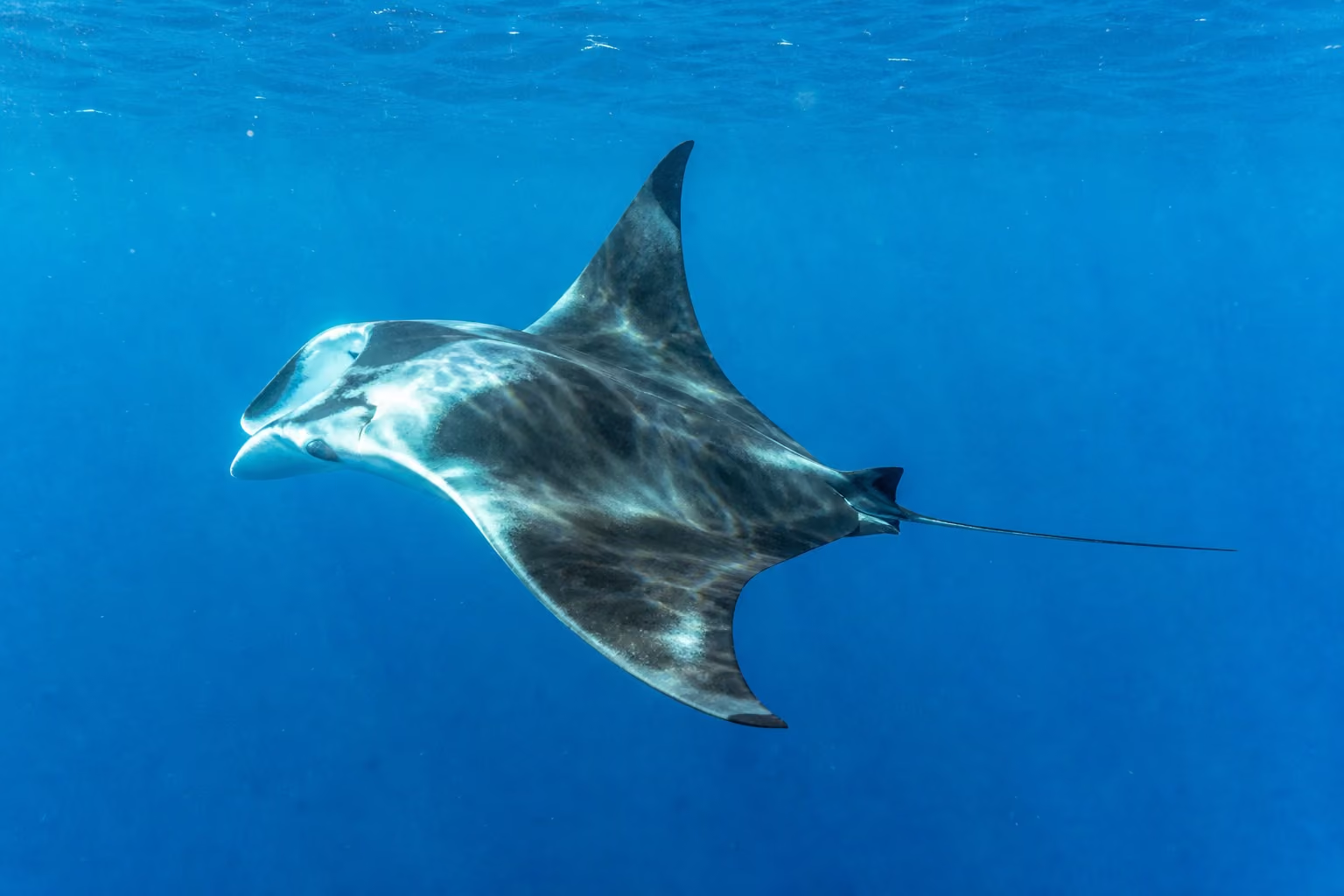
A graceful giant of the reef that flies through the water on triangular pectoral fins spanning up to five metres. A pair of paddle-like cephalic fins funnel seawater into its wide mouth, where it strains out drifting plankton.
Range

Habitat range map
Native range Occasional / Transient
Pacific OceanPacific OceanPacific OceanIndian Ocean

Map: Ecoregions 2017 © RESOLVE (CC BY 4.0) · Natural Earth (PD)

Details

Habitat

It ranges across the tropical and subtropical Indo-Pacific, favouring coastal coral reefs, lagoons and the open water around them. It is found from the Ryukyu Islands east to Polynesia and Hawaii.

Appearance

Disc width is usually 3 to 3.5 m but reaches around 5 m, with weights from 500 kg to 1.4 tonnes. The back is black to dark blue with pale shoulder patches forming a 'Y', and the white underside carries dark blotches whose pattern is unique to each individual and used for identification. Unlike devil rays, it has no venomous tail spine.

Behavior

Active by day, it returns to fixed reef 'cleaning stations' where small wrasses pick parasites from its skin. It gathers in loose groups and forms lasting bonds with familiar individuals, a sign of unusual social complexity, and has been recorded diving past 600 m in search of food.

Feeding

It ram-feeds, cruising into tidal currents with its mouth held open to draw in seawater and strain out zooplankton through its gills. Where prey is dense it performs somersaulting barrel-rolls or feeds in coordinated circling chains.

Reproduction

It is ovoviviparous, with a gestation of about 12 to 13 months. A female usually bears a single pup, rarely two, already over a metre across at birth. The young spend their first years in shallow nursery waters and take roughly a decade to mature.

Notes

Listed as Vulnerable by the IUCN and on CITES Appendix II, it is threatened by fisheries targeting its gill rakers, bycatch and coastal development; its slow breeding makes depleted populations slow to recover. It carries one of the largest brains relative to body size of any fish.