675 Featured Specimen
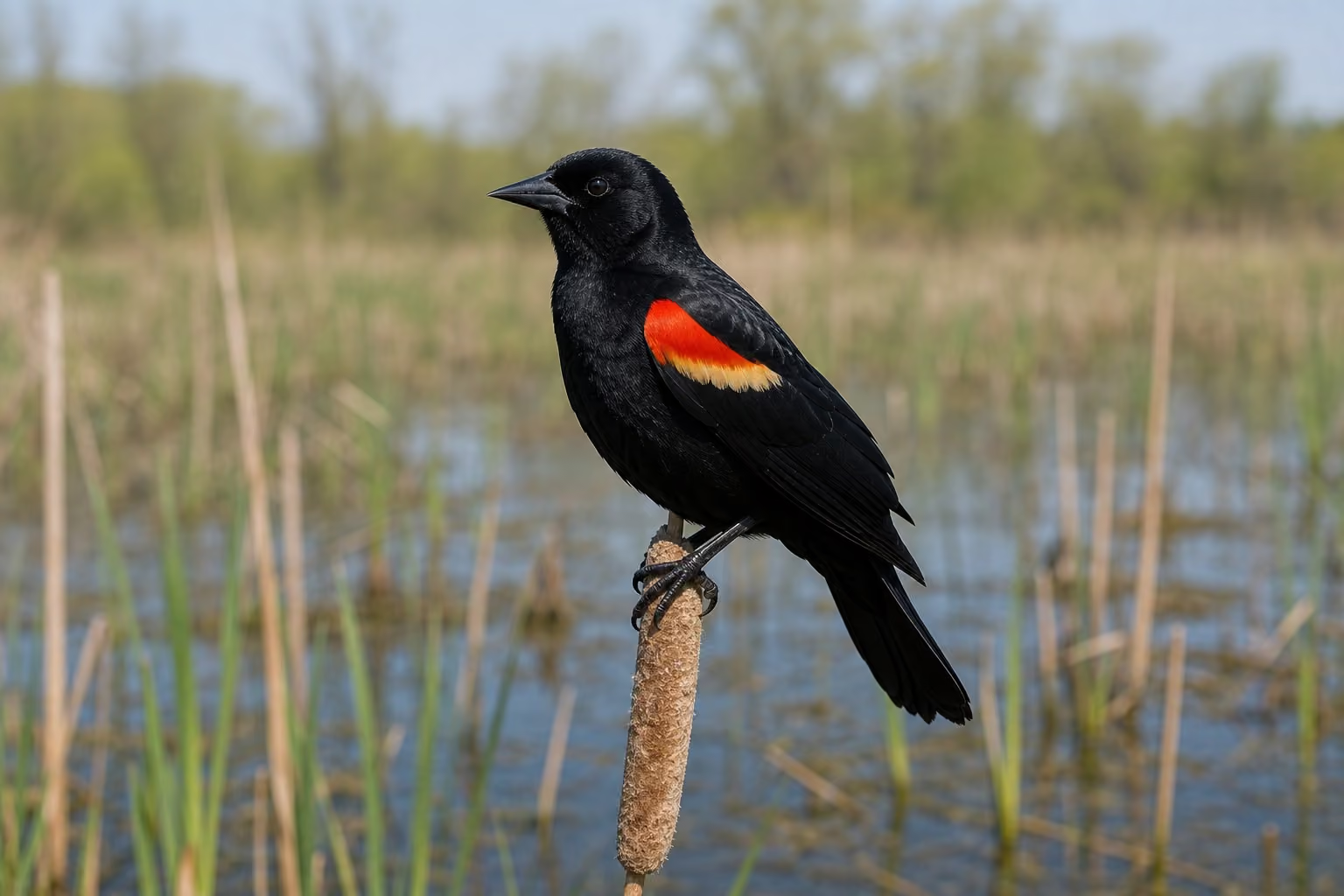
Red-winged blackbird

Details

Red-winged blackbird

Agelaius phoeniceus

Size
17–23 cm · 32–77 g
Diet
Omnivore
Activity
Diurnal
Sociality
Herd
Lifespan

A conspicuous North American marsh bird; males are black with red-and-yellow shoulder patches and sing from reeds.
Range

Habitat range map
Native range Occasional / Transient
NearcticNearcticNearcticNearcticNearcticNearcticNearcticNearcticNearcticNearcticNearcticNearcticNearcticNearcticNearcticNearcticNearcticNearcticNearcticNearcticNearcticNearcticNearcticNearcticNearcticNearcticNearcticNearcticNearcticNearcticNearcticNearcticNearcticNearcticNearcticNearcticNearcticNearcticNearcticNearcticNearcticNeotropicalNeotropicalNeotropicalNeotropicalNeotropicalNeotropicalNeotropicalNeotropical

Map: Ecoregions 2017 © RESOLVE (CC BY 4.0) · Natural Earth (PD)

Details

Habitat

Uses freshwater marshes, reedbeds, wet grassland, farmland, roadsides, canals, and parks, especially vegetated wetlands for breeding.

Appearance

Males are black with red and yellow shoulder patches. Females are brown and streaked, with a sparrow-like appearance.

Behavior

Males sing from tall stems or posts and defend territories. Outside breeding, very large flocks may form.

Feeding

Insects, seeds, grain, and fruit are eaten, with more insects during breeding and more plant food in winter.

Reproduction

Females weave cup nests among reeds or grasses. Males may defend territories containing several females.

Notes

Still abundant in North America, it is influenced locally by wetland quality and agricultural land use.