770 Featured Specimen
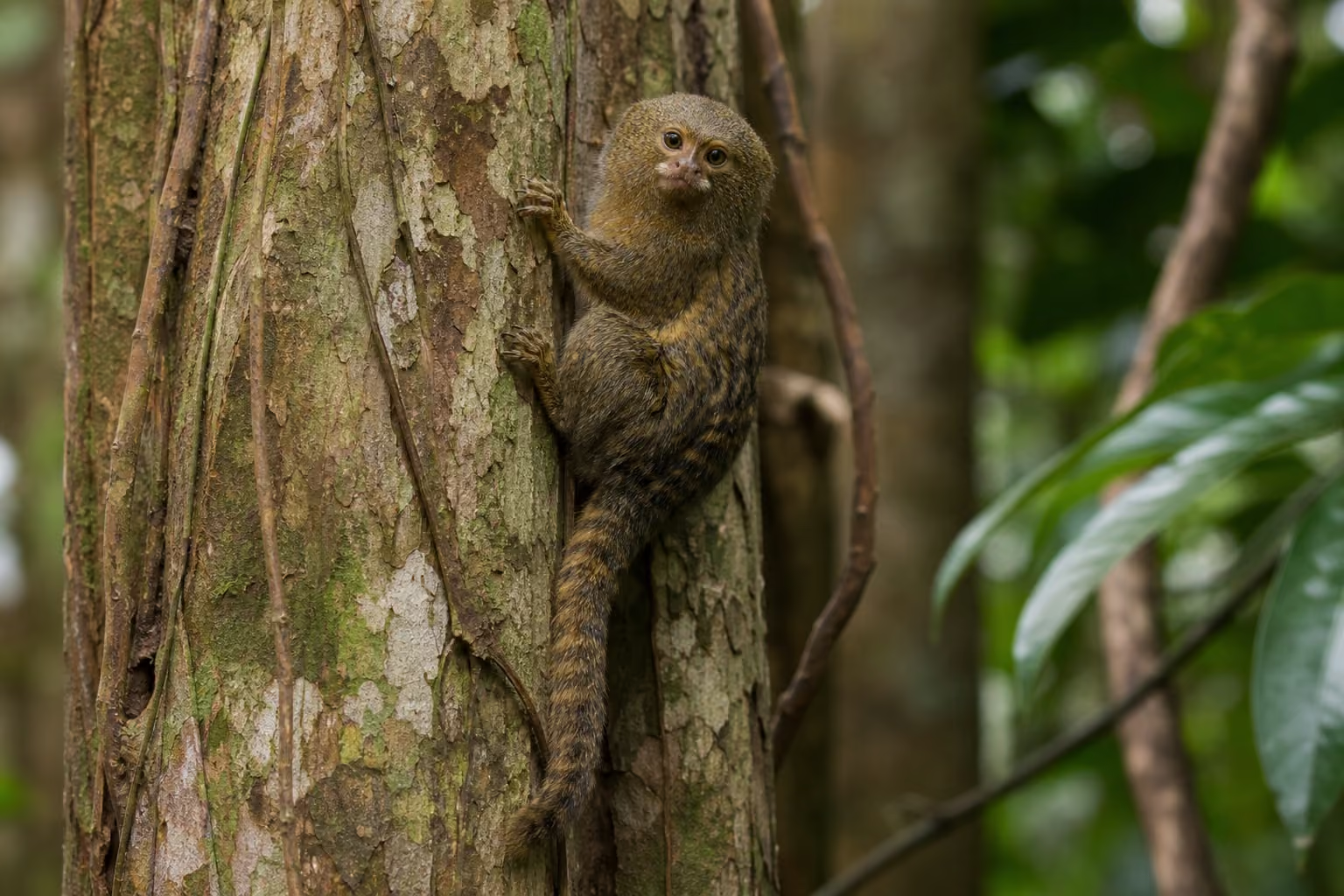
Pygmy marmoset

Details

Pygmy marmoset

Cebuella pygmaea

Size
28–40 cm · 85–150 g
Diet
Omnivore
Activity
Diurnal
Sociality
Social
Lifespan

A tiny Amazonian monkey specialized for feeding on tree exudates. It gouges bark and returns to sap holes along riverine forest edges.
Range

Habitat range map
Native range Occasional / Transient
NeotropicalNeotropicalNeotropicalNeotropicalNeotropicalNeotropicalNeotropicalNeotropical

Map: Ecoregions 2017 © RESOLVE (CC BY 4.0) · Natural Earth (PD)

Details

Habitat

Pygmy marmosets use western Amazon lowland forest, river-edge forest, floodplain forest, and secondary growth with gum-producing trees.

Appearance

They are very small, with dense fur and a long banded tail. Claw-like nails let them cling to vertical trunks and move quickly.

Behavior

They are diurnal and live in family groups with small territories. Groups repeatedly visit bark holes that they maintain for sap flow.

Feeding

Tree sap, gum, and resin dominate the diet, supplemented by insects, fruit, and nectar. Exudates provide reliable high-energy food.

Reproduction

Females often give birth to twins. Fathers and other group members carry infants, returning them to the mother for nursing.

Notes

The pet trade affects some populations, but their specialized diet and social life make them unsuitable as casual captive animals.