007 Featured Specimen
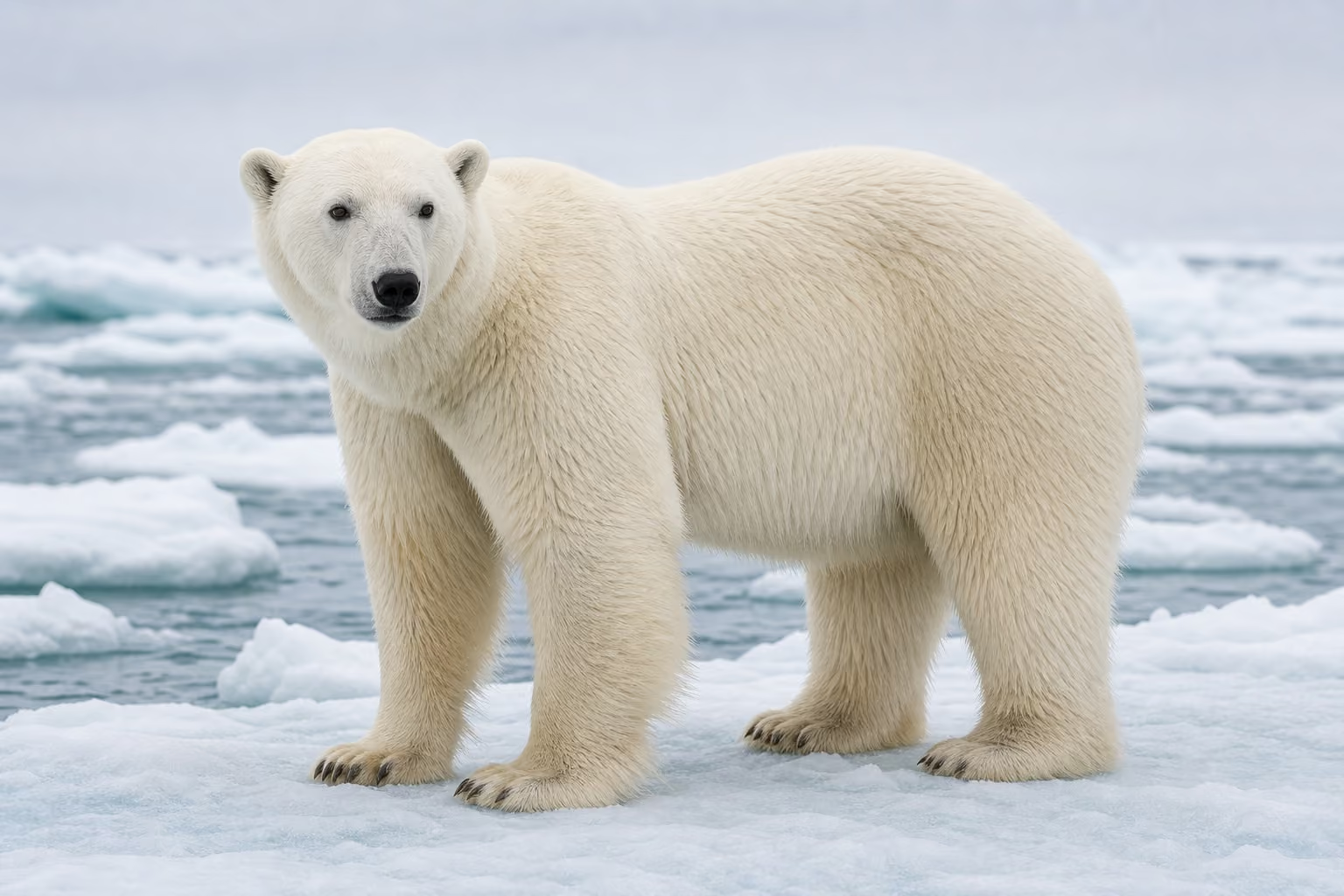
Polar bear

Details

Polar bear

Ursus maritimus

Size
2–3 m · 150–700 kg
Diet
Carnivore
Activity
Cathemeral
Sociality
Solitary
Lifespan
20–30 years

The largest living land carnivore, exquisitely adapted to life on Arctic sea ice. Beneath its seemingly white coat lie black skin and a thick fat layer, equipping it to hunt seals as the Arctic's apex predator.
Range

Habitat range map
Native range Occasional / Transient
Arctic OceanArctic OceanArctic OceanPalearcticPalearcticPalearcticPalearcticPalearcticPalearcticPalearcticPalearcticPalearcticPalearcticPalearcticPalearcticPalearcticPalearcticPalearcticPalearcticPalearcticPalearcticPalearcticPalearcticPalearcticPalearcticPalearcticPalearcticNearcticNearcticNearcticNearcticNearcticNearcticNearcticNearcticNearcticNearcticNearcticNearcticNearcticNearcticNearcticNearcticNearcticNearcticNearcticNearcticNearcticNearcticNearcticNearcticNearcticNearcticNearcticNearcticNearcticNearcticNearcticNearcticNearcticNearcticNearcticNearcticNearcticNearcticNearcticNearcticNearctic

Map: Ecoregions 2017 © RESOLVE (CC BY 4.0) · Natural Earth (PD)

Details

Habitat

Ranges across the Arctic — Greenland, Canada, Alaska, Russia and Norway's Svalbard archipelago — in at least 18 distinct subpopulations. It hunts mainly over sea ice along coasts, islands and drifting floes.

Appearance

Roughly 200–300 cm long and weighing 150–700 kg, with males far larger than females. Slimmer than a brown bear, with a longer neck and narrower skull. The fur lacks pigment and looks white through light scattering, while the skin is black and a 5–10 cm fat layer provides insulation and reserves.

Behavior

Largely solitary, grouping only as mothers with cubs, mating pairs, or where food concentrates. It roams vast distances over the sea ice — tens of kilometres a day — and swims strongly across open water. Only pregnant females den up to overwinter.

Feeding

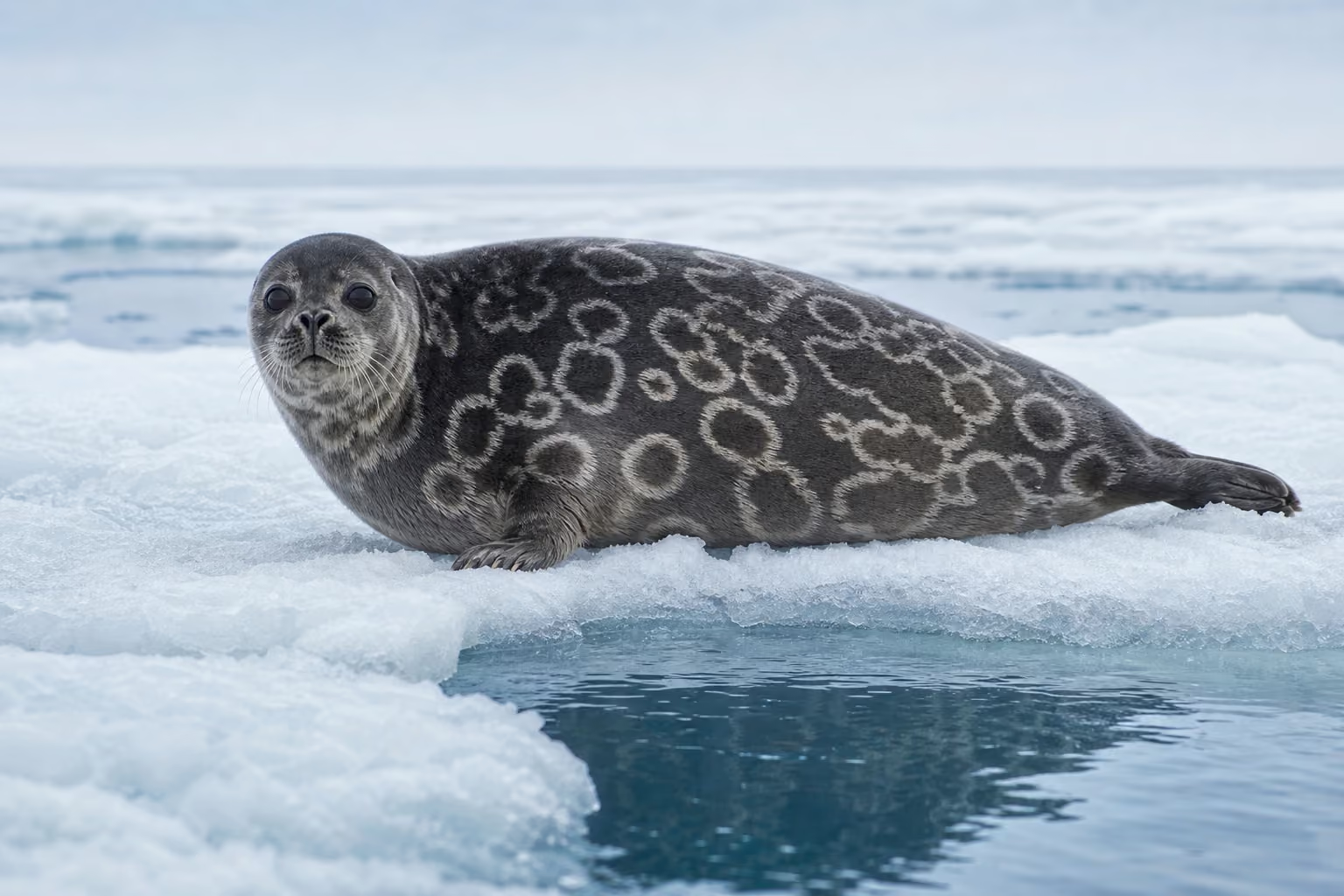
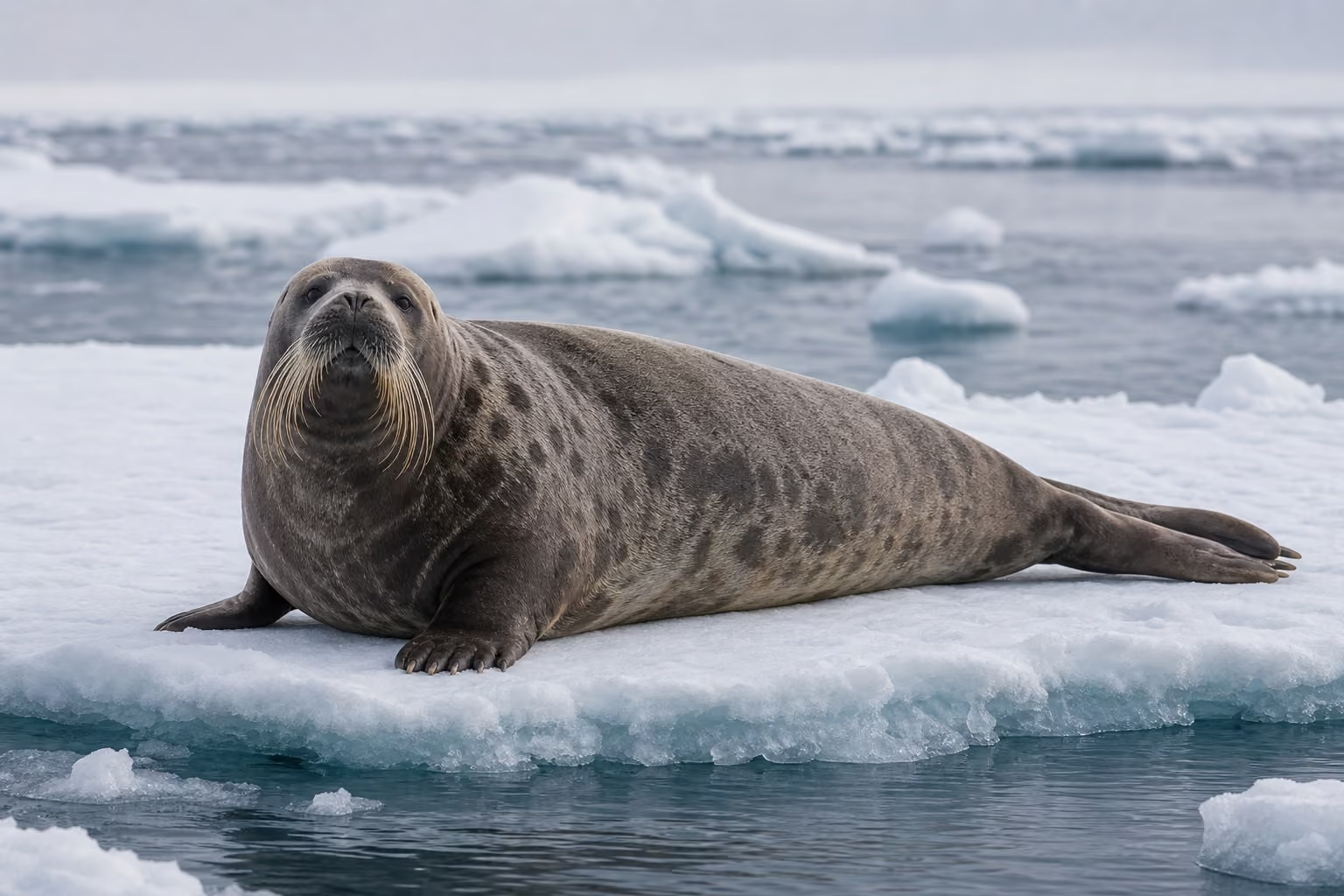
A hypercarnivore feeding chiefly on ringed seals, with bearded and harp seals also taken. Using a keen sense of smell, it stalks seals on the ice, waits at breathing holes, and breaks into snow dens. By storing fat it can endure months without eating.

Reproduction

Mating takes place on the sea ice from March to May, after which delayed implantation holds the embryo dormant until autumn. Females den from late autumn to early winter and bear usually two cubs (one to four), each about 600 g. Cubs stay with the mother for around two and a half years; wild lifespan reaches about 25–30 years.

Notes

Shrinking sea ice driven by climate change is the gravest threat, cutting the time available to hunt seals and forcing bears ashore before they can build up fat. Ice loss also raises encounters with people. The wild population is estimated at around 26,000.