188 Featured Specimen
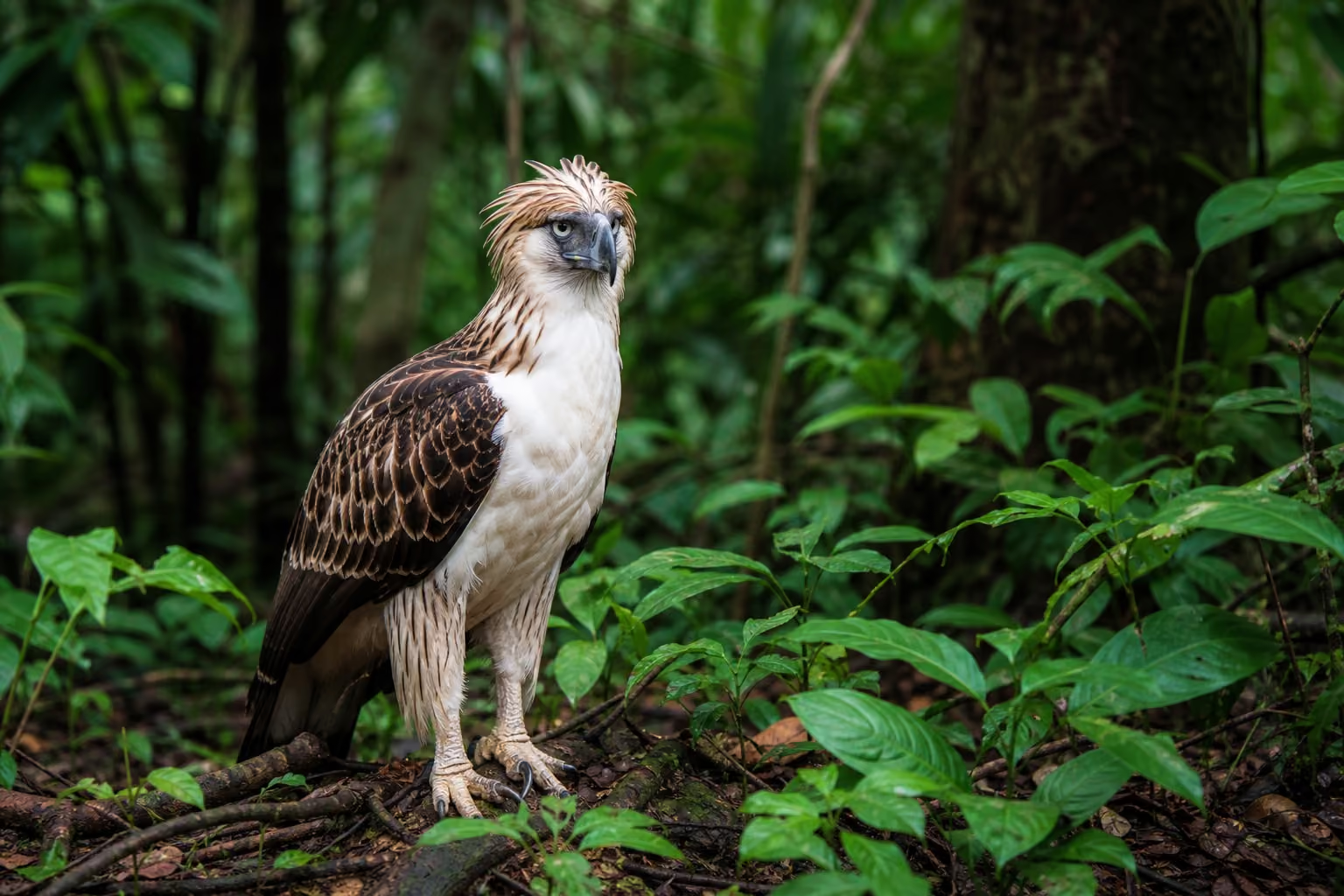
Philippine eagle

Details

Philippine eagle

Pithecophaga jefferyi

Size
Wingspan 1.8–2.2 m · 4.7–8 kg
Diet
Carnivore
Activity
Diurnal
Sociality
Pair
Lifespan
8-25 years

The Philippine eagle is a huge forest raptor of the Philippines. Diurnal pairs use large territories in mature lowland and mountain forest.

Range

Habitat range map
Native range Occasional / Transient
IndomalayanIndomalayanIndomalayanIndomalayanIndomalayanIndomalayanIndomalayanIndomalayanIndomalayanIndomalayanIndomalayanIndomalayanIndomalayanIndomalayanIndomalayan

Map: Ecoregions 2017 © RESOLVE (CC BY 4.0) · Natural Earth (PD)

Details

Habitat

It uses tropical lowland to montane forest but requires extensive continuous woodland. Large trees are critical for nesting and lookout perches.

Appearance

Wingspan is about 184-220 cm and weight about 4.7-8 kg. A long crest, heavy bill, broad wings, and powerful feet give it a commanding form.

Behavior

Active by day, it flies along forest slopes and valleys and watches from perches. Pair bonds are strong, and territories may be used for years.

Feeding

It is carnivorous, taking mammals, birds, and reptiles from trees and forest interiors. Ambush and short pursuit are important hunting modes.

Reproduction

Pairs build large nests in tall trees and care for few young over long periods. Slow breeding makes population recovery difficult.

Notes

Its status is listed as Critically Endangered. Forest loss and fragmentation are major threats, so large connected reserves are essential.