709 Featured Specimen
Details
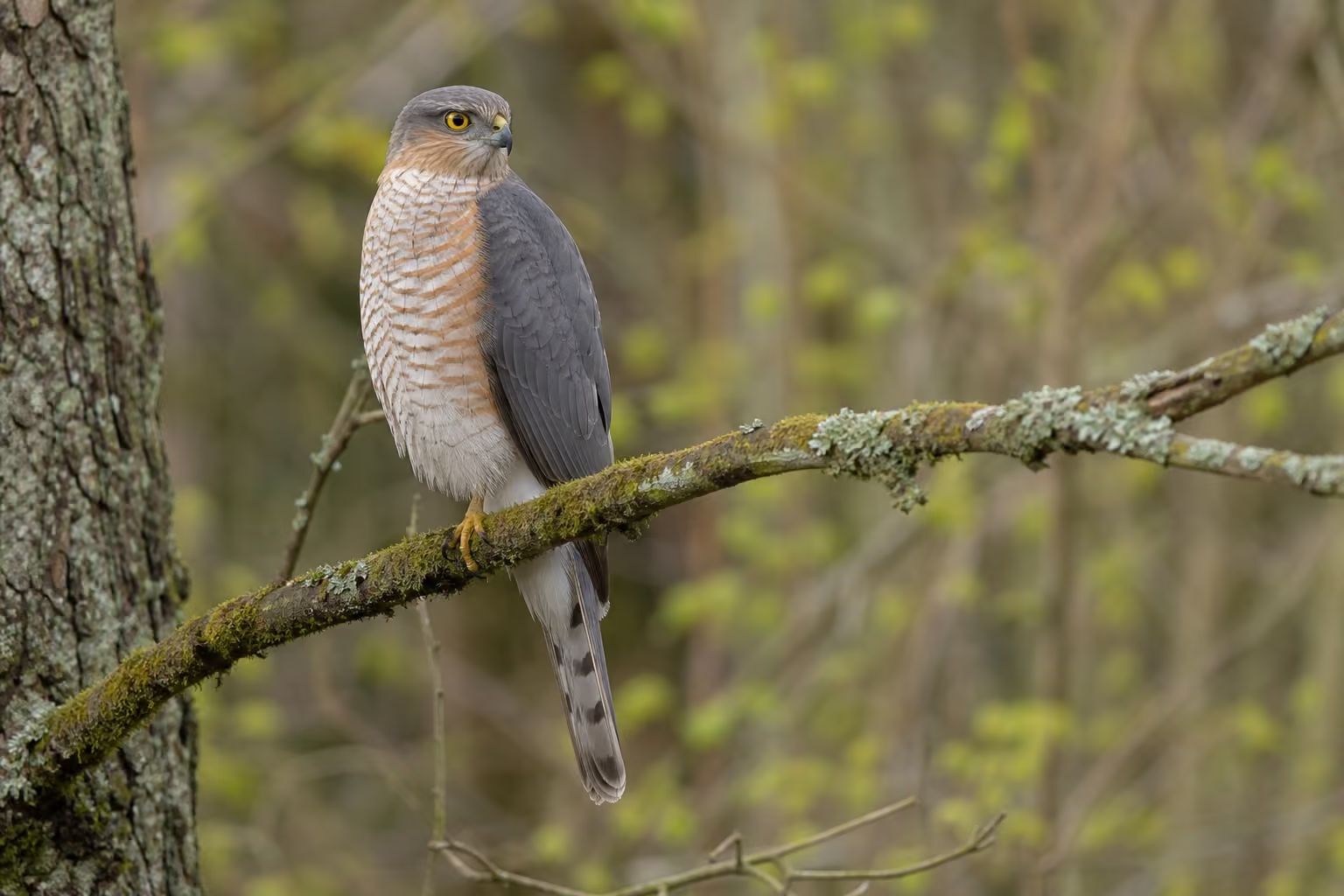
Eurasian sparrowhawk
Accipiter nisus
- Size
- 28–40 cm · 110–350 g
- Diet
- Carnivore
- Activity
- Diurnal
- Sociality
- Solitary
- Lifespan
- —
A small hawk of woodland edges and towns, built for fast surprise attacks on small birds.
Details
Accipiter nisus
A small hawk of woodland edges and towns, built for fast surprise attacks on small birds.
Map: Ecoregions 2017 © RESOLVE (CC BY 4.0) · Natural Earth (PD)
Uses woods, conifers, farm shelterbelts, parks, and gardens where trees provide cover and small birds are abundant.
Males have blue-gray upperparts and orange barring, while females are browner and more heavily barred. Wings are short and rounded with a long tail.
It flies low and fast, using trees and buildings to ambush prey. Outside breeding it is usually solitary.
Small birds dominate the diet. Males take smaller birds, while larger females can catch thrushes and starlings.
Stick nests are built in trees within woodland. Females incubate while males supply prey for much of the early breeding period.
Globally low-risk, with some populations recovered from pesticide impacts; window strikes and persecution remain local issues.