085 Featured Specimen
Panther chameleon

Details

Panther chameleon

Furcifer pardalis

Size
30–50 cm · 60–180 g
Diet
Carnivore
Activity
Diurnal
Sociality
Solitary
Lifespan
Varies by species and environment

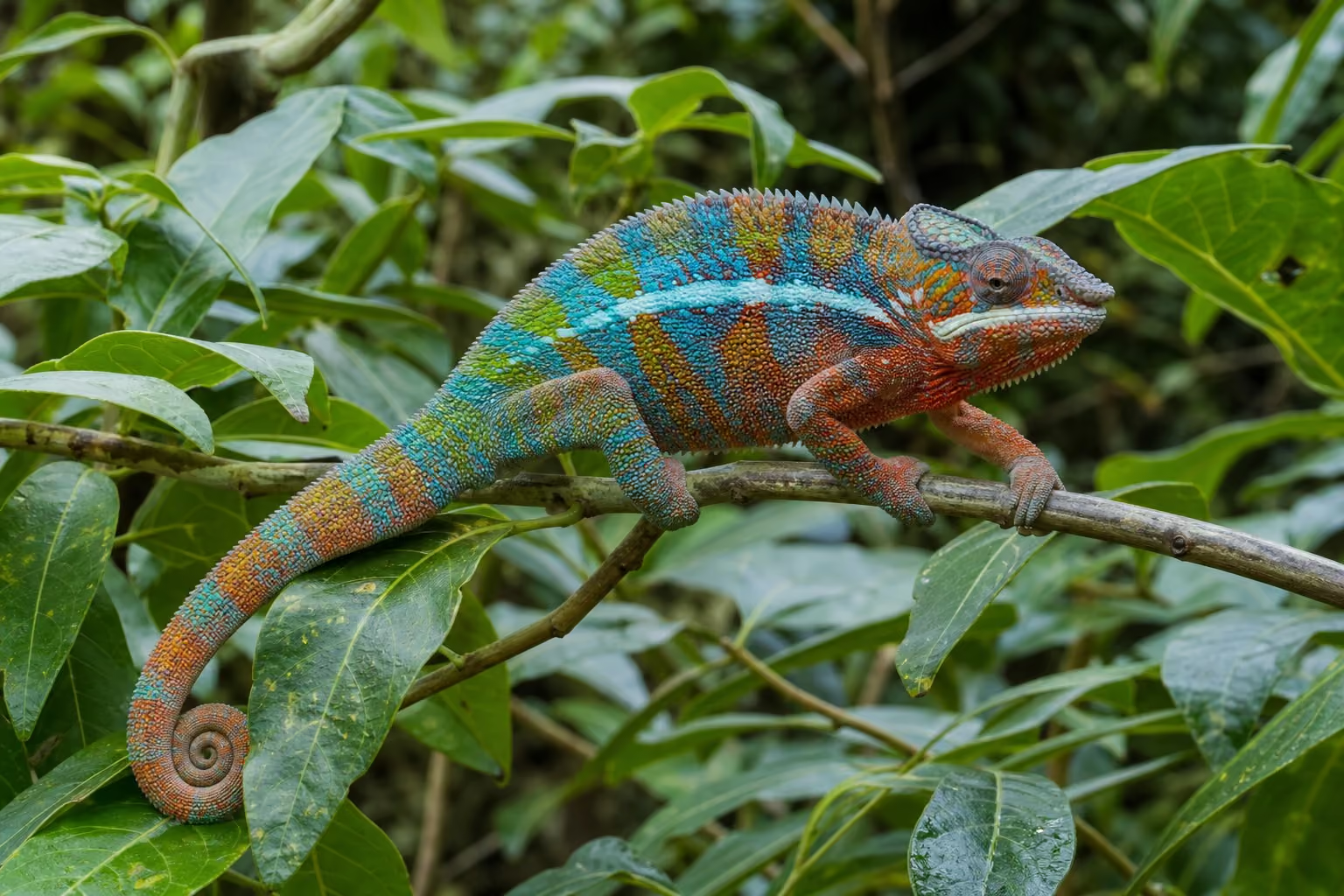
A tree-dwelling chameleon endemic to Madagascar, famous for the dazzling, locale-specific coloration of males and their ability to shift color with mood and situation.
Range

Habitat range map
Native range Occasional / Transient
AfrotropicalAfrotropicalAfrotropicalAfrotropical

Map: Ecoregions 2017 © RESOLVE (CC BY 4.0) · Natural Earth (PD)

Details

Habitat

Endemic to eastern and northern Madagascar, it inhabits humid tropical rainforest as well as the drier broken forest and savannah of the northwest. It adapts readily to disturbed habitats, thriving near roads, homes, and plantations.

Appearance

Roughly 30 to 50 cm long and 60 to 180 g, with males larger and far more vivid than females. Male color varies by region, blue in Nosy Be populations, red, green, or orange around Ambilobe, while females stay tan to brown with little geographic variation. The eyes move independently and the toes are fused into gripping bundles.

Behavior

Strongly territorial, it lives alone outside the breeding season. When two males meet they brighten their colors and inflate their bodies in display, escalating to biting if neither backs down. Color change also serves in courtship and thermoregulation.

Feeding

Carnivorous, it preys mainly on insects and other terrestrial invertebrates. Tracking prey with independently swiveling eyes, it shoots out a tongue that can rival its own body length, then crushes the catch with strong jaws.

Reproduction

Oviparous, females bury clutches of 10 to 46 eggs and may lay several clutches in a lifetime. Incubation is long, around 240 days. Egg-laying is taxing, and wild females rarely survive long after breeding.

Notes

Listed on CITES Appendix II, its brilliant coloration makes it a prized animal in the international pet trade. It is among the hardier chameleons and breeds readily in captivity, with regional color forms valued as distinct lineages.