436 Featured Specimen
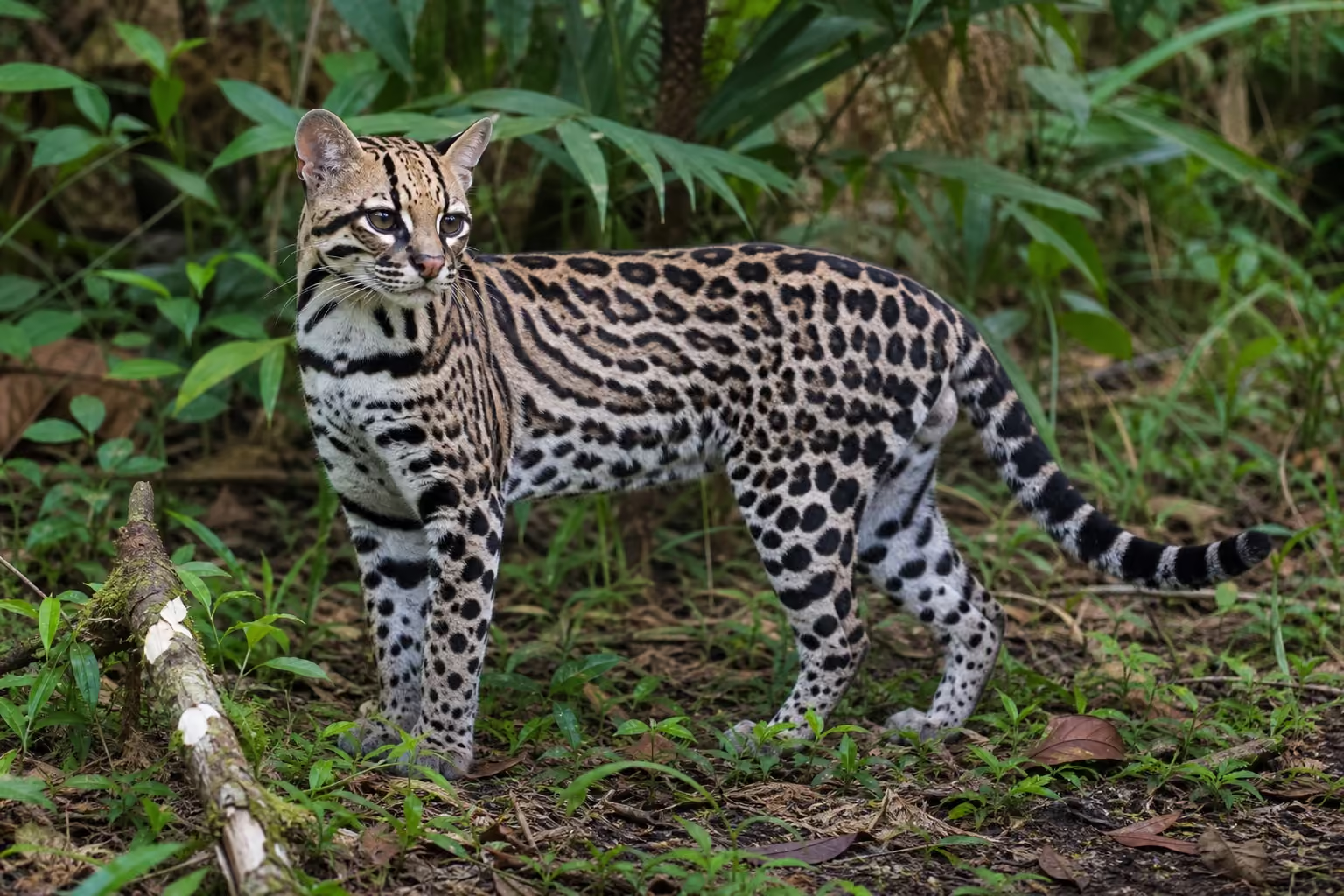
Ocelot

Details

Ocelot

Leopardus pardalis

Size
0.6–1 m · 7–18 kg
Diet
Carnivore
Activity
Nocturnal
Sociality
Solitary
Lifespan
7–10 years

The ocelot is a beautifully marked small cat of the Americas. It hunts alone at night, taking small mammals, birds, and other prey.
Range

Habitat range map
Native range Occasional / Transient
NearcticNearcticNearcticNearcticNearcticNearcticNearcticNearcticNearcticNearcticNearcticNearcticNearcticNearcticNearcticNearcticNearcticNearcticNearcticNearcticNearcticNearcticNearcticNearcticNearcticNearcticNearcticNearcticNearcticNearcticNearcticNearcticNearcticNearcticNearcticNearcticNearcticNearcticNearcticNearcticNearcticNeotropicalNeotropicalNeotropicalNeotropicalNeotropicalNeotropicalNeotropicalNeotropical

Map: Ecoregions 2017 © RESOLVE (CC BY 4.0) · Natural Earth (PD)

Details

Habitat

It ranges through the Neotropics into the southern Nearctic, using forest and grassland. Dense undergrowth, riparian forest, and brushy cover are especially important.

Appearance

Length 55-100 cm; weight 7-18 kg. The tawny coat is patterned with black spots and chainlike markings, with a white belly. Rounded ears carry pale spots behind.

Behavior

Nocturnal and solitary, it usually travels on the ground but can climb and swim. Scent marks define its territory.

Feeding

A carnivore, it catches rodents, birds, reptiles, amphibians, and other small animals. It moves quietly through dark cover and pounces at close range.

Reproduction

Females den in rock crevices, hollow roots, or dense cover and raise small litters. Young stay with the mother while learning to hunt.

Notes

It is listed as Least Concern, though it was heavily hunted for fur in the past. Forest fragmentation and road mortality remain local issues.