763 Featured Specimen
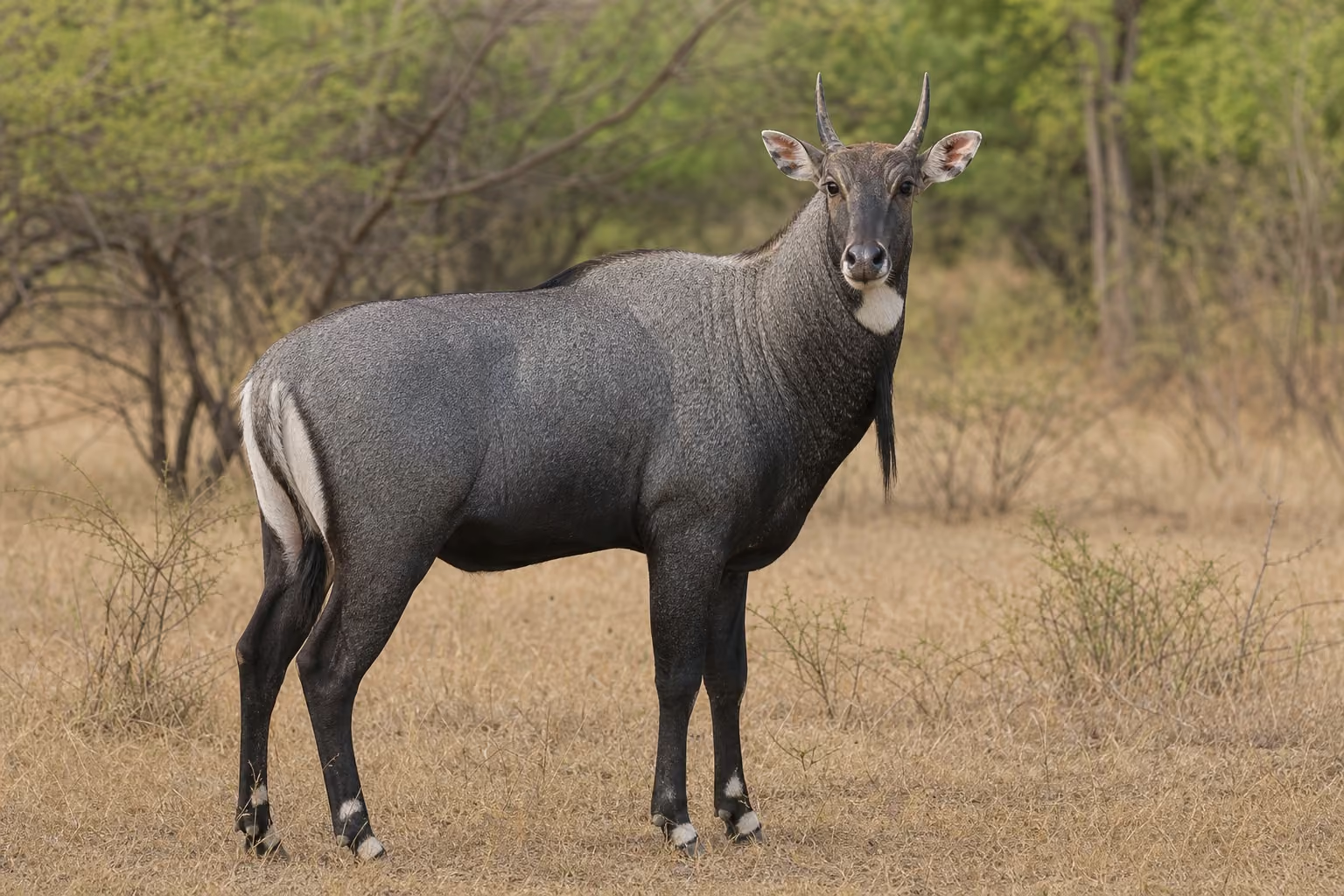
Nilgai

Details

Nilgai

Boselaphus tragocamelus

Size
1.8–2.1 m · 120–288 kg
Diet
Herbivore
Activity
Diurnal
Sociality
Loose group
Lifespan

A large antelope of the Indian subcontinent. Adult males are bluish gray, females are tawny, and the species uses grassland, farms, and open woodland.
Range

Habitat range map
Native range Occasional / Transient
IndomalayanIndomalayanIndomalayanIndomalayanIndomalayanIndomalayanIndomalayanIndomalayanIndomalayanIndomalayanIndomalayanIndomalayanIndomalayanIndomalayanIndomalayan

Map: Ecoregions 2017 © RESOLVE (CC BY 4.0) · Natural Earth (PD)

Details

Habitat

Nilgai favor dry grassland, scrub, open woodland, and agricultural edges. They generally avoid dense forest and prefer areas with visibility.

Appearance

Males are blue-gray with short horns; females and young are tawny. The body is high-shouldered with a throat tuft.

Behavior

They feed by day. Females and young form small groups, while males may be solitary or in bachelor groups and compete during breeding periods.

Feeding

They eat grasses, leaves, shoots, fruits, and crops. Broad diet tolerance allows them to persist in dry and human-modified landscapes.

Reproduction

Females may give birth to one calf or twins. Young remain near the mother and later join group movements.

Notes

In parts of India, cultural associations with cattle complicate management, especially where crop damage and protection concerns overlap.