757 Featured Specimen
Greater kudu

Details

Greater kudu

Tragelaphus strepsiceros

Size
1.9–2.5 m · 120–315 kg
Diet
Herbivore
Activity
Crepuscular
Sociality
Loose group
Lifespan

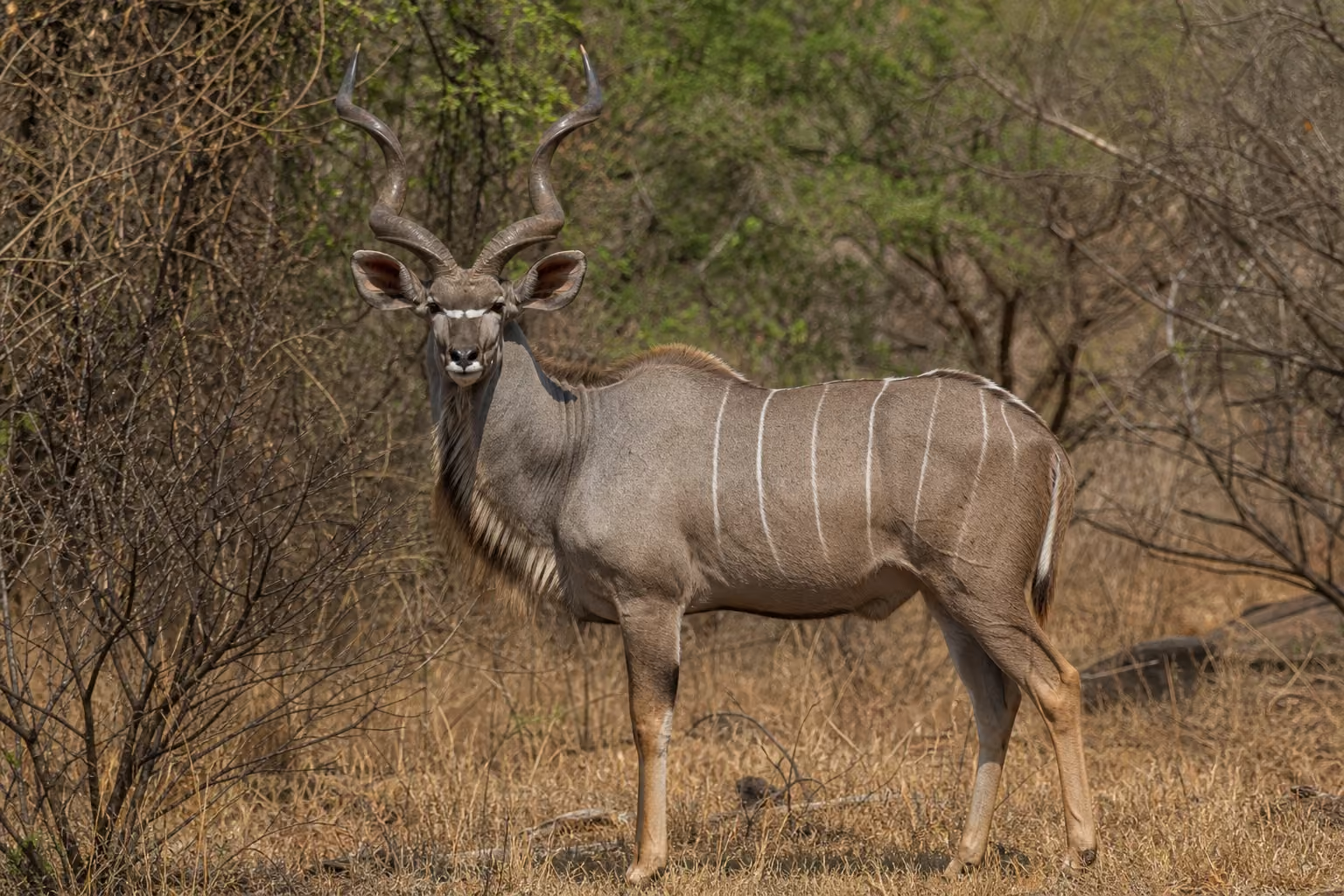
A large antelope of eastern and southern African woodland. Males are recognized by long spiral horns and pale vertical body stripes.
Range

Habitat range map
Native range Occasional / Transient
AfrotropicalAfrotropicalAfrotropicalAfrotropical

Map: Ecoregions 2017 © RESOLVE (CC BY 4.0) · Natural Earth (PD)

Details

Habitat

Greater kudus use dry woodland, bushland, riparian thickets, and rocky wooded slopes. They favor cover rather than very open plains.

Appearance

The gray-brown body has narrow white stripes. Males carry large spiral horns and a throat fringe, while females are smaller and hornless.

Behavior

They are most active near dawn and dusk, resting in cover during hotter hours. Females and young form small groups; mature males are often solitary.

Feeding

They browse leaves, shoots, vines, and fruit. A long neck helps them select foliage from shrubs and small trees.

Reproduction

During the rut, males follow females and spar with their horns. Females hide single calves in dense cover during the early weeks.

Notes

Their stripes help break up the body outline in dappled woodland, supporting their tendency to freeze or slip away quietly when alarmed.