311 Featured Specimen
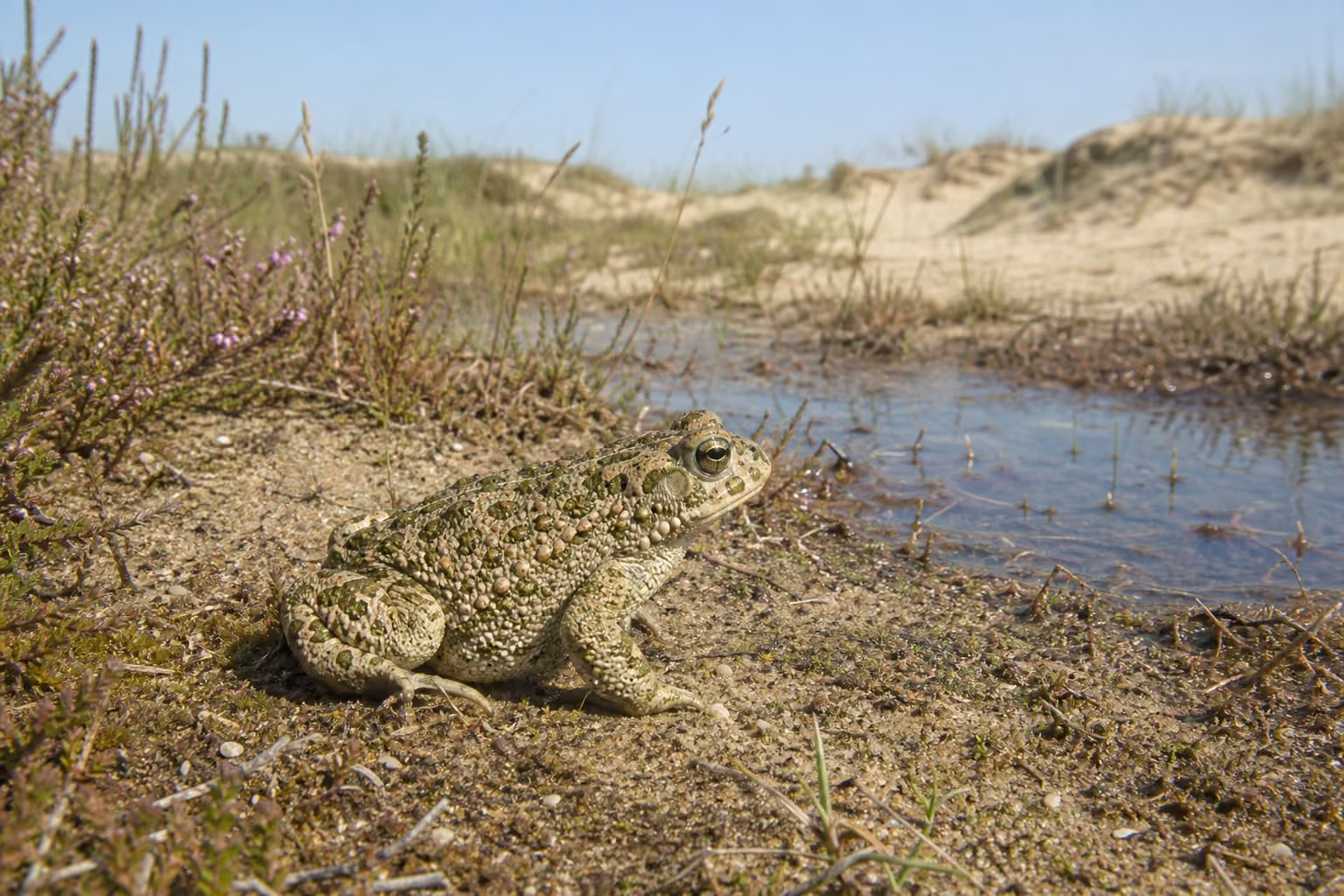
Natterjack toad

Details

Natterjack toad

Epidalea calamita

Size
6–8 cm · 20–60 g
Diet
Carnivore
Activity
Nocturnal
Sociality
Solitary
Lifespan
10–15 years

The natterjack toad is a small Palearctic toad of sandy heaths, dunes, and open coastal grasslands. Its quick, running gait gives it the alternative name running toad.
Range

Habitat range map
Native range Occasional / Transient
PalearcticPalearcticPalearcticPalearcticPalearcticPalearcticPalearcticPalearcticPalearcticPalearcticPalearcticPalearcticPalearcticPalearcticPalearcticPalearcticPalearcticPalearcticPalearcticPalearcticPalearcticPalearcticPalearcticPalearctic

Map: Ecoregions 2017 © RESOLVE (CC BY 4.0) · Natural Earth (PD)

Details

Habitat

It favors dunes, heathland, saltmarsh edges, and open grassland with shallow pools. Sunny, sparsely vegetated ground and temporary water are central to breeding habitat.

Appearance

Length is 6-8 cm and weight 20-60 g. A thin yellow stripe usually runs down the back, and the short hind legs and warty skin suit a low, running movement.

Behavior

Nocturnal adults hide by day in sand or under cover. Rather than bounding like many frogs, they scurry across open ground, and breeding males call loudly from pool margins.

Feeding

A carnivore, it eats small invertebrates such as beetles, ants, flies, and spiders. It patrols bare ground and seizes moving prey at close range.

Reproduction

Breeding takes place in shallow pools in spring and early summer. Females lay strings of eggs, and tadpoles must grow quickly before temporary water dries.

Notes

It is listed as Least Concern, but local populations can be vulnerable where breeding pools are lost or open sandy habitat becomes overgrown.