090 Featured Specimen
Common frog

Details

Common frog

Rana temporaria

Size
6–9 cm · 20–80 g
Diet
Carnivore
Activity
Crepuscular
Sociality
Solitary
Lifespan
Varies by species and environment

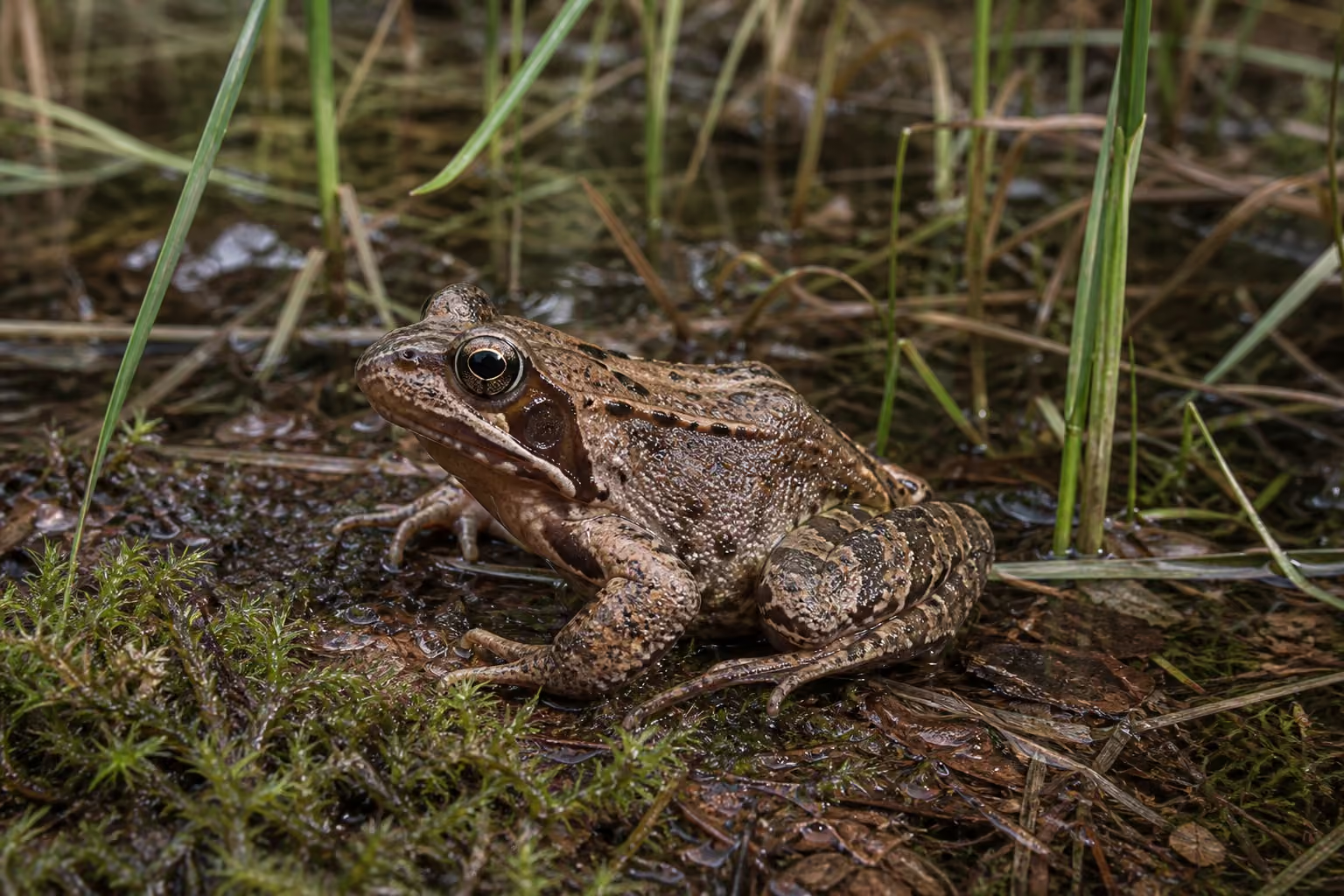
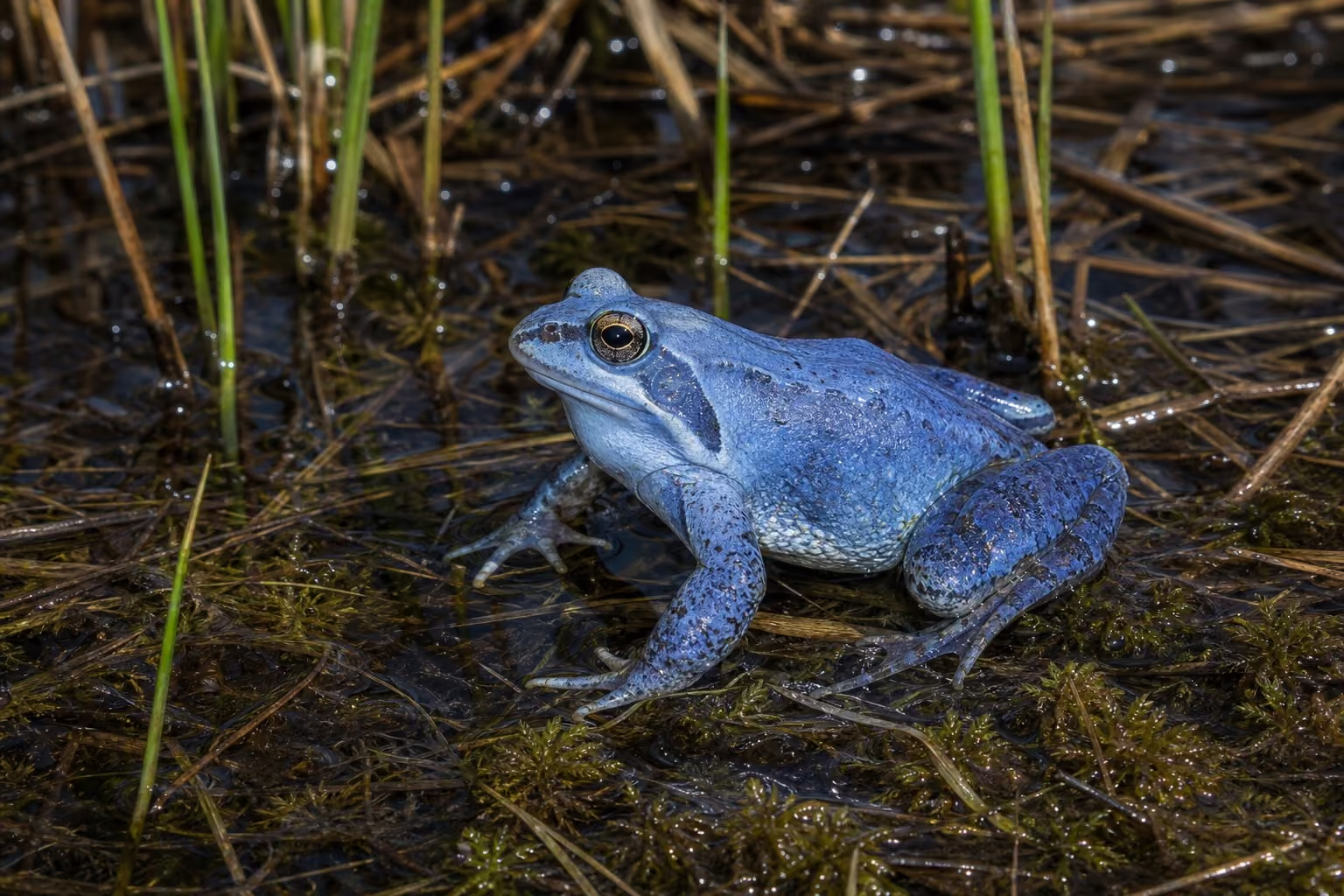
The common frog is Europe's most familiar amphibian, recognised by its smooth skin and the dark temporal patch behind each eye. It can lighten or darken its skin to blend in, and gathers en masse at ponds to spawn in early spring.
Range

Habitat range map
Native range Occasional / Transient
PalearcticPalearcticPalearcticPalearcticPalearcticPalearcticPalearcticPalearcticPalearcticPalearcticPalearcticPalearcticPalearcticPalearcticPalearcticPalearcticPalearcticPalearcticPalearcticPalearcticPalearcticPalearcticPalearcticPalearctic

Map: Ecoregions 2017 © RESOLVE (CC BY 4.0) · Natural Earth (PD)

Details

Habitat

It ranges across most of Europe, from Scandinavia south and east to the Urals, absent only from the far south such as much of Iberia. Outside the breeding season it favours damp grassland and hollows near ponds and marshes, overwintering in mud or at the bottom of water bodies.

Appearance

Adults are 6-9 cm long and weigh roughly 20-80 g, with females larger than males. Coloration ranges from olive green to brown, grey and yellowish, marked with irregular dark blotches, a chevron on the neck, and a distinctive dark patch behind the eye. The snout is fairly pointed and the skin smooth.

Behavior

It lives a largely solitary life, becoming active in the cool, damp hours of dusk and night. From about October to January it hibernates underwater or in mud, breathing through its skin throughout. Only at breeding time do large numbers converge on a single pool.

Feeding

A carnivore, it uses a sticky tongue to seize insects such as flies and beetles along with slugs, snails, earthworms, spiders and woodlice. Tadpoles, by contrast, graze on algae and detritus.

Reproduction

Breeding takes place in shallow freshwater between late February and June, generally in spring. A single female lays a clutch of a few hundred to 5,000 eggs; these hatch in two to three weeks and the tadpoles complete metamorphosis by early summer. There is no parental care.

Notes

Listed as Least Concern and still widespread, it nonetheless faces threats from ranavirus, which can cause very high mortality, and from habitat fragmentation by urbanisation. A frequent visitor to garden ponds, it is one of Europe's best-loved frogs.