082 Featured Specimen
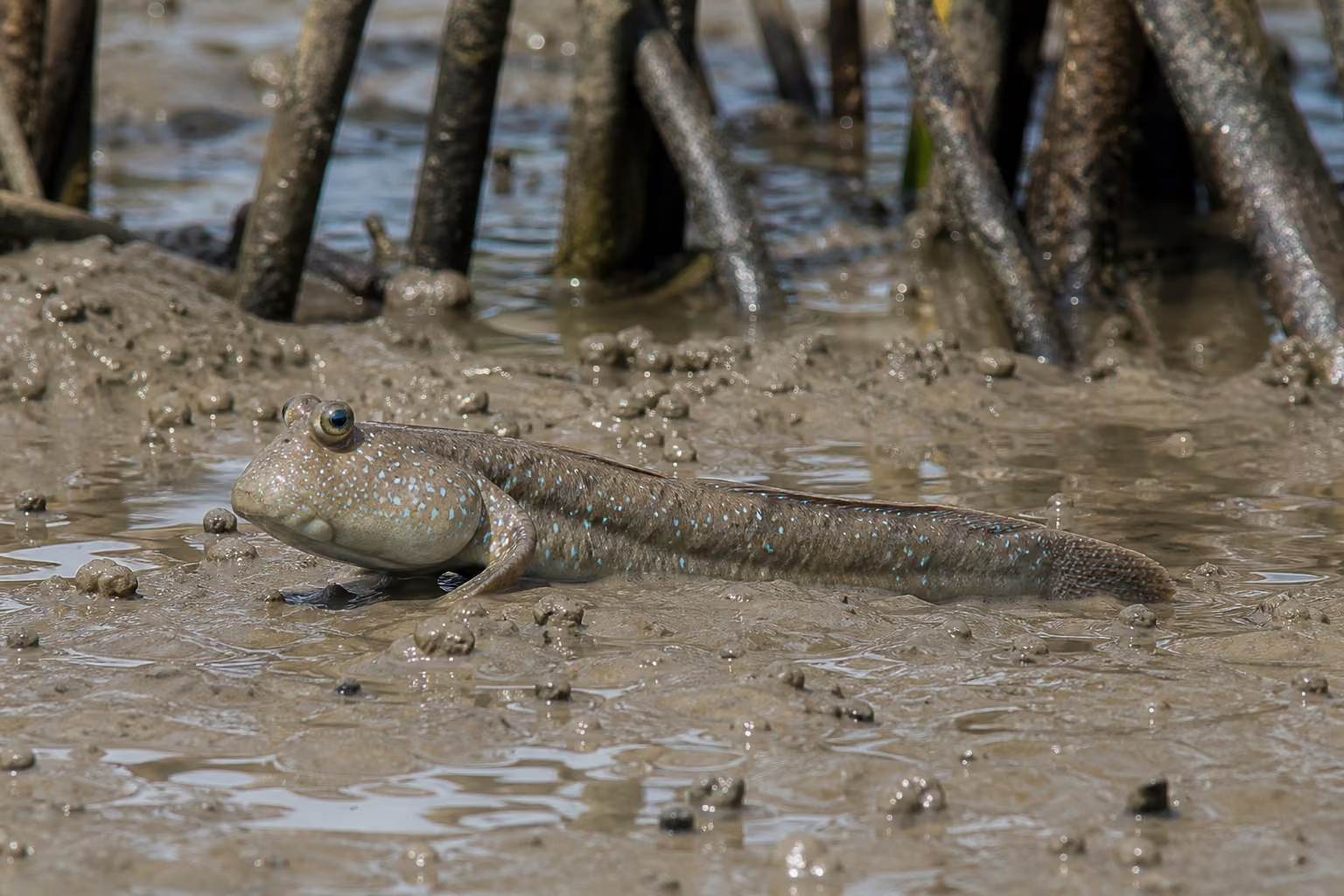
Mudskipper

Details

Mudskipper

Periophthalmus barbarus

Size
10–25 cm · 10–80 g
Diet
Omnivore
Activity
Diurnal
Sociality
Loose group
Lifespan
Varies by species and environment

An amphibious fish of tropical West African coasts that is as much at home on land as in water. Its bulging, nearly fused eyes sit high on the head to scan the mudflat, and it walks across the mud on leg-like pectoral fins.
Range

Habitat range map
Native range Occasional / Transient
Pacific OceanPacific OceanPacific OceanAfrotropicalAfrotropicalAfrotropicalAfrotropicalIndomalayanIndomalayanIndomalayanIndomalayanIndomalayanIndomalayanIndomalayanIndomalayanIndomalayanIndomalayanIndomalayanIndomalayanIndomalayanIndomalayanIndomalayan

Map: Ecoregions 2017 © RESOLVE (CC BY 4.0) · Natural Earth (PD)

Details

Habitat

Found along the tropical Atlantic coasts of West Africa, it lives in mangrove swamps and intertidal mudflats. It tolerates fresh, brackish and marine water alike.

Appearance

It measures 10 to 25 cm and weighs 10 to 80 g. The eyes are set close together and high on the head, giving a wide view across flat mud. A mucus-coated body resists drying, and water held in the gill chambers lets it breathe out of water.

Behavior

Active by day, it spends much of its time on exposed mud at low tide. Strongly territorial, it builds mud walls around its patch and digs burrows up to 1.5 m deep that offer refuge and trapped air pockets for breathing.

Feeding

An ambush forager, it captures prey on land using a 'hydrodynamic tongue'—water expelled and drawn back with the mouth. Its prey includes worms, insects, small fish and crustaceans such as crabs.

Reproduction

Spawning peaks from February to May, with males guarding the eggs inside burrows dug into the mud. Paternal care is extensive, the male tending the clutch. Lifespan averages around five years, though some reach 15.

Notes

Listed as Least Concern, but local declines are linked to overfishing, pollution and the loss of mudflats to urban development. It is used as food, fishing bait, an ornamental fish and in traditional medicine.