759 Featured Specimen
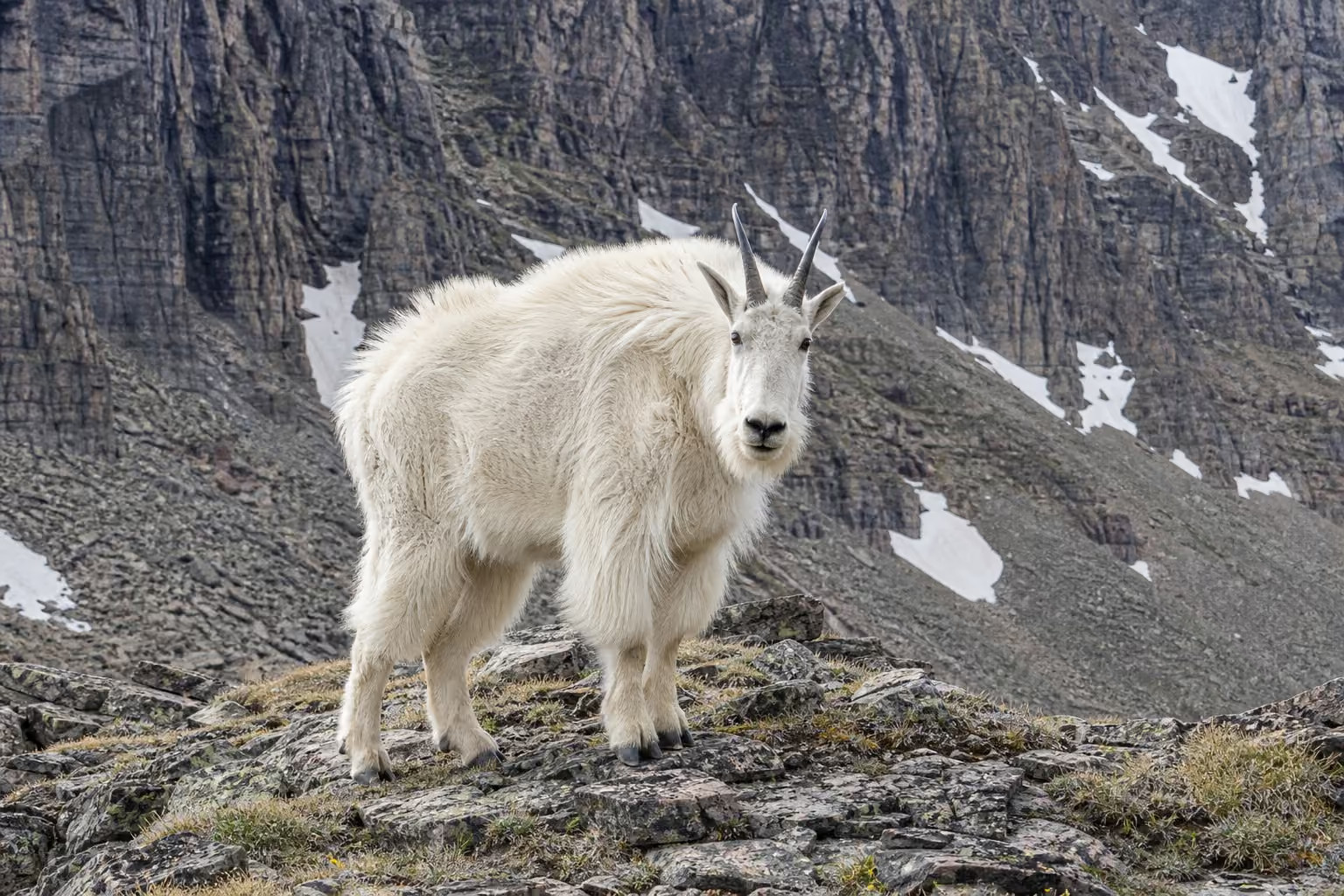
Mountain goat

Details

Mountain goat

Oreamnos americanus

Size
1.2–1.8 m · 45–140 kg
Diet
Herbivore
Activity
Diurnal
Sociality
Loose group
Lifespan

A white bovid of western North American mountains, specialized for cliffs, snowfields, and alpine meadows. Dense fur protects it from cold.
Range

Habitat range map
Native range Occasional / Transient
NearcticNearcticNearcticNearcticNearcticNearcticNearcticNearcticNearcticNearcticNearcticNearcticNearcticNearcticNearcticNearcticNearcticNearcticNearcticNearcticNearcticNearcticNearcticNearcticNearcticNearcticNearcticNearcticNearcticNearcticNearcticNearcticNearcticNearcticNearcticNearcticNearcticNearcticNearcticNearcticNearctic

Map: Ecoregions 2017 © RESOLVE (CC BY 4.0) · Natural Earth (PD)

Details

Habitat

Mountain goats inhabit alpine meadows, cliffs, rocky ridges, and snowfields from the Rocky Mountains to coastal ranges. Steep terrain provides predator refuge.

Appearance

They have long white coats, short black horns, and specialized hooves. Hard outer edges and soft pads improve grip on rock.

Behavior

They forage by day and move across ledges and ridgelines. Females and young form small groups, while adult males are often solitary outside the rut.

Feeding

Their diet includes alpine herbs, grasses, lichens, mosses, and shrub leaves. Winter foraging often occurs on wind-scoured slopes.

Reproduction

Breeding occurs in autumn, with kids born in spring or early summer. Newborns can walk quickly and follow mothers across steep terrain.

Notes

Despite the common name, the species is not a true goat in the genus Capra; it is a cliff-adapted North American caprine.