026 Featured Specimen
Monarch butterfly

Details

Monarch butterfly

Danaus plexippus

Size
Wingspan 8–10 cm
Diet
Nectarivore
Activity
Diurnal
Sociality
Herd
Lifespan
A few weeks to several months

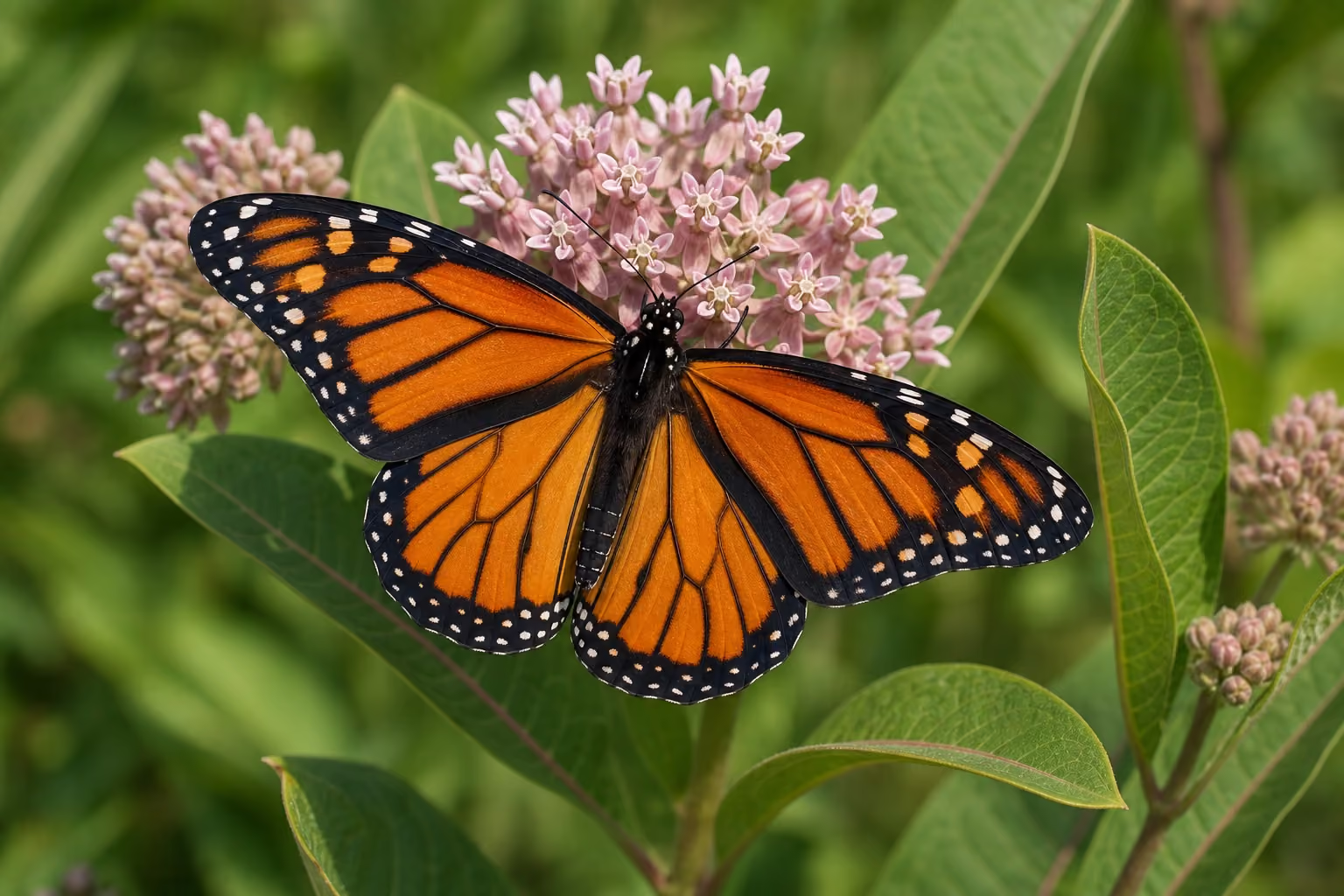
North America's iconic orange-and-black butterfly, its tawny wings veined and edged in black and dotted with white. It is renowned worldwide for a multi-generational migration spanning thousands of kilometres.
Range

Habitat range map
Native range Occasional / Transient

Map: Ecoregions 2017 © RESOLVE (CC BY 4.0) · Natural Earth (PD)

Details

Habitat

It ranges widely from southern Canada across North America, breeding in open grasslands, farmland and forest edges wherever milkweed grows. Overwintering is confined to a few sites such as the mountain forests of Michoacan, Mexico, and the California coast, where there is sunlight and sheltering trees to roost in.

Appearance

A medium-sized butterfly with a wingspan of roughly 8 to 10 cm, it has bright orange wings crossed by black veins and bordered with black, the margins studded with small white spots. Males are slightly larger and bear dark scent-gland spots on the hindwings; females are darker with thicker veins.

Behavior

Active by day, it gathers in vast overwintering roosts where countless individuals cluster on the same trees, sometimes bending the branches under their weight. Eastern populations travel some 4,000 km to Mexico, navigating by the sun and the Earth's magnetic field.

Feeding

Adults sip nectar from a wide range of flowers including sunflowers, asters and milkweeds. The caterpillars eat only milkweed leaves, sequestering the plant's toxic steroids (cardenolides) and carrying them through to the adult as a defence against predators.

Reproduction

A female lays 300 to 500 eggs on milkweed over two to five weeks. The caterpillar passes through five instars before pupating, emerging in about 25 days in summer. Summer adults live only two to five weeks, but the migratory generation survives several months, overwintering until the following spring.

Notes

Though widespread overall, the migratory population has fallen sharply as logging at overwintering sites and herbicide-driven loss of milkweed take their toll, with estimates that nearly a billion monarchs vanished after 1990. Protected reserves and milkweed plantings are now promoted to support them.