130 Featured Specimen
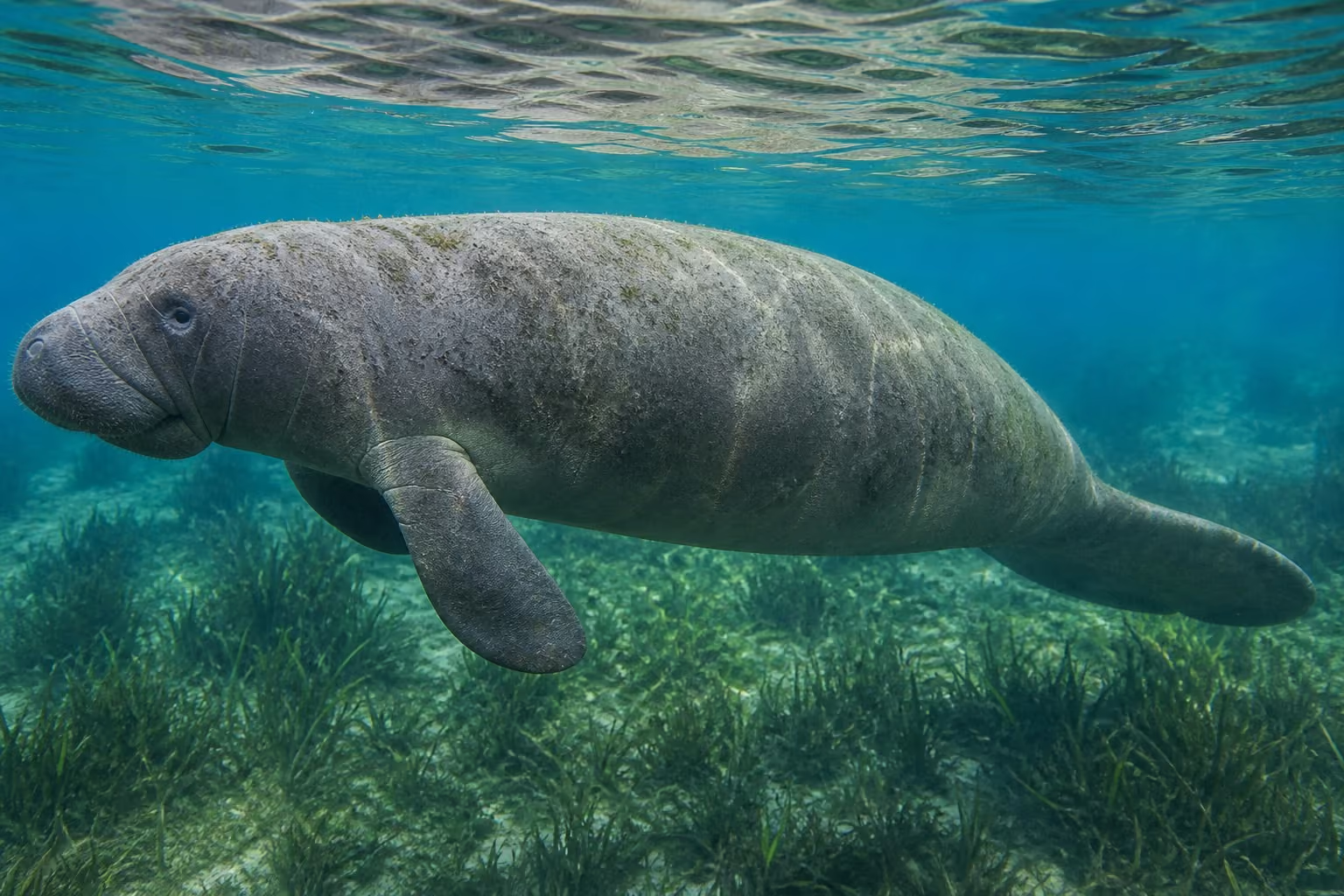
West Indian manatee

Details

West Indian manatee

Trichechus manatus

Size
2.5–4 m · 0.4–1.6 t
Diet
Herbivore
Activity
Cathemeral
Sociality
Loose group
Lifespan
10-20 years

The West Indian manatee is a large herbivorous sirenian of freshwater and coastal waters. Cathemeral and slow-moving, it often forms loose groups.
Range

Habitat range map
Native range Occasional / Transient
Atlantic OceanAtlantic OceanAtlantic OceanAtlantic OceanAtlantic OceanNeotropicalNeotropicalNeotropicalNeotropicalNeotropicalNeotropicalNeotropicalNeotropical

Map: Ecoregions 2017 © RESOLVE (CC BY 4.0) · Natural Earth (PD)

Details

Habitat

It uses rivers, estuaries, shallow coasts, and warm springs. Water temperature and aquatic vegetation strongly shape its movements.

Appearance

Body length is about 250-400 cm and weight about 400-1,600 kg. A rounded body, paddle-like forelimbs, and broad tail support slow swimming.

Behavior

It alternates feeding and resting through day and night. Individuals move alone or in loose groups and surface regularly to breathe.

Feeding

It is herbivorous, eating aquatic plants, seagrasses, and floating vegetation. It grazes slowly while moving through shallow water.

Reproduction

Calves are born in water and nurse while swimming beside the mother. The mother-calf bond is long, and young learn travel routes from her.

Notes

Its status is listed as Vulnerable. Boat strikes, cold stress, and coastal habitat change are frequent concerns.