129 Featured Specimen
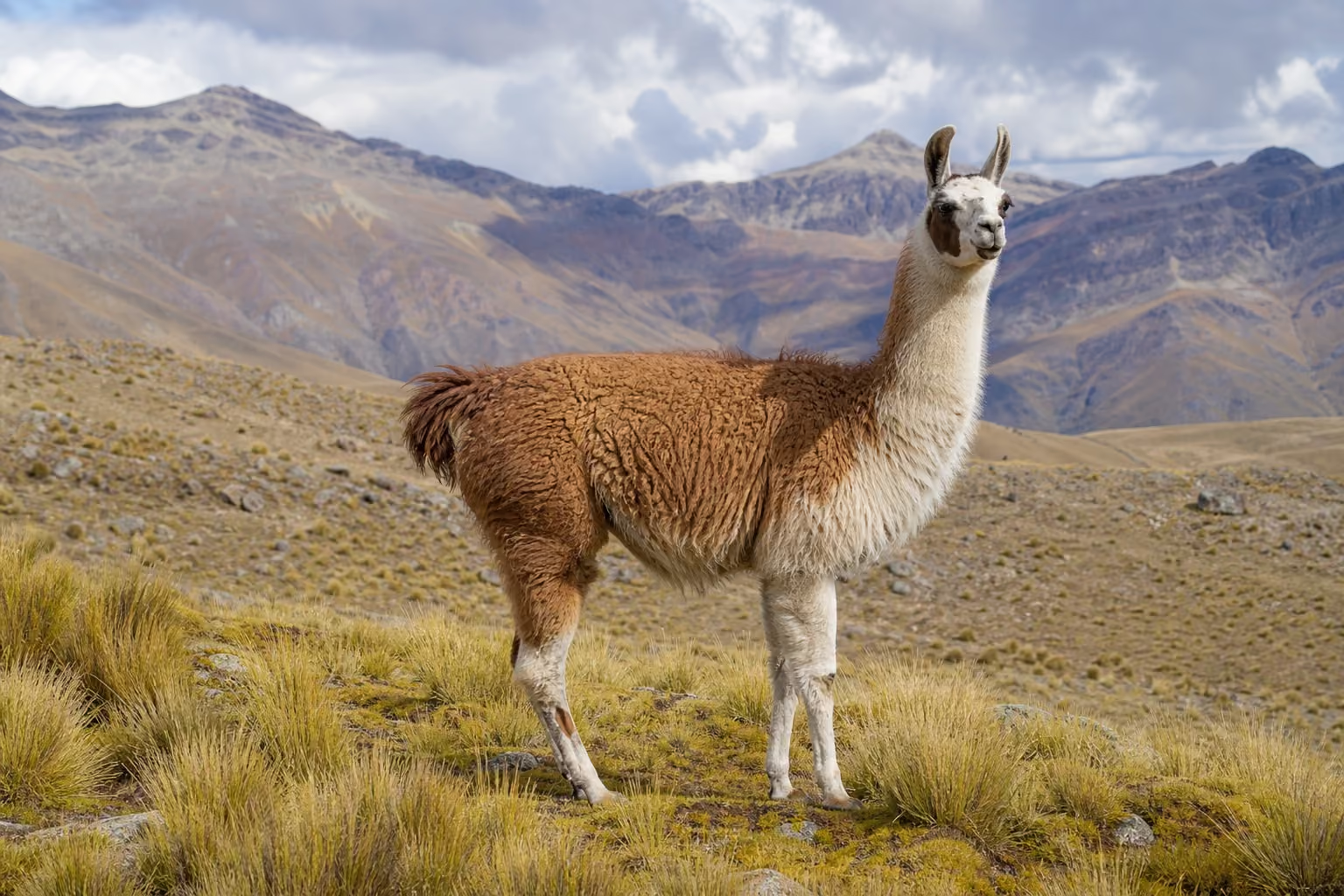
Llama

Details

Llama

Lama glama

Size
1.2–2.3 m · 80–200 kg
Diet
Herbivore
Activity
Diurnal
Sociality
Herd
Lifespan
10-20 years

The llama is a large camelid adapted to South American mountains and grasslands. Diurnal herds move through open highland country.
Range

Habitat range map
Native range Occasional / Transient
NeotropicalNeotropicalNeotropicalNeotropicalNeotropicalNeotropicalNeotropicalNeotropical

Map: Ecoregions 2017 © RESOLVE (CC BY 4.0) · Natural Earth (PD)

Details

Habitat

It uses Andean grasslands and open mountain areas. It feeds under dry conditions, temperature swings, and thin highland air.

Appearance

Body length is about 120-225 cm and weight about 80-200 kg. A long neck, slim legs, soft coat, and split padded feet suit rocky ground.

Behavior

Diurnal animals forage in herds while maintaining spacing. They are alert and often scan from a tall, upright posture.

Feeding

It is herbivorous, eating grasses, shrubs, and dry vegetation. It makes efficient use of sparse highland plants.

Reproduction

Young are born well developed and soon follow the mother. They nurse while moving with the herd.

Notes

Its status is listed as Least Concern. Long associated with people, it has been important for transport and fiber in highland life.