071 Featured Specimen
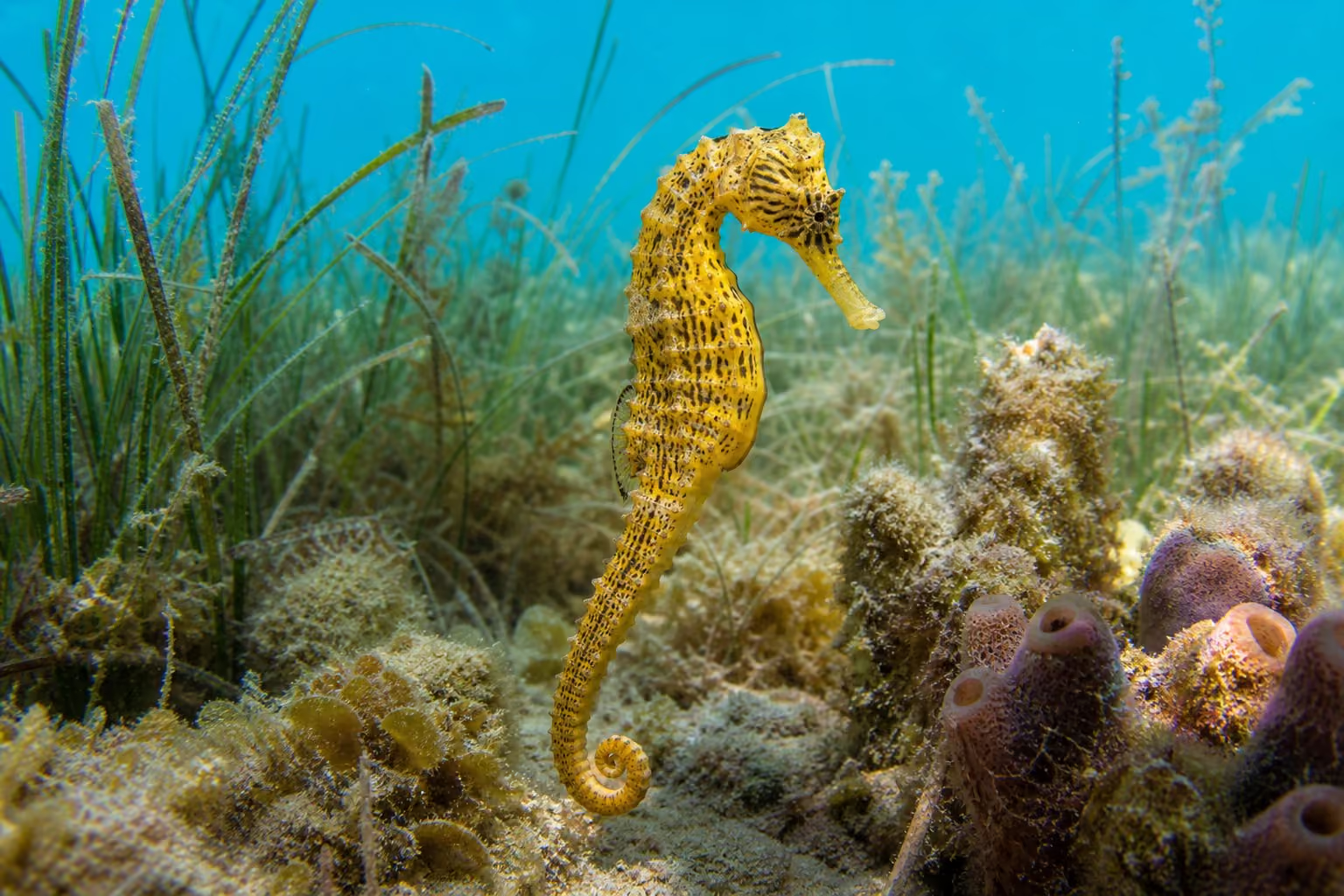
Lined seahorse

Details

Lined seahorse

Hippocampus erectus

Size
8–19 cm · 5–20 g
Diet
Carnivore
Activity
Diurnal
Sociality
Pair
Lifespan
Varies by species and environment

A small western Atlantic seahorse that swims upright, fluttering its dorsal and pectoral fins while gripping seagrass and coral with a prehensile tail. Like all seahorses, it is famous for male pregnancy: the father broods the eggs in an abdominal pouch.
Range

Habitat range map
Native range Occasional / Transient
Atlantic OceanAtlantic OceanAtlantic OceanAtlantic OceanAtlantic Ocean

Map: Ecoregions 2017 © RESOLVE (CC BY 4.0) · Natural Earth (PD)

Details

Habitat

It ranges through the western Atlantic from Cape Cod south to Venezuela and the Caribbean. It favors shallow coastal water rich in seagrass, mangroves, sponges, and floating Sargassum, occurring down to about 73 m, and moves to deeper water in winter.

Appearance

It grows to 8-19 cm long and 5-20 g, its body sheathed in roughly fifty armor-like bony plates with white lines tracing the neck. Color ranges widely from black, grey, brown, and green to orange, red, and yellow, shifting with surroundings and mood. The crown-like coronet is unique to each individual, and the eyes move independently.

Behavior

Active by day, it is a weak swimmer that holds an erect posture, beating its fins twenty to thirty times a second. It is monogamous, pairs reaffirming their bond with near-daily courtship dances, and can produce clicking sounds with the coronet.

Feeding

A carnivore, it preys on tiny crustaceans and zooplankton. It draws its snout slowly toward prey, then captures it with a sudden suction, and a growing seahorse may feed for many hours each day.

Reproduction

The female deposits eggs into the male's brood pouch, where he carries them for about 20-21 days. Broods range widely, from roughly 97 to over 1,500 eggs, and the young emerge as miniature adults near 11 mm long; only a small fraction survive to maturity.

Notes

Habitat loss, pollution, coastal development, and collection for the aquarium trade and traditional medicine have driven declines, and the IUCN lists the species as Vulnerable. It is also protected under CITES Appendix II, which regulates international trade.