754 Featured Specimen
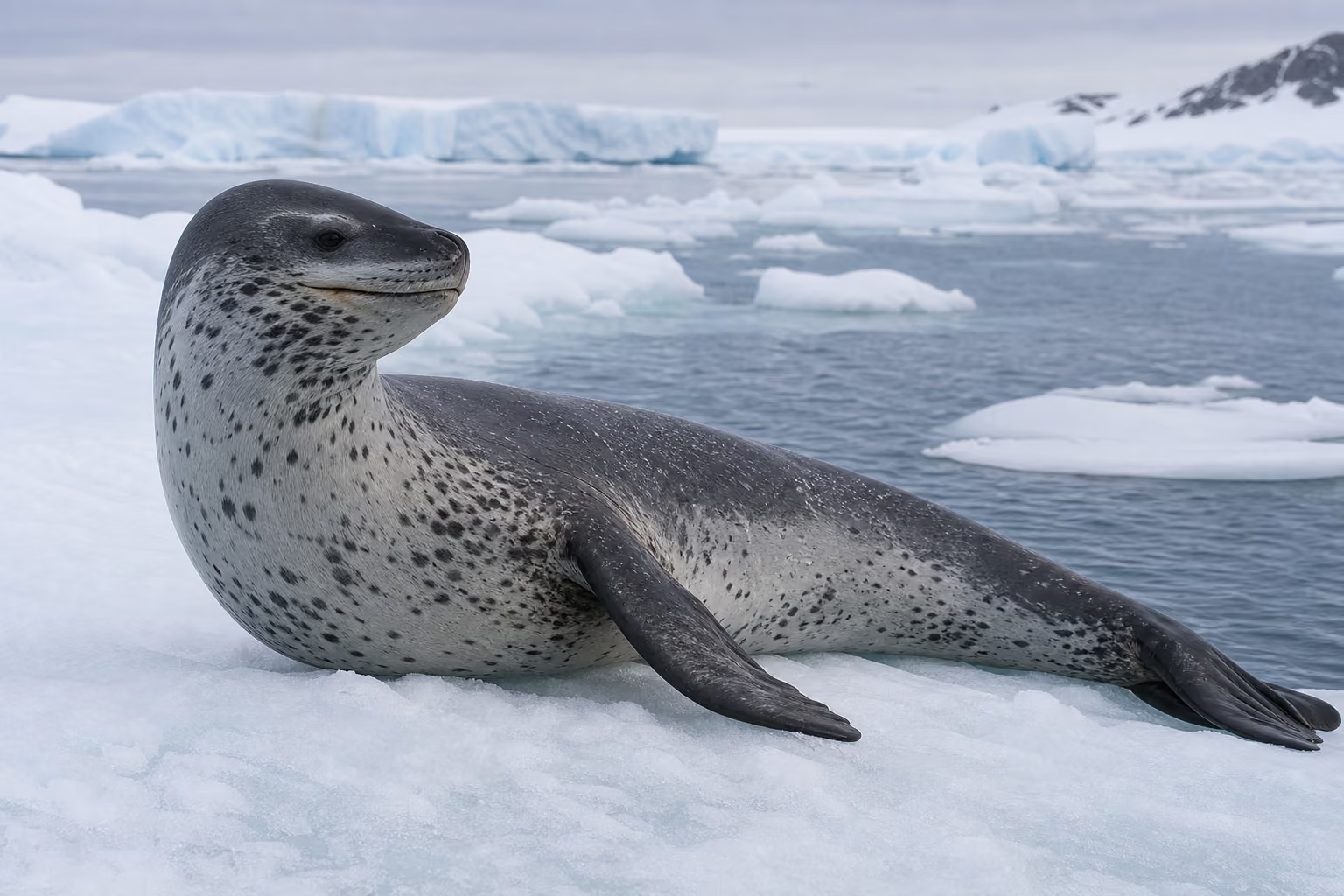
Leopard seal

Details

Leopard seal

Hydrurga leptonyx

Size
2.4–3.5 m · 200–590 kg
Diet
Carnivore
Activity
Cathemeral
Sociality
Solitary
Lifespan

A large Antarctic seal with a long head and spotted body. It is a top predator that can take penguins and other seals as well as fish and krill.
Range

Habitat range map
Native range Occasional / Transient
Southern OceanAntarcticAntarcticAntarcticAntarcticAntarcticAntarctic

Map: Ecoregions 2017 © RESOLVE (CC BY 4.0) · Natural Earth (PD)

Details

Habitat

Leopard seals inhabit Antarctic pack ice, ice edges, island coasts, and cold open water. Some individuals move northward seasonally.

Appearance

The body is long and powerful, with a large head, gray back, pale underside, and dark spots. The mouth is broad with sharp teeth.

Behavior

They are mostly solitary and often hunt near ice edges or shorelines. Strong swimming and ambush tactics help them capture agile prey.

Feeding

They eat penguins, young seals, fish, squid, and krill. Their teeth can grip large prey and also strain small crustaceans.

Reproduction

Females give birth to a single pup on ice during the Antarctic spring or early summer. Nursing is short and energetically intense.

Notes

As an Antarctic top predator, the species may be affected by changes in sea ice and the distribution of penguins and krill.