748 Featured Specimen
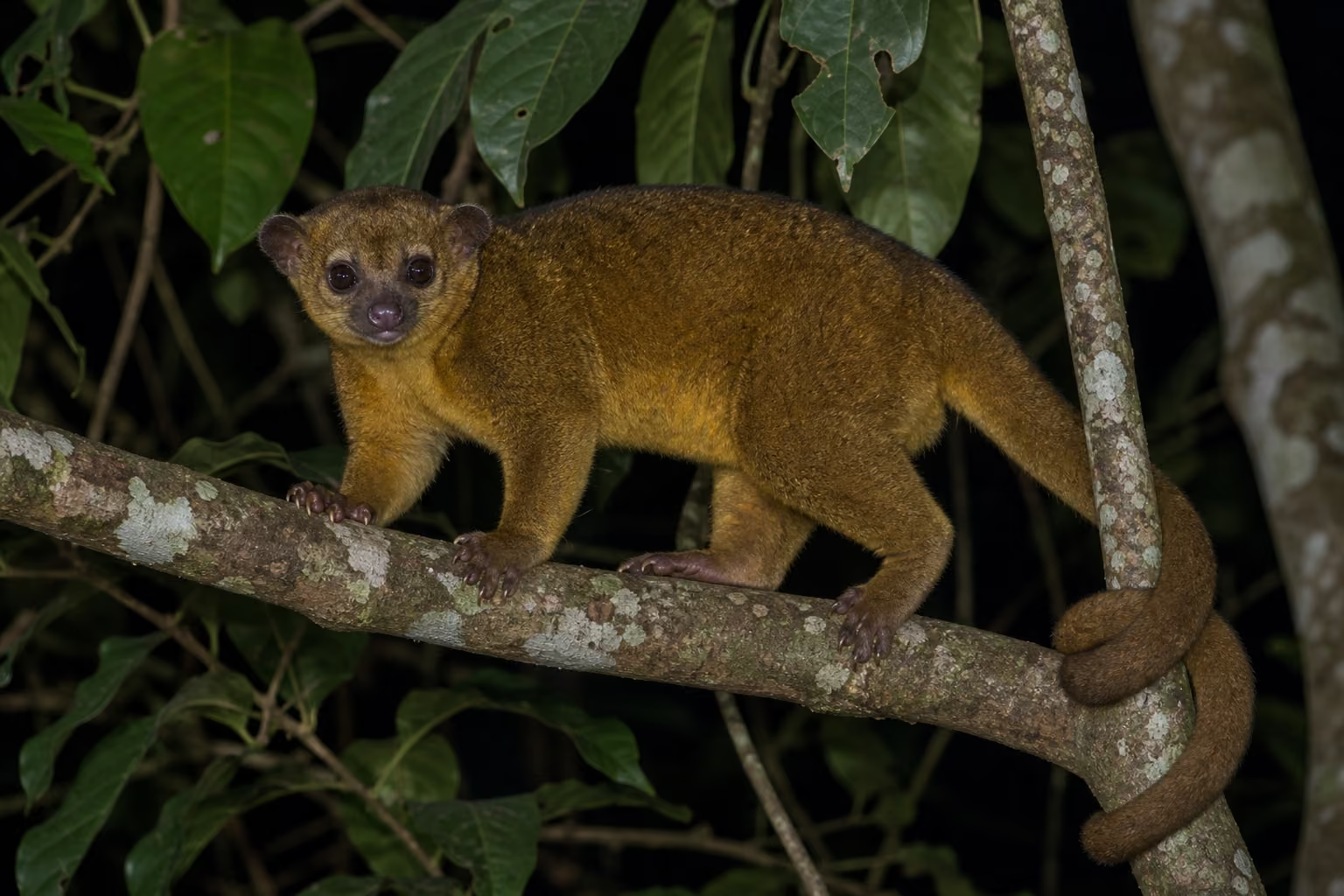
Kinkajou

Details

Kinkajou

Potos flavus

Size
0.8–1.3 m · 1.4–4.6 kg
Diet
Omnivore
Activity
Nocturnal
Sociality
Loose group
Lifespan

An arboreal procyonid of Central and South American tropical forests. It uses a prehensile tail and long tongue while foraging in the canopy at night.

Range

Habitat range map
Native range Occasional / Transient
NeotropicalNeotropicalNeotropicalNeotropicalNeotropicalNeotropicalNeotropicalNeotropical

Map: Ecoregions 2017 © RESOLVE (CC BY 4.0) · Natural Earth (PD)

Details

Habitat

Kinkajous inhabit tropical rainforest, cloud forest, and mature secondary forest. Connected canopy and fruiting trees are important habitat features.

Appearance

They have soft golden-brown fur, large eyes, rounded ears, and a long prehensile tail. The tail wraps around branches for support.

Behavior

They are nocturnal and strongly arboreal, moving carefully through branches. Individuals may forage alone but share resting sites or social groups.

Feeding

Fruit dominates the diet, supplemented by nectar, flowers, insects, and small animals. A long tongue allows nectar feeding from deep flowers.

Reproduction

Females usually bear a single young in a tree cavity or similar shelter. The young clings to the mother and gradually learns canopy movement.

Notes

The nickname honey bear reflects sweet food preferences, but kinkajous are procyonids rather than bears.