515 Featured Specimen
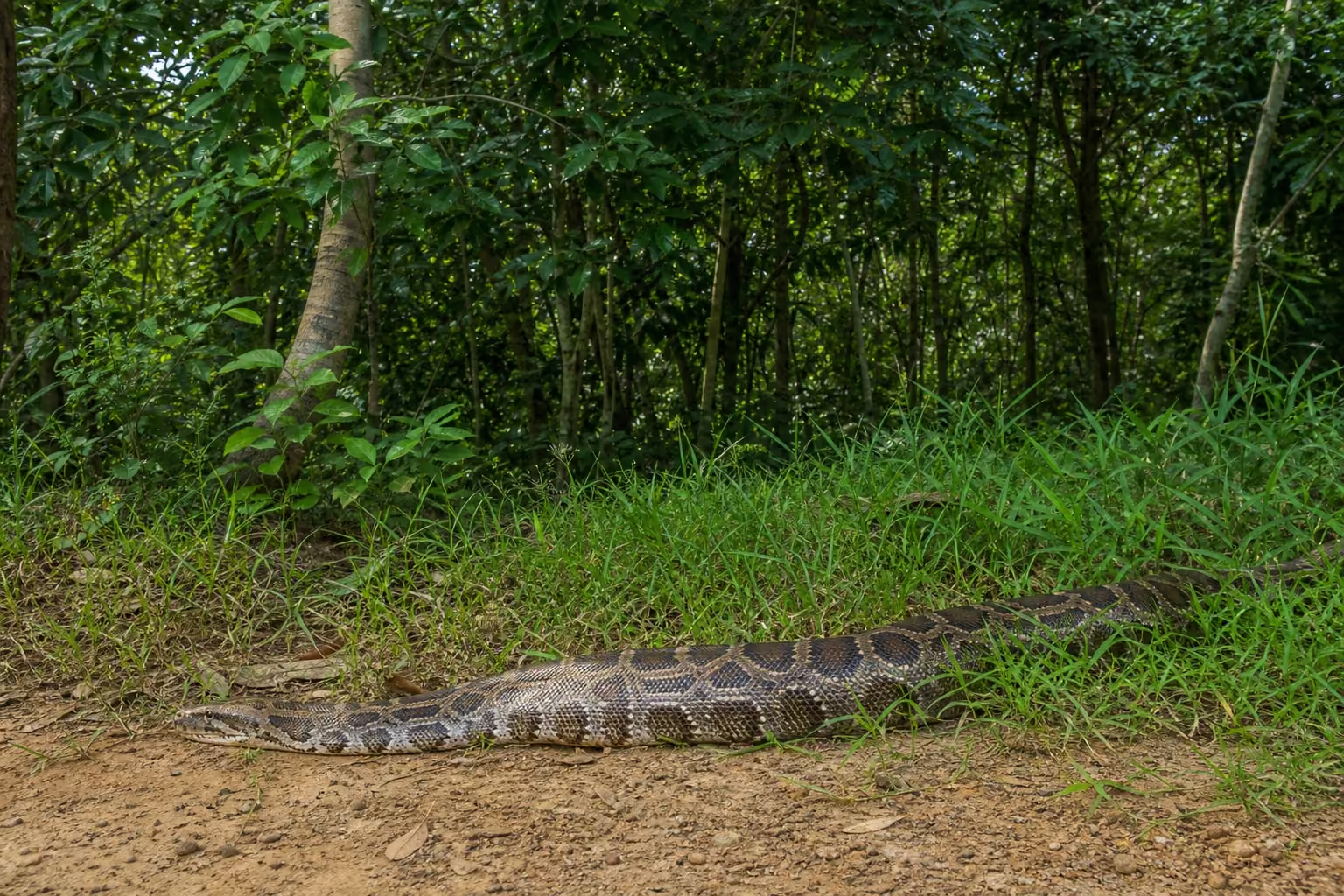
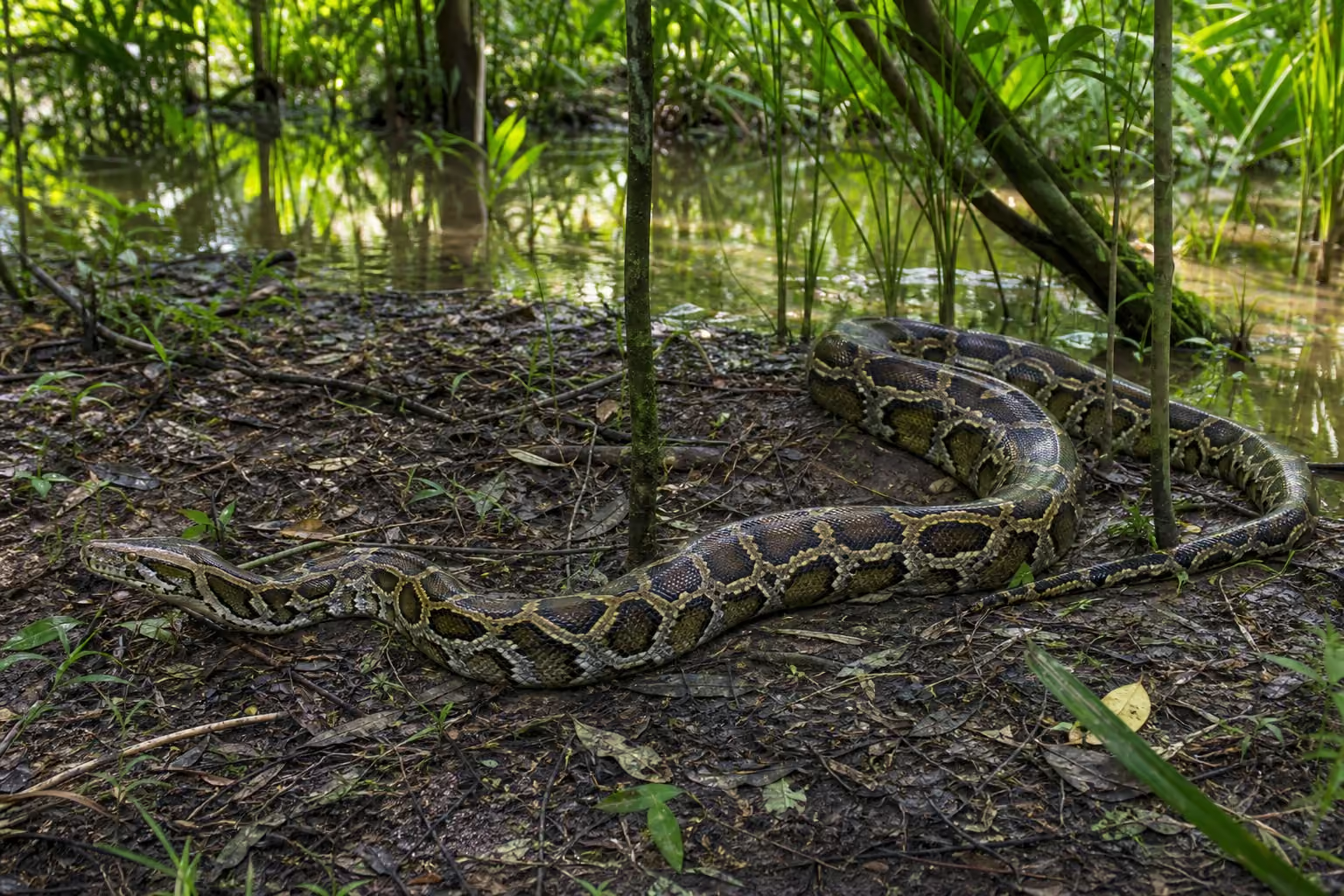
Indian python

Details

Indian python

Python molurus

Size
Total length 0.5–4.6 m
Diet
Carnivore
Activity
Cathemeral
Sociality
Solitary
Lifespan

A large, non-venomous python of South Asia, patterned with big dark-brown blotches on a pale, tan-tinged ground. Slow and unaggressive by nature, it kills even sizeable mammals by powerful constriction.
Range

Habitat range map
Native range Occasional / Transient
IndomalayanIndomalayanIndomalayanIndomalayanIndomalayanIndomalayanIndomalayanIndomalayanIndomalayanIndomalayanIndomalayanIndomalayanIndomalayanIndomalayanIndomalayan

Map: Ecoregions 2017 © RESOLVE (CC BY 4.0) · Natural Earth (PD)

Details

Habitat

It ranges across tropical and subtropical Asia, from the Indian subcontinent into Southeast Asia, including southern Nepal, Sri Lanka, Bangladesh and northern Myanmar. The snake occupies grasslands, swamps and marshes, rocky foothills, open woodland and river valleys, always near a reliable source of water.

Appearance

Usually around 3 m long, it is a heavy-bodied snake; the longest recorded specimen, from Pakistan, reached about 4.6 m and 52 kg. The pale, whitish-to-yellow body carries large tan to dark-brown blotches, often with reddish stripes on the sides of the head. Animals from the Western Ghats are darker, those from drier plateaus paler; hatchlings measure 45-60 cm.

Behavior

A solitary, lethargic and slow-moving snake, it is timid and rarely strikes in defence. It travels in a straight line by 'walking' on its ribs, and is a capable swimmer able to stay submerged for long periods. Juveniles spend much time in trees before becoming ground-dwelling adults.

Feeding

Strictly carnivorous, it takes mammals, birds, reptiles and amphibians, with a clear preference for mammals such as deer, wild boar and monkeys. Prey is seized, held in one or two tight coils until it suffocates, then swallowed head-first. After a large meal it may fast for weeks, with one record stretching to two years.

Reproduction

The female is oviparous, laying up to about 100 eggs and coiling around the clutch to guard it. While brooding she raises her body temperature above the surroundings through rhythmic muscular contractions, incubating the eggs until they hatch at 45-60 cm. The young grow rapidly.

Notes

Listed as Near Threatened, the species is thought to have declined by roughly 30% over 2010-2020 through habitat loss and overexploitation for skins, meat and the pet trade, and its international trade is regulated under CITES. Kaa, the python mentor in Kipling's The Jungle Book, is this species.