037 Featured Specimen
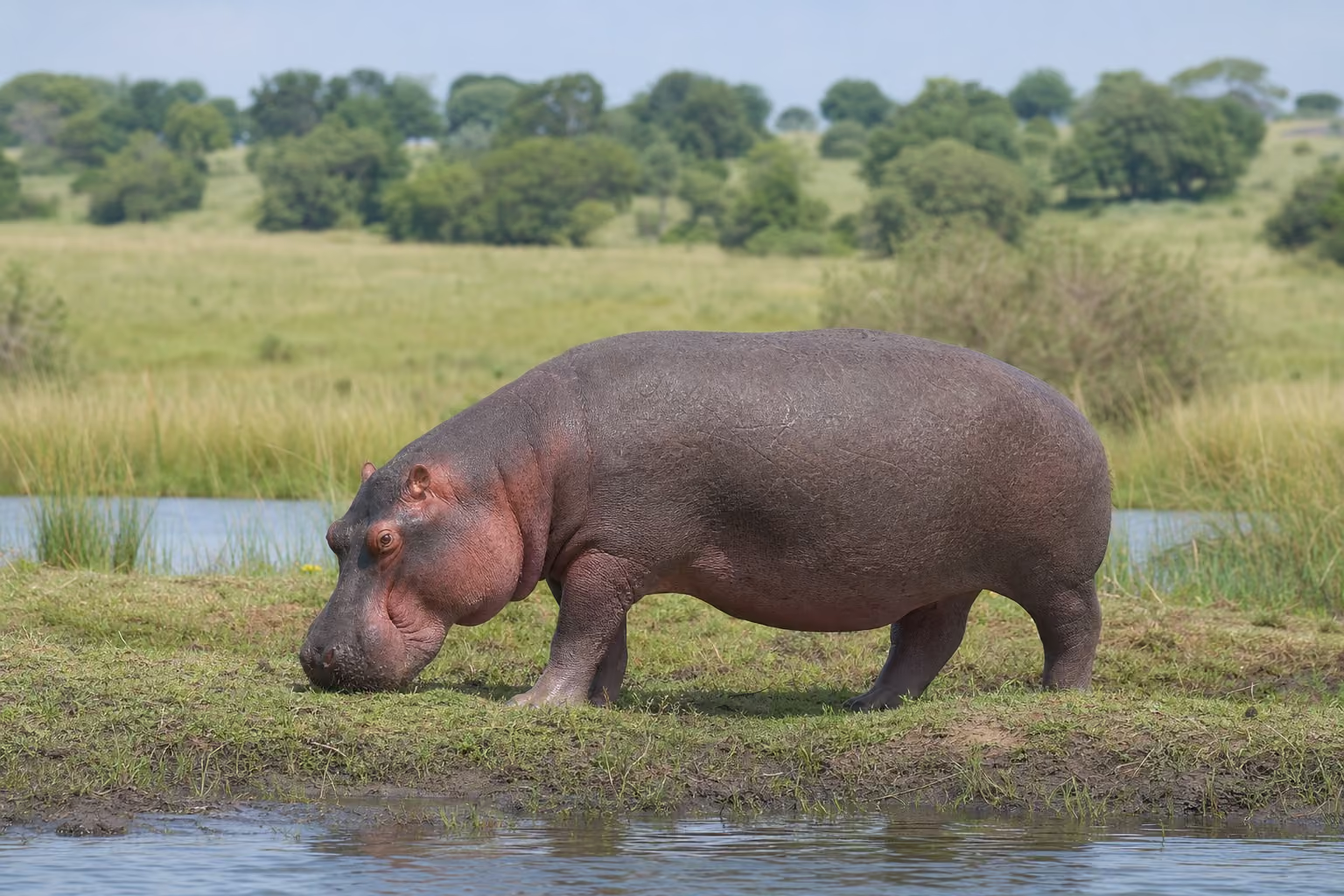
Hippopotamus

Details

Hippopotamus

Hippopotamus amphibius

Size
3–5 m · 1.3–3.2 t
Diet
Herbivore
Activity
Nocturnal
Sociality
Herd
Lifespan
40-50 years

A massive semiaquatic herbivore that lounges submerged in water by day and hauls out at night to graze. With its barrel-shaped body, huge gaping jaws and aggressive, unpredictable temper, it ranks among the most dangerous animals in Africa.
Range

Habitat range map
Native range Occasional / Transient

Map: Ecoregions 2017 © RESOLVE (CC BY 4.0) · Natural Earth (PD)

Details

Habitat

Found across sub-Saharan Africa, from The Gambia eastward to Ethiopia and south to South Africa. It favours rivers, lakes and swamps with still water and gently sloping shores, resting in the shallows and grazing the surrounding grasslands.

Appearance

Adults reach roughly 3 to 5 m long and weigh between about 1.3 and 3.2 tonnes, making them the third-heaviest land mammal after elephants and rhinos. The barrel body sits on short legs; the skin is purplish-grey above and pinkish below, and secretes a reddish, acidic mucus that acts as natural sunscreen. The lower canines grow continuously and can reach 50 cm.

Behavior

By day hippos rest in water to stay cool and hydrated, emerging after dusk to feed. Females and young form pods that can swell to over a hundred animals in the dry season, while dominant bulls hold territories in the water. They are highly aggressive, gaping their jaws in threat and clashing with their huge canines.

Feeding

Strictly herbivorous, a hippo walks up to several kilometres from the water each night to reach grazing grounds, cropping grass with its broad, hardened lips. It consumes around 30 to 40 kg of grass over four to six hours, a modest intake relative to its enormous body mass.

Reproduction

Gestation lasts about eight months, and a single calf is usually born in seclusion, often in the water. Newborns weigh around 50 kg; mothers nurse on land or underwater and are fiercely protective, with calves riding on their backs in deep water. Young are weaned at about a year, and females breed only once every couple of years.

Notes

The IUCN lists the hippo as Vulnerable, with poaching for meat and for its canine ivory, alongside loss of freshwater habitat, the main threats. Its aggression makes it a frequent danger to people and boats, yet it has long held cultural significance, appearing in Egyptian mythology and African folklore.