015 Featured Specimen
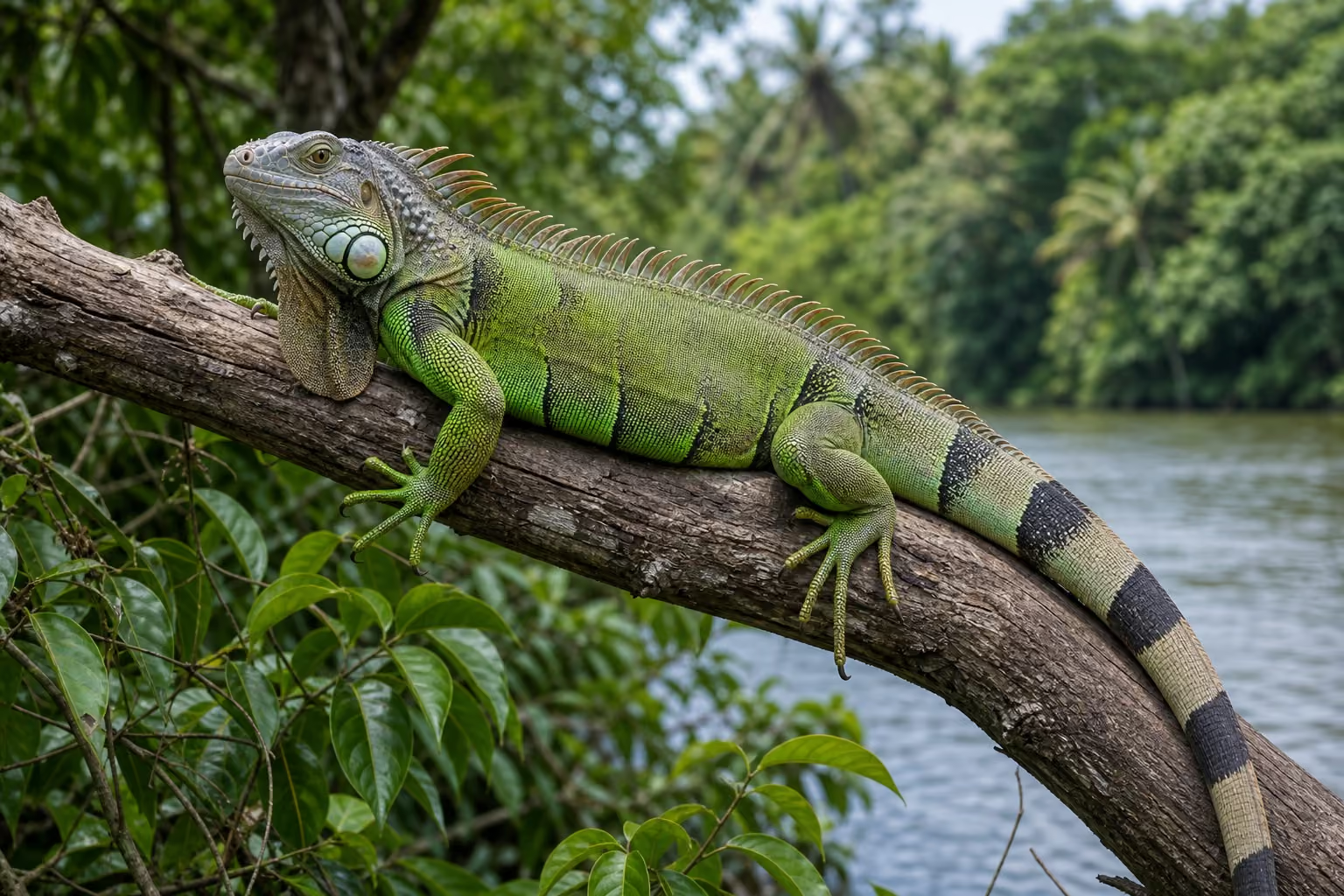
Green iguana

Details

Green iguana

Iguana iguana

Size
1.2–2 m · 4–8 kg
Diet
Herbivore
Activity
Diurnal
Sociality
Solitary
Lifespan
10–15 years

A large, tree-dwelling lizard of the Neotropics, instantly recognized by the row of spiny scales running down its back and tail and the broad flap of skin (dewlap) beneath its throat. Despite the name, its color varies with region and age from green to grey-brown, orange, and even reddish hues.
Range

Habitat range map
Native range Occasional / Transient

Map: Ecoregions 2017 © RESOLVE (CC BY 4.0) · Natural Earth (PD)

Details

Habitat

Ranges across the Neotropics from Mexico through Central America to Brazil and Paraguay. It favors tropical and subtropical forests and is usually found in trees overhanging rivers, ponds, and other water.

Appearance

A heavy-bodied species reaching roughly 120 to 200 cm from head to tail and about 4 to 8 kg in weight. A crest of spiny scales runs along the back and tail, especially pronounced in males. A large dewlap hangs beneath the throat, and a pale parietal eye on the crown senses light and overhead movement.

Behavior

A diurnal, arboreal lizard that basks to raise its body temperature. An agile climber, it can fall great distances and land unharmed. It swims well, plunging into water when threatened and propelling itself with tail strokes while its legs hang against its sides. In defense it flares the dewlap, puffs up, hisses, and bobs its head.

Feeding

Adults are almost entirely herbivorous, eating the leaves, flowers, fruit, and shoots of well over 100 plant species, using sharp teeth to shred foliage. Hatchlings eat the droppings of adults to acquire the gut microbes needed to digest their fibrous, plant-only diet.

Reproduction

Females nest in a synchronized season once a year, laying clutches of about 20 to 70 eggs in underground burrows. They provide no care after laying. The eggs hatch after roughly 10 to 15 weeks, and juveniles remain in family groups for their first year.

Notes

Across its native range it has long been eaten as 'gallina de palo,' the chicken of the trees. One of the most heavily traded reptiles in the world, escaped or released pets have established invasive populations in places such as Florida and Taiwan.