647 Featured Specimen
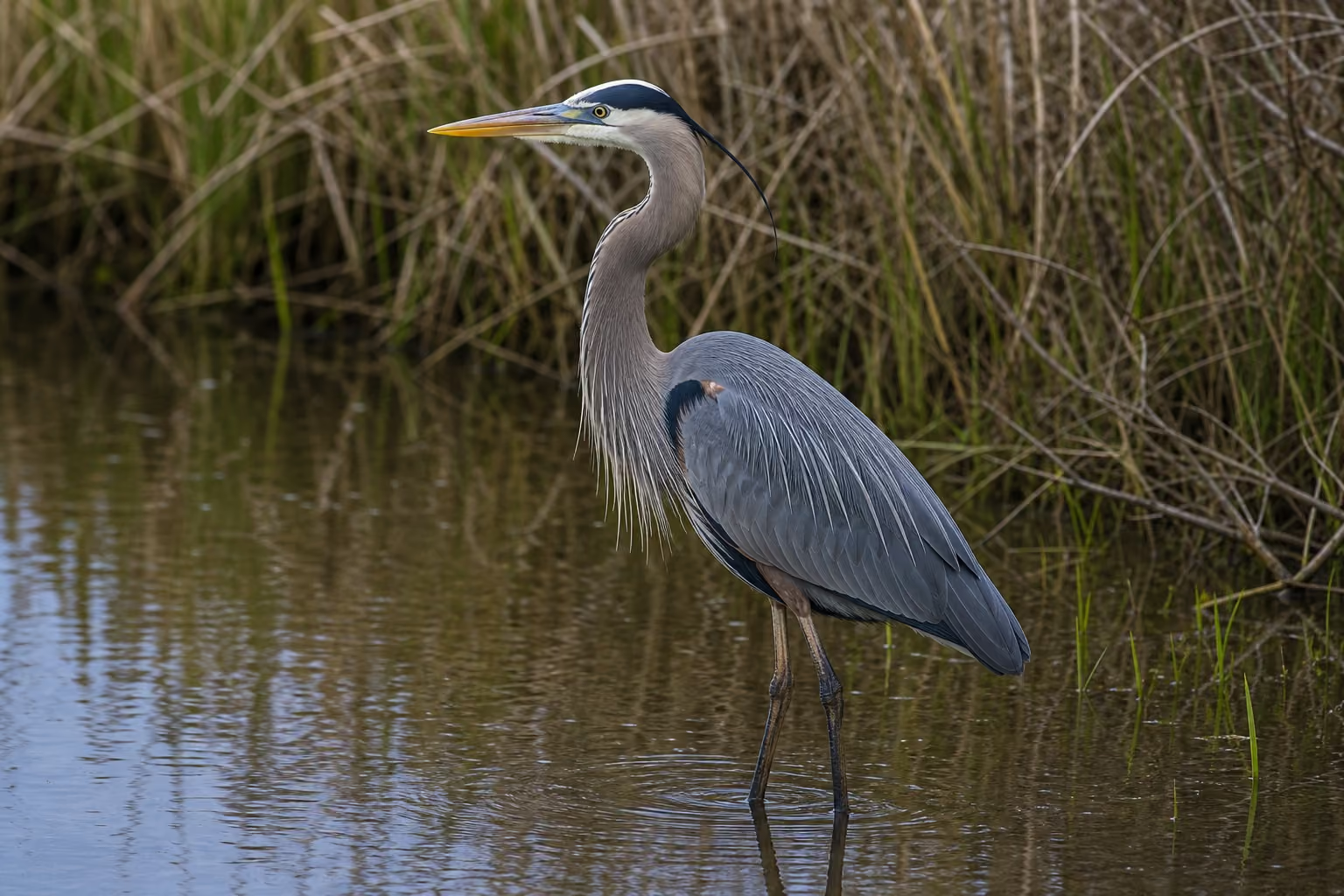
Great blue heron

Details

Great blue heron

Ardea herodias

Size
0.9–1.4 m · 2.1–3.6 kg
Diet
Carnivore
Activity
Diurnal
Sociality
Solitary
Lifespan

A large North American heron of shorelines and wetlands, using long legs and a dagger bill to hunt in shallow water.
Range

Habitat range map
Native range Occasional / Transient
NearcticNearcticNearcticNearcticNearcticNearcticNearcticNearcticNearcticNearcticNearcticNearcticNearcticNearcticNearcticNearcticNearcticNearcticNearcticNearcticNearcticNearcticNearcticNearcticNearcticNearcticNearcticNearcticNearcticNearcticNearcticNearcticNearcticNearcticNearcticNearcticNearcticNearcticNearcticNearcticNearcticNeotropicalNeotropicalNeotropicalNeotropicalNeotropicalNeotropicalNeotropicalNeotropical

Map: Ecoregions 2017 © RESOLVE (CC BY 4.0) · Natural Earth (PD)

Details

Habitat

Lives along rivers, lakes, marshes, tidal flats, coasts, and mangroves, adapting to both fresh and salt water.

Appearance

The back is blue-gray, the neck is long, and black head plumes trail from the crown. In flight, the neck is folded in an S shape.

Behavior

It often stands alone and strikes quickly when prey comes close. During breeding, many pairs may nest in colonies.

Feeding

Fish dominate the diet, with frogs, crustaceans, small mammals, reptiles, and insects also taken.

Reproduction

Adults build large stick nests in trees or shrubs and feed chicks by regurgitating fish and other prey.

Notes

It is common around suburban ponds and coasts, acting as a conspicuous top predator in shallow-water food webs.