584 Featured Specimen
European eel

Details

European eel

Anguilla anguilla

Size
0.6–1.5 m · 0.5–6.6 kg
Diet
Carnivore
Activity
Nocturnal
Sociality
Solitary
Lifespan

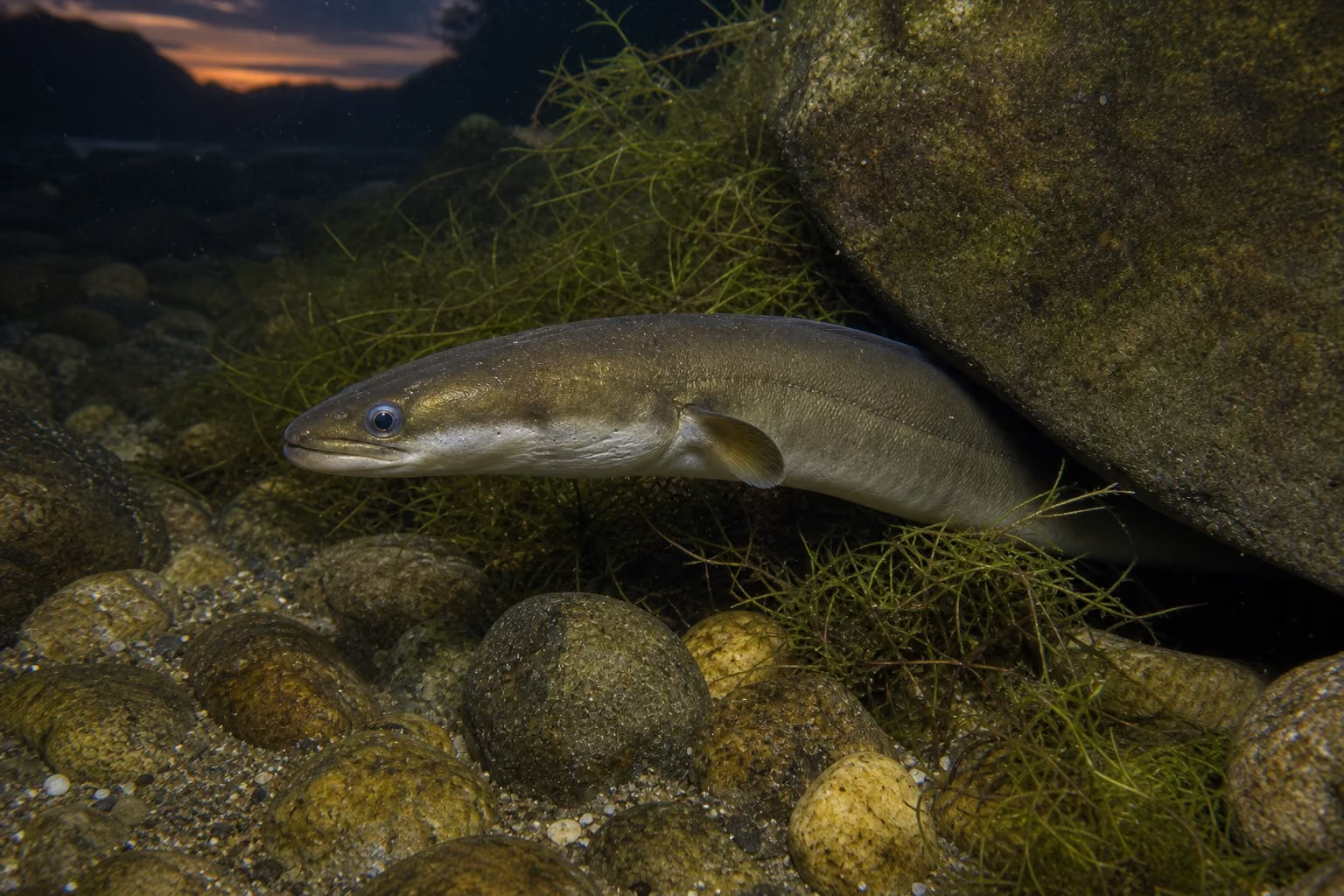
A long-bodied eel that links European freshwaters with the Atlantic Ocean. It grows in rivers and wetlands before migrating far offshore to spawn.

Range

Habitat range map
Native range Occasional / Transient
Atlantic OceanAtlantic OceanAtlantic OceanAtlantic OceanAtlantic OceanPalearcticPalearcticPalearcticPalearcticPalearcticPalearcticPalearcticPalearcticPalearcticPalearcticPalearcticPalearcticPalearcticPalearcticPalearcticPalearcticPalearcticPalearcticPalearcticPalearcticPalearcticPalearcticPalearcticPalearcticAfrotropicalAfrotropicalAfrotropicalAfrotropical

Map: Ecoregions 2017 © RESOLVE (CC BY 4.0) · Natural Earth (PD)

Details

Habitat

Juveniles enter rivers, lakes, marshes, and estuaries, while adults migrate through coastal seas into the Atlantic. Spawning is associated with the Sargasso Sea.

Appearance

The body is cylindrical, slimy, and snake-like, with pectoral fins. Life stages include transparent leptocephalus larvae, glass eels, yellow eels, and silver eels.

Behavior

It is mainly nocturnal and hides in mud, stones, or vegetation by day. Mature silver eels stop feeding and begin a long ocean migration.

Feeding

In fresh water it eats insect larvae, crustaceans, small fish, worms, and carrion. Larger individuals take larger bottom prey.

Reproduction

Adults spawn offshore, and larvae drift back toward European coasts on ocean currents. Much of the spawning behavior remains hard to observe.

Notes

The species has declined sharply under fishing, barriers, parasites, habitat change, and ocean shifts. It is a major conservation concern.