399 Featured Specimen
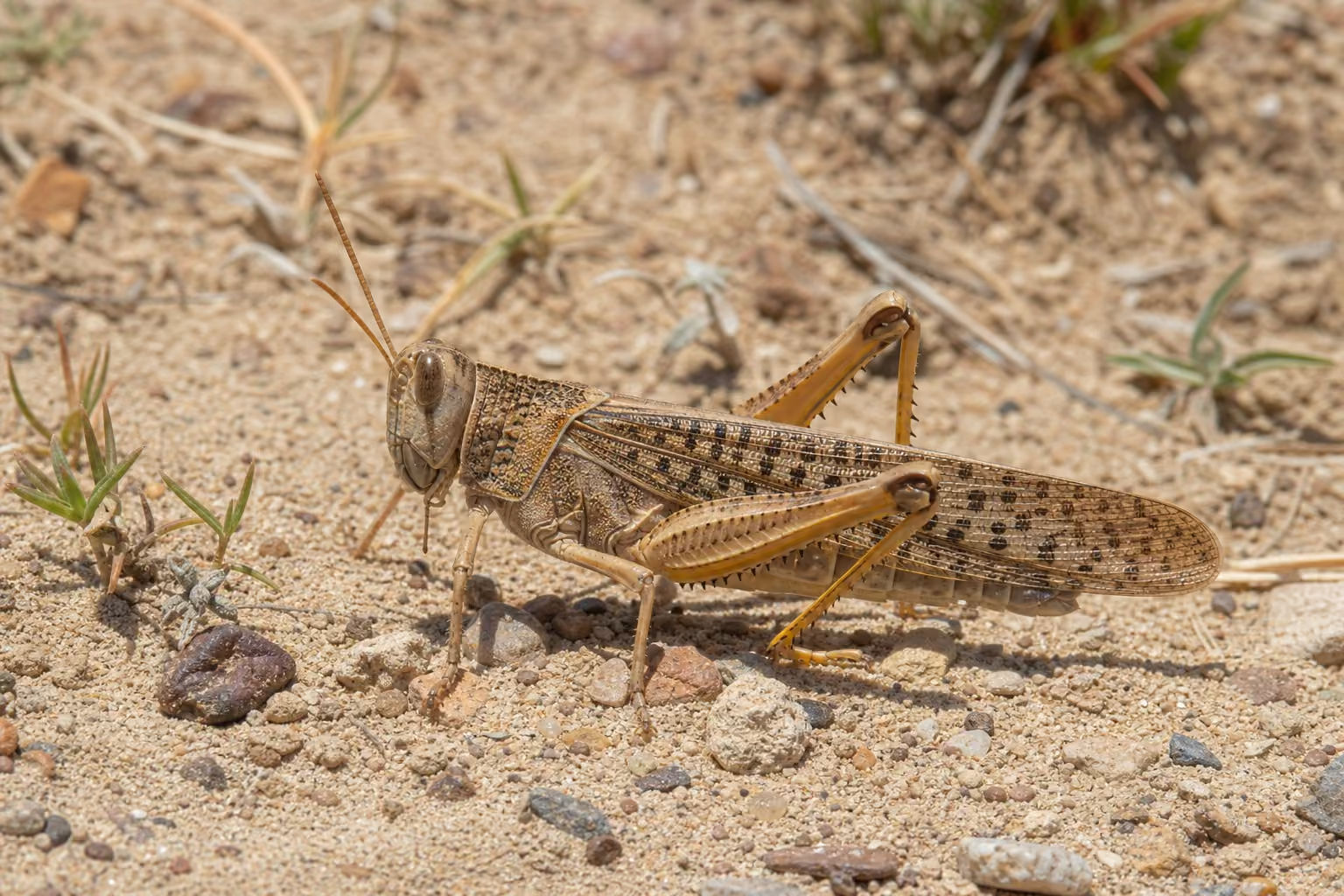
Desert locust

Details

Desert locust

Schistocerca gregaria

Size
4–6 cm · 1.5–3 g
Diet
Herbivore
Activity
Diurnal
Sociality
Loose group
Lifespan
less than 1 year

The desert locust is a migratory grasshopper capable of huge outbreaks in arid lands. It feeds by day on vegetation and can travel far in groups when conditions align.
Range

Habitat range map
Native range Occasional / Transient
PalearcticPalearcticPalearcticPalearcticPalearcticPalearcticPalearcticPalearcticPalearcticPalearcticPalearcticPalearcticPalearcticPalearcticPalearcticPalearcticPalearcticPalearcticPalearcticPalearcticPalearcticPalearcticPalearcticPalearcticAfrotropicalAfrotropicalAfrotropicalAfrotropicalIndomalayanIndomalayanIndomalayanIndomalayanIndomalayanIndomalayanIndomalayanIndomalayanIndomalayanIndomalayanIndomalayanIndomalayanIndomalayanIndomalayanIndomalayan

Map: Ecoregions 2017 © RESOLVE (CC BY 4.0) · Natural Earth (PD)

Details

Habitat

It lives in deserts, grasslands, and savannas across the Afrotropics, the Palearctic, the Indomalayan region. Temporary green growth after rain provides breeding habitat.

Appearance

Length 4-6 cm; weight 1.5 g-3 g. Adults have a slender body, long hind legs, and well-developed wings. Color and behavior shift between solitary and gregarious phases.

Behavior

Diurnal, it is usually dispersed but becomes gregarious at high density. Swarms use wind and mass movement to cover broad areas.

Feeding

A herbivore, it eats grasses, crops, and shrub leaves. Swarms can strip large areas of vegetation quickly.

Reproduction

Females lay eggs in rain-moistened sand. Wingless nymphs move in marching bands and molt into flying adults.

Notes

It is listed as Least Concern, though local populations can still be affected by habitat change, collection, or pollution.