681 Featured Specimen
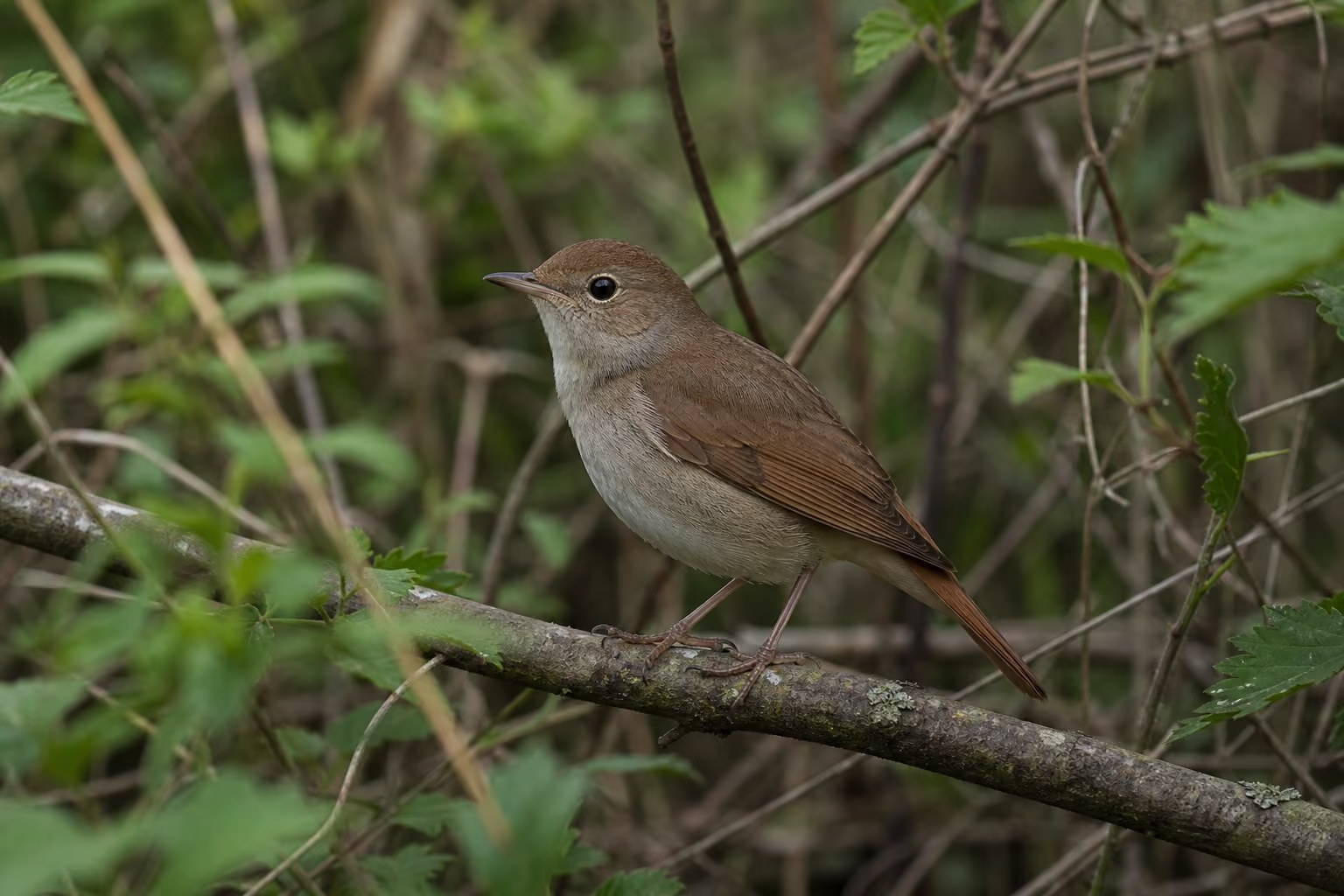
Common nightingale

Details

Common nightingale

Luscinia megarhynchos

Size
15–16.5 cm · 18–27 g
Diet
Omnivore
Activity
Diurnal
Sociality
Solitary
Lifespan

A plain-looking Old World songbird famous for a powerful, complex song that may carry through the night.
Range

Habitat range map
Native range Occasional / Transient
PalearcticPalearcticPalearcticPalearcticPalearcticPalearcticPalearcticPalearcticPalearcticPalearcticPalearcticPalearcticPalearcticPalearcticPalearcticPalearcticPalearcticPalearcticPalearcticPalearcticPalearcticPalearcticPalearcticPalearcticAfrotropicalAfrotropicalAfrotropicalAfrotropical

Map: Ecoregions 2017 © RESOLVE (CC BY 4.0) · Natural Earth (PD)

Details

Habitat

Lives in shrubby woodland edges, thickets, riverside cover, orchards, and young woods with dense undergrowth.

Appearance

Warm brown upperparts and a rufous tail contrast with plain pale underparts and few bold markings.

Behavior

Males sing by day and night in spring, often hidden in cover. It migrates to Africa for the non-breeding season.

Feeding

Insects, larvae, spiders, earthworms, and autumn fruits or seeds are taken close to the ground.

Reproduction

Nests of dry leaves are placed low in shrubs or near the ground, and chicks are fed many insects.

Notes

Culturally famous for its song, it is more often detected by voice than by sight.