330 Featured Specimen
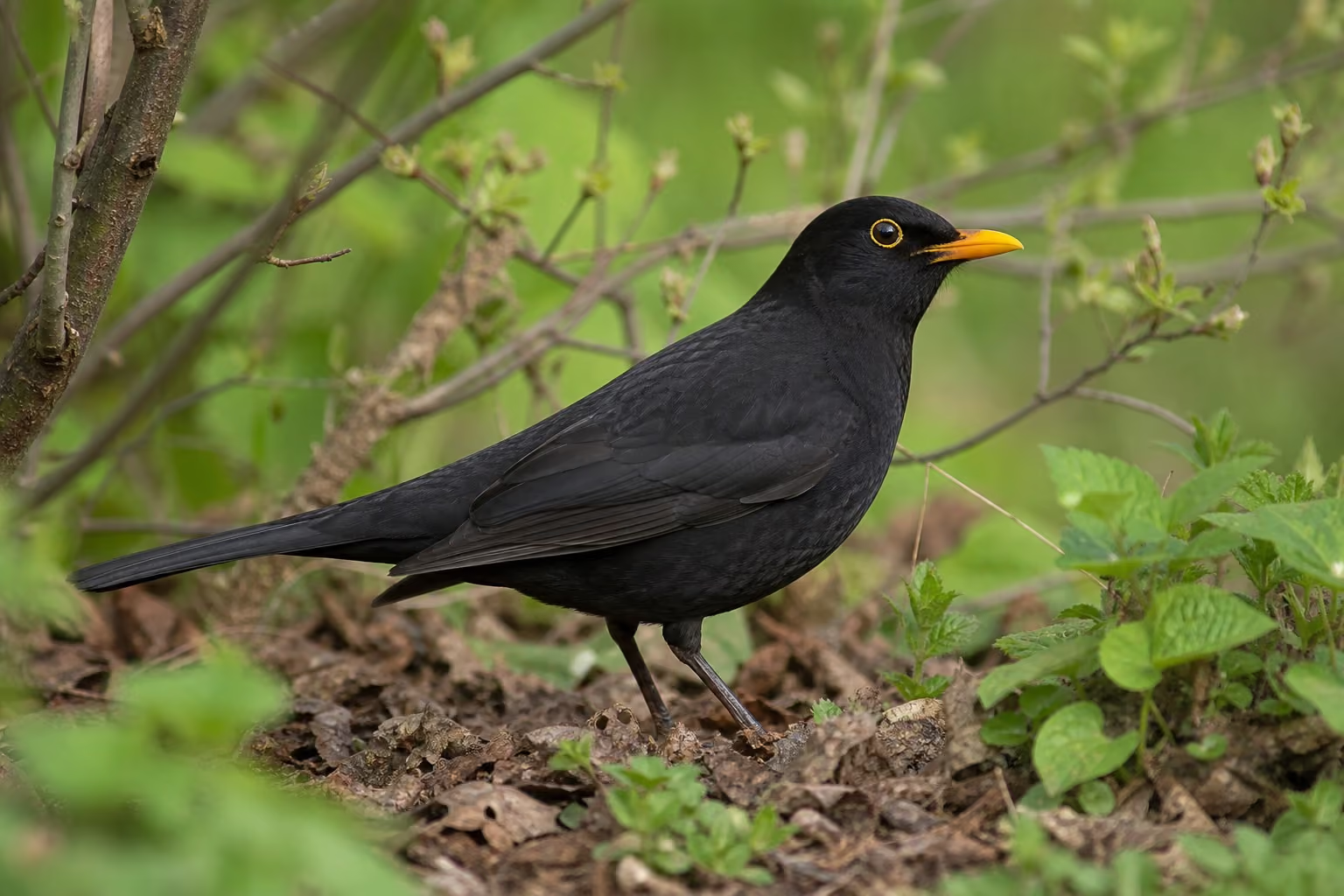
Common blackbird

Details

Common blackbird

Turdus merula

Size
23–29 cm · 80–125 g
Diet
Omnivore
Activity
Diurnal
Sociality
Solitary
Lifespan
3–10 years

The common blackbird is a medium-sized thrush centered on the Palearctic. The male's black plumage, yellow bill, and rich evening song make it a familiar bird.
Range

Habitat range map
Native range Occasional / Transient
PalearcticPalearcticPalearcticPalearcticPalearcticPalearcticPalearcticPalearcticPalearcticPalearcticPalearcticPalearcticPalearcticPalearcticPalearcticPalearcticPalearcticPalearcticPalearcticPalearcticPalearcticPalearcticPalearcticPalearcticIndomalayanIndomalayanIndomalayanIndomalayanIndomalayanIndomalayanIndomalayanIndomalayanIndomalayanIndomalayanIndomalayanIndomalayanIndomalayanIndomalayanIndomalayan

Map: Ecoregions 2017 © RESOLVE (CC BY 4.0) · Natural Earth (PD)

Details

Habitat

It uses woodland, edges, hedges, parks, gardens, and orchards. Shrubs, leaf litter, and soft ground support foraging, and many birds adapt well to towns.

Appearance

Length is 23-29 cm and weight 80-125 g. Males are black with a yellow bill and eye ring, while females are brown with paler mottling on the breast.

Behavior

Diurnal birds are usually solitary or paired on territories. On the ground they pause, cock the head, and listen or watch for movement under litter.

Feeding

An omnivore, it eats earthworms, insects, slugs, fruit, and berries. It probes soft soil and flicks aside leaves to expose food.

Reproduction

The nest is a cup placed in shrubs, climbers, or dense cover. The female mainly incubates, and both parents bring worms and insects to chicks.

Notes

It is listed as Least Concern. Often common in parks and gardens, it may migrate regionally, with berries important in winter.